





New Delhi, Delhi, 17th of February, 2026 : Clinical rotations represent a pivotal stage in medical education, where theoretical learning is tested in real clinical settings. For Indian medical students aspiring to build international careers, particularly in healthcare systems such as the UK or the US, the choice of clinical training environment can play a decisive role in shaping professional readiness. As global healthcare becomes more interconnected, there is growing interest among Indian students in clinical experiences that offer exposure to diverse patient populations, structured care models, and internationally benchmarked practices.
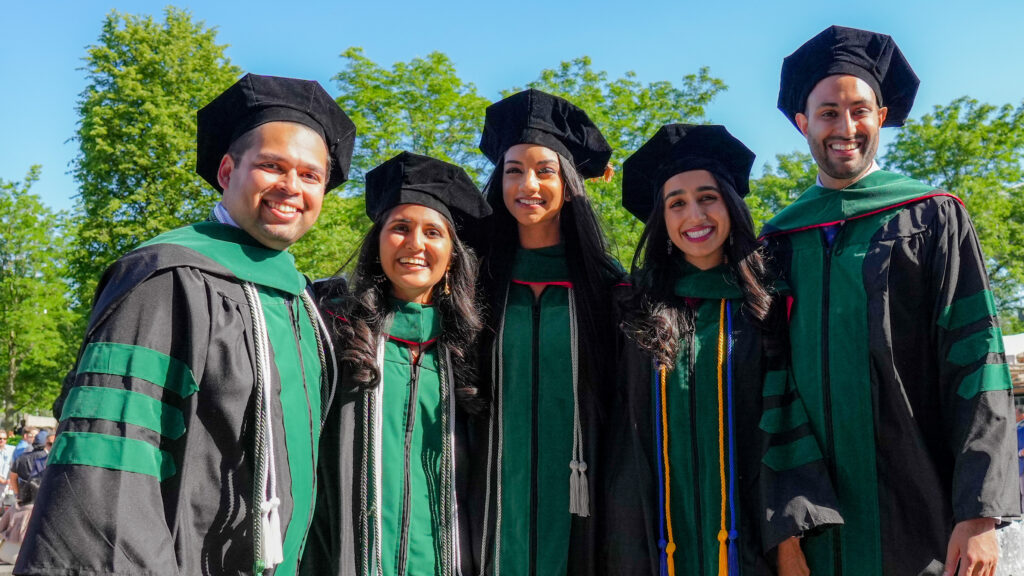
St. George’s University (SGU) School of Medicine in Grenada, West Indies, offers students enrolled in its Doctor of Medicine (MD) program the opportunity to complete part or all of their clinical training in the United Kingdom through 15 affiliated clinical sites within the National Health Service (NHS). Academic standards and assessment frameworks are applied consistently across all clinical locations. For Indian students, the UK clinical pathway provides exposure to a globally recognized public healthcare system and the opportunity to gain experience delivering care within a different clinical, cultural, and regulatory context. In this article, SGU outlines how participation in UK-based clinical rotations supports the development of clinical skills, professional adaptability, and preparedness for medical practice in diverse healthcare settings.
Benefits of Completing Clinical Rotations in the UK
- Builds clinical versatility and adaptability
Training within the UK’s NHS exposes students to a healthcare system that emphasizes structured protocols, multidisciplinary teamwork, and population-based care. Navigating a new system helps students become more adaptable and versatile, skills that are increasingly valued in residency programs and modern medical practice.
Reflecting on this exposure, Peter Orton Beaumont, MD ’03, shares, ‘’Completing a significant portion of my clinical rotations in the UK meant I was already familiar with the healthcare system, the clinical environment, and the patient population.”
- Strengthens confidence in real-world settings
Working in high-volume clinical environments and managing a broad spectrum of cases enables students to develop confidence in clinical decision-making. Many students find that early exposure to different care pathways prepares them to transition more smoothly into residency and postgraduate training.
As Dr. Beaumont, further, notes, “While I noticed some differences in training compared to UK graduates, I quickly adapted, and those early adjustments ultimately strengthened my skills and confidence.”
- Enhances cultural competence and patient communication
The UK’s diverse patient population offers students firsthand experience in delivering care across cultural, social, and economic backgrounds. This immersion strengthens communication skills and fosters cultural sensitivity, both of which are essential for effective, patient-centered care. - Sharpens clinical reasoning and problem-solving skills
Exposure to varied diagnostic approaches and healthcare delivery models encourages students to think critically and approach clinical problems from multiple perspectives. This experience enhances clinical reasoning and the ability to manage complex cases. - Prepares students for global medical careers
Many students credit their UK clinical experience with broadening their professional outlook and equipping them to thrive in a range of medical environments. The skills gained, adaptability, resilience, and cross-system experience, provide a strong foundation for pursuing residency and medical careers across borders.
Emphasizing the long-term value of UK practice, Dr. Beaumont notes, “For those who are committed, adaptable, and passionate about patient care, a medical career in the UK can be incredibly fulfilling and a source of great professional pride.”
For more information on the programs and tracks available through SGU School of Medicine, visit SGU’s website.
About St. George’s University School of Medicine:
Founded in 1976, St. George’s University (SGU) is a center for academic excellence worldwide. With students and faculty drawn from more than 150 countries, SGU is truly an international institution, with a uniquely global perspective. The SGU School of Medicine is accredited by the Grenada Medical and Dental Council which has been recognized by the World Federation for Medical Education (WFME). The school offers a four-year Doctor of Medicine (MD) degree program. Students can also enter the MD degree program from many education systems around the world via the five-, six-, or seven-year tracks. SGU has a large network of 75+ affiliated hospitals and health centers in the US and UK, with the unique opportunity for students to begin their medical career in Grenada or the UK.




More Stories
Apollo Hospitals, Bengaluru Performs India’s First EXIME Temporary Prostatic Stent Procedure; Five Patients Treated.
Union Minister Dr. Jitendra Singh Inaugurates India’s 51st Doppler Weather Radar At Sambalpur Odisha, Says Mission Mausam Strengthening India’s Weather Preparedness.
RISE Health Innovation Summit 2026 Brings The Global Healthcare Conversation To Hyderabad On September 24.