



New Delhi, Delhi, 19th of March 2026 : The Ministry of Statistics and Programme Implementation (MoSPI) has organised two-days consultative workshop on ‘Capacity Building Workshop on Monitoring Frameworks of Sustainable Development Goals, Compilation of Environment Accounts, and Gender Statistics. This capacity building workshop is co-organised with Government of Bihar with the technical support by United Nations Development Programme (UNDP) India.
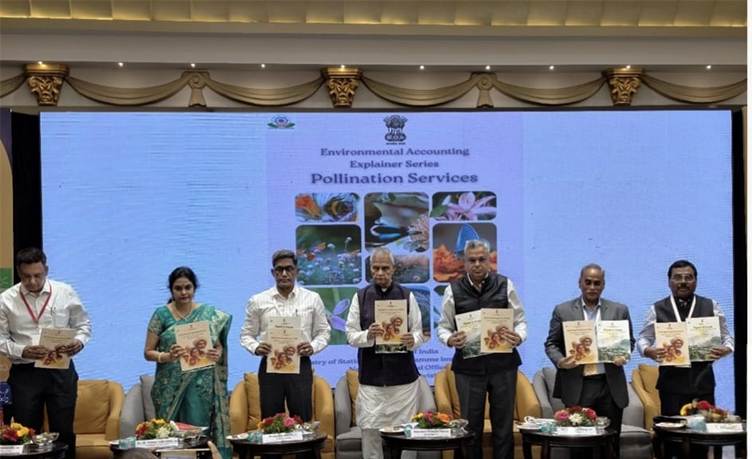
The inaugural session of the workshop was graced by the Hon’ble Minister of Planning and Development, Government of Bihar, Shri. Bijendra Prasad Yadav, Dr. Saurabh Garg, Secretary, MoSPI , Shri. Pratyaya Amrit, Chief Secretary, Govt. of Bihar , Shri. N. K. Santoshi, Director General, MoSPI, Shri. S.C. Malik, Additional Director General,MoSPI, Dr. N Vijaya Lakshi, Additional chief Secretary, Govt. of Bihar, Dr. Angela Lusigi, UNDP and other distinguished dignitaries.
Shri. Bijendra Prasad Yadav, Hon’ble Minister of Planning and Development, in his address emphasised the importance of timely generation of robust data for evidence-based governance and sustainable development for achieving a Viksit Bharat by 2047. He also emphasized that State-specific realities and data context should be considered so that the analysis reflects ground realities accurately.
Dr. Saurabh Garg, Secretary, MoSPI emphasized upon the critical importance of collecting robust and timely data to enable evidence-based policymaking and effective monitoring. He further appreciated the efforts of states that have undertaken granular data collection, which strengthens localized planning and targeted interventions. He also informed about initiatives undertaken by MoSPI and stressed upon the harmonization of administrative data through cross-coordination with States of India.
The Chief Secretary of Bihar, Shri Pratyaya Amrit, lauded the state’s progress in achieving key milestones related to the SDGs and highlighted its improving performance on gender indicators. He underscored the pivotal role of data in enabling informed policymaking and emphasized its importance in realizing the vision of a Viksit Bharat and a Vaibhavshali Bihar by 2047.
Dr. Angela Lusigi, UNDP, noted that “what cannot be measured cannot be accelerated,” stressing the need for granular, local-level data and better use of expenditure and outcome data to track investments and gaps.
The workshop primarily aimed at capacity building in three crucial areas – SDGs, Environment and Gender, that has brought together a diverse group of stakeholders, including government officials, experts, and representatives from international organizations. Over the course of the two days, participants were engaged in technical sessions focused on key topics on Sharing Experiences in SDG Data, Gender Statistics and Environment Accounting & Statistics in India. The workshop witnessed a significant participation from national, sub-national, and international agencies. More than 200 representatives from line Ministries, State/UT Departments, institutions and international organisations attended the workshop.
One of the significant highlights of the workshop was the release of three reports of MoSPI titled “Environmental Accounting Explainer Series Pollination Services”, “Planet in Focus: Advancing Environmental Sustainability under the SDGs” and “Delivering Prosperity at Scale: India’s Economic Transformation through the SDGs,” by the eminent dignitaries. The report is now available on MoSPI’s website at the following link: https://mospi.gov.in/publications-reports
The workshop featured technical presentations and discussions focusing on the use of data for strengthening SDG monitoring and gender-responsive policymaking. Session on SDG highlighted the national indicator framework , gender statistics for SDGs, Global practices in SDG data and monitoring including initiatives such as the Panchayat Advancement Index, NER District SDG Index. Speakers shared perspectives on gender data for policymaking, women’s work and mobility, state-level data policies, disaggregated data initiatives, and monitoring gender outcomes, while also highlighting international experiences in advancing gender statistics.
For environmental accounting and statistics, environmental sustainability key themes including the implementation of environmental accounting frameworks in India, valuation of forest ecosystem services, and state-level experiences in forest accounting, Economic valuation of biodiversity and pollination services were discussed. Further deliberations examined state-level initiatives in strengthening environment statistics systems and the economic evaluation of organic farming and agroforestry under the TEEB project. The discussions underscored the growing importance of environmental statistics and accounting in supporting sustainable development and evidence-based policymaking.
The All-India Workshop successfully facilitated an in-depth exchange of ideas, best practices and strategies for advancing environmental data, gender statistics and SDG monitoring through enhanced data collection, policy integration and inclusive governance. The collaborative efforts showcased during the workshop are a testament to India’s commitment to building a sustainable, equitable, and inclusive future for all its citizens.



More Stories
HCL Group’s 50th Anniversary Celebrations Continue In Hyderabad With Devi Sri Prasad Concert.
IIT Bombay Batchmates – Epigamia Co-Founder And Former Housing.Com CXO Launch Kokasa, A Deep-Tech Company Building Critical Systems And Autonomous Technologies.
Trade Finance To Strengthen India-Sri Lanka Business Ties, Key Agreement Signed.