




New Delhi, Delhi, 19th of March 2026 : As a significant step in rural drinking water framework, a reform-linked Memorandum of Understanding (MoU) under Jal Jeevan Mission (JJM) 2.0 was signed with the State of Maharashtra today. This marked the State’s formal entry into the reform‑linked implementation framework of the Jal Jeevan Mission 2.0 which was approved by the Union Cabinet on March 10, 2026.
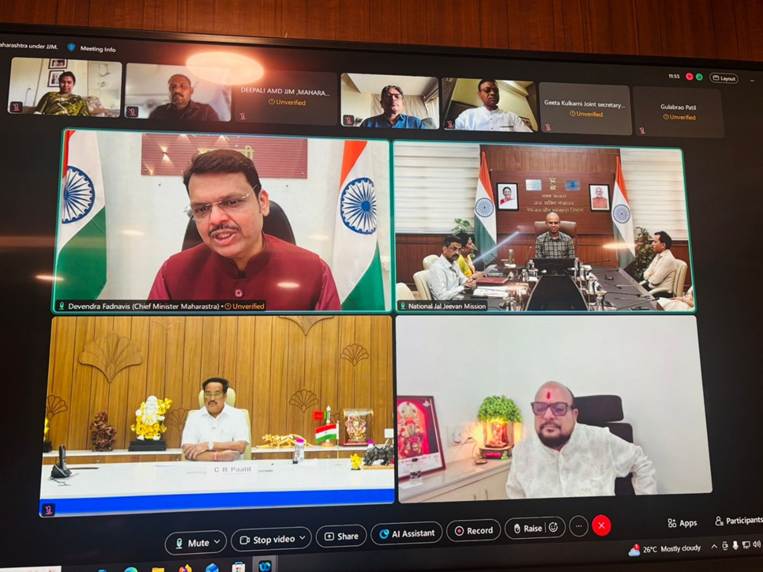
The MoU was signed in the presence of Union Minister of Jal Shakti, Shri C. R. Paatil, and Chief Minister of Maharashtra, Shri Devendra Fadnavis, Shri Gulabrao Patil, Minister of Water Supply & Sanitation Department, Maharashtra; Smt. Meghna Bordikar Sakore, State Minister, Maharashtra who all joined the event through online video conference.
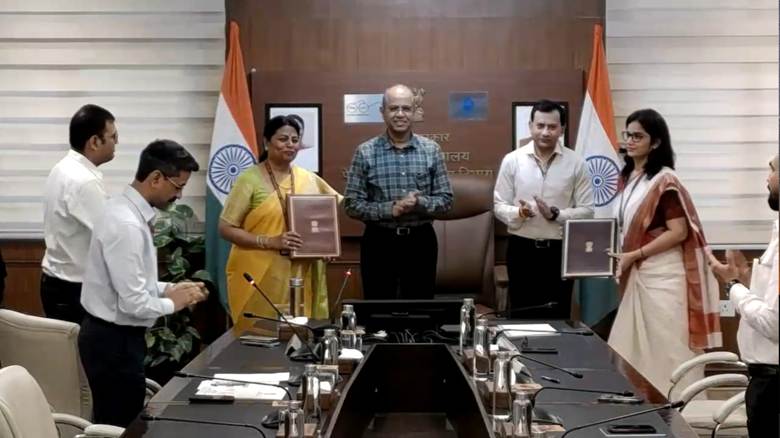
The MoU was signed and exchanged between Smt. Swati Meena Naik, Joint Secretary (Water), DDWS, Ministry of Jal Shakti, and Smt. R. Vimla, Resident Commissioner and Secretary of Maharashtra Sadan.
Senior officials from the Department of Drinking Water and Sanitation (DDWS), including Shri Ashok K. K. Meena, Secretary, DDWS, Shri Kamal Kishore Soan, Additional Secretary & Mission Director, National Jal Jeevan Mission (NJJM), along with officers from DDWS attended physically and senior officials from Maharashtra virtually attended the MoU signing.
Addressing the gathering, Union Minister of Jal Shakti, Shri C. R. Paatil, extended his best wishes for Gudi Padwa and said under the leadership of Prime Minister Shri Narendra Modi, Jal Jeevan Mission has brought about a transformative change in rural water supply across the country. While access to safe drinking water remained a challenge for decades, the Mission has enabled tap water connections to 80% rural households. Moving forward JJM 2.0 focuses on assured service delivery, accountability and long‑term sustainability with structural reform. Signing of MoU is a part of this reform that aims to strengthen implementation on the ground. Referring to recent Parliamentary deliberations, he reiterated that the Union Government follows a zero‑tolerance policy towards corruption, irregularities and quality lapses.
The Union Minister further stated that according to SBI Research, Jal Jeevan Mission has relieved nearly 9 crore women from the daily drudgery of fetching water, enabling them to devote more time to agriculture, livelihoods and productive activities. Citing World Health Organization (WHO) study, he said that universal access to safe drinking water through household tap connections has the potential to save nearly 5.5 crore hours every day for women and prevent close to 4 lakh deaths annually due to diarrhoeal diseases. Emphasising the transformative impact of these outcomes, Shri Paatil stated that Jal Jeevan Mission is not merely a scheme, but a life‑impacting mission that is bringing about fundamental improvements in health, dignity and quality of life, particularly for women and rural communities. Thus, regular and continuous drinking water supply must be ensured in every village, and public grievances should be addressed promptly.
Highlighting the call given by the Prime Minister, he urged the state to take up source sustainability and water conservation using VB G RAM G fund, as it will also help continuous supply of water.
Chief Minister of Maharashtra, Shri Devendra Fadnavis, appreciated the transformative impact of Jal Jeevan Mission under the leadership of Prime Minister Shri Narendra Modi, noting that it has significantly improved rural drinking water access. He reaffirmed the State’s commitment towards ensuring sustainable, reliable, and quality water supply to every rural household, with a strong focus on service delivery and outcomes aligning with the vision of Prime Minister.
In his address, he further stated that with the revised administrative approval, the State will place greater emphasis on the quality of works and is well‑positioned to realize the objectives of Jal Jeevan Mission 2.0. Drawing on the lessons learned from the Mission’s core agenda of achieving universal household tap water coverage, the State will work within the stipulated timelines to strengthen rural drinking water supply systems and ensure the successful implementation of the mission.
As part of the reform‑linked MoU, Jal Seva Aankalan shall be undertaken at the Gram Panchayat level to capture community feedback on the quality, regularity and reliability of rural drinking water services. The responses recorded under Jal Seva Aankalan will reflect the actual service delivery outcomes and is visible to citizens through the Meri Panchayat Application, thereby strengthening transparency, accountability and community participation in water governance.
To further institutionalize Jan Bhagidari, the MoU provides for the observance of Jal Utsav, a structured three‑tier annual campaign aimed at embedding water awareness and stewardship within local culture. This includes Jal Mahotsav at the national level, Rajya Jal Utsav / Nadi Utsav at the State level, and Lok Jal Utsav at the Gram Panchayat level, with a focus on integrating the local cultural and traditional significance of water. In this context, National Jal Mahotsav 2026 was launched with a nationwide Jal Arpan on 8 March 2026 and is set to culminate on 22 March 2026, coinciding with World Water Day. The national‑level event held on 11 March 2026 was graced by the President of India, Smt. Droupadi Murmu, underscoring the national importance of the initiative.
As a key reform condition under the MoU, all completed piped water supply schemes shall be formally handed over to Gram Panchayats, VWSCs and the community through the “Jal Arpan” process. This structured handover is intended to ensure local ownership, operational responsibility and long‑term sustainability of rural drinking water services.
The reform‑linked MoU further mandates a Gram Panchayat‑led, service‑based and community‑centered model of rural water governance, aligned with the objectives of Jal Jeevan Mission 2.0. It also provides for the operationalisation of the Decision Support System (DSS) developed by the Department of Drinking Water and Sanitation (DDWS) as a digital planning platform at the district and Gram Panchayat levels. The DSS will support source sustainability planning and will be integrated with the Sujalam Bharat platform and national water datasets, enabling data‑driven, evidence‑based decision‑making.
The extension of Jal Jeevan Mission up to December 2028, with enhanced financial outlay, seeks to restructure and reorient the programme towards assured service delivery, with a focused emphasis on functionality, water quality, source sustainability and community ownership, thereby establishing JJM 2.0 as a robust and sustainable national model for rural drinking water services.
The reform‑linked MoU seeks to ensure that every rural household has access to drinking water supply in adequate quantity and of prescribed quality on a regular basis, through strengthened community participation (Jan Bhagidari) and bringing in structural reforms for sustainable operation and maintenance of rural water supply systems, thereby enhancing the living standards of rural communities contributing to long‑term water security aligned with the national vision of Viksit Bharat @2047.



More Stories
IHM Hyderabad Students Bring Hyderabad’s Nizami Culinary Heritage To Life At Traditional Chowki Lunch.
Minister Of State For Social Justice & Empowerment Shri Ramdas Athawale Addresses Media In Guwahati.
HCL Group’s 50th Anniversary Celebrations Continue In Hyderabad With Devi Sri Prasad Concert.