



New Delhi, Delhi, 25th of March 2026 : The National Statistics Office (NSO), Ministry of Statistics & Programme Implementation (MoSPI), conducted a one-day All-India Workshop of Trainers (AIWOT) for the Rapid Survey of Functional Cooperatives (RSFC) on March 25, 2026 at the Scope Convention Centre, New Delhi.
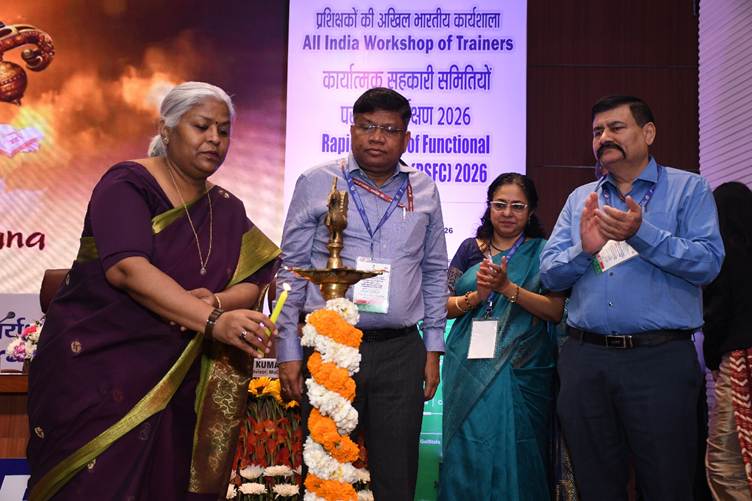
The workshop was inaugurated by Smt. Geeta Singh Rathore, Director General, National Sample Survey (NSS). In her address, she emphasized that the cooperative sector serves as the backbone of India’s socio- economic development, demonstrating its strength through rural empowerment and inclusive growth. The RSFC will play a vital role by providing reliable data on Gross Value Added (GVA), Gross Value Output (GVO), and employment generated across 30 major cooperative sectors. She emphasized the importance of maintaining high standards of data quality, robust field practices and effective training mechanisms for the successful implementation of the survey and urged trainers to ensure a uniform understanding of concepts through this AIWOT.
The All-India workshop is a key preparatory training programme conducted ahead of the nationwide field operations of any survey. A total of 225 participants across Zonal, Regional and Sub-Regional offices of Field Operations Division (FOD) including the officers from Enterprise Survey Division (EnSD), Coordination and Quality Control Division (CQCD) and officers from Ministry of Cooperation (MoC) attended the workshop.
The RSFC is scheduled to be conducted across the country from April 2026 for a period of six months. The AIWOT would equip master trainers with the necessary conceptual clarity, survey methodology, and technical know-how for conducting subsequent regional-level trainings.
During the inaugural session, the Divisional heads from FOD, EnSD and CQCD, along with the Economic Advisor from the Ministry of Cooperation, stressed the importance and need for data on cooperative sector in achieving the vision of Viksit Bharat 2047. They emphasized the significance of proper training, effective coordination, and strong supervision to ensure the desired quality of data. It was highlighted that reliability, transparency, and standardization are fundamental to maintaining user trust in official statistics, and structured feedback from the field was encouraged for continuous improvement.
The RSFC is being conducted for the first time as a pan-India survey on the cooperative sector to provide estimates of the economic contribution of the cooperative sector, as well as its role in employment generation across the country using the National Cooperative Database (NCD) as the sampling frame and will be conducted through a web-based data collection system. Separate all India sector-wise estimates will be generated for 12 key cooperative sectors identified by the Ministry of Cooperation. They include housing cooperatives, dairy cooperatives, fishery cooperatives, Primary Agricultural Credit Societies (PACS), sugar mill cooperatives, credit and thrift cooperatives, handloom textile and weavers’ cooperatives, labour cooperatives, Large Area Multipurpose Societies (LAMPS), agriculture and allied cooperatives, consumer cooperatives, and agro-processing and industrial cooperatives.
The workshop witnessed active participation from Master Trainers and other officers from MoSPI representing all States and Union Territories, who will, in turn conduct regional-level training for field functionaries before the launch of the survey in April, 2026. The Ministry of Cooperation assured that the State/District authorities of Registrar of Cooperative Societies will extend necessary cooperation to the officials of FOD for the smooth conduct of the survey. The AIWOT concluded with a reaffirmed commitment to professionalism and quality, with the objective of ensuring the successful conduct of the RSFC and strengthening India’s statistical system.



More Stories
Jai Raj Ispat Hosts Dealer And Engineer Visit To Strengthen Industry Engagement.
GARC Advances Automotive Testing Under PM E-DRIVE.
When Is A Headache More Than Just a Headache? : Dr. Sharad S. Rajamani, Director & Senior Consultant – Neurosurgery, Skull Base & Vascular, Endoscopic Cranial & Spinal Surgery, KIMS Hospitals, Mahadevapura, Bengaluru.