


New Delhi, Delhi, 14th of April 2026 : Launched on March 8, 2018, POSHAN Abhiyaan (Prime Minister’s Overarching Scheme for Holistic Nourishment) is a flagship, multi-ministerial mission to place nutrition at the centre of India’s national development agenda. The mission marked a shift in India’s approach from treating nutrition primarily as a welfare concern, to recognising it as a national priority linked to human capital development, the Sustainable Development Goals (SDG) and long-term growth.
Over the past eight years, POSHAN Abhiyaan has transformed India’s nutrition governance architecture – embedding convergence, digital monitoring and community mobilisation into the framework.
Anchored in the Ministry of Women & Child Development, the POSHAN Abhiyaan brings together more than 26 ministries and departments under a unified nutrition framework, recognising that malnutrition cannot be addressed by the health or food sector alone — it requires simultaneous action on sanitation, education, water, women’s empowerment, and income.
Crucially, POSHAN Abhiyaan was designed around a lifecycle and preventive approach — rather than solely addressing acute malnutrition after it occurs. The mission places special emphasis on the first 1,000 days — from conception to two years of age — as this period is critical for physical growth, brain development and long-term health outcomes.
Policy Evolution: From POSHAN Abhiyaan to Mission Poshan 2.0
For several decades, nutrition interventions in India were implemented through multiple schemes, targeting different groups, across different ministries. While these addressed different aspects of nutrition, the approach remained largely sector specific. Over time, the need for convergence and coordinated implementation was recognised.
The Integrated Child Development Services (ICDS), launched in 1975, provided the foundational platform for supplementary nutrition, health services and early childhood care through Anganwadi Centres.
Recognising that the health of a mother is a critical factor in ensuring the health and nutrition of her child, in 2017, the Pradhan Mantri Matru Vandana Yojana (PMMVY) was implemented. This scheme introduced maternity benefits through direct cash transfers, thus providing financial support for pregnant and lactating mothers. In the same year, NITI Aayog’s National Nutrition Strategy (2017) emphasised convergence, improved monitoring and community participation, and recommended a mission-mode approach.
Building on this, the POSHAN Abhiyaan was launched in 2018 as India’s National Nutrition Mission to bring multiple ministries and schemes under a unified framework with time-bound targets, digital monitoring and a Jan Andolan approach.
The Union Budget 2021–22 further consolidated India’s fragmented nutrition initiatives under Mission Poshan 2.0 (Mission Saksham Anganwadi and Poshan 2.0), creating a unified and integrated framework. This restructuring subsumed the following schemes:
- Anganwadi Services
- Scheme for Adolescent Girls
- POSHAN Abhiyaan
The consolidation sharpened the focus on maternal nutrition, infant and young child feeding (IYCF) norms, and the treatment of Severe Acute Malnutrition (SAM)/ Moderate Acute Malnutrition (MAM). It also emphasised wellness through AYUSH-based practices to reduce wasting, stunting, anaemia and underweight prevalence.
The mission is re-structured and operates through the following primary verticals:
- Nutrition Support for children, pregnant women &lactating mothers and adolescent girls
- Early Childhood Care and Education (3-6 years) and early stimulation for (0-3 years)
- Anganwadi Infrastructure including upgradation of centres into Saksham Anganwadi.
(i) Nutrition Support
Supplementary Nutrition is provided to Children (6 months to 6 years), Pregnant Women, Lactating Mothers and Adolescent Girls in accordance with the nutrition norms contained in Schedule-II of the National Food Security Act, 2013. These norms have been revised in January 2023. The old norms were largely calorie-specific; however, the revised norms are more comprehensive and balanced in terms of both quantity and quality of supplementary nutrition based on the principles of diet diversity that provides for quality protein, healthy fats and micronutrients (Calcium, Zinc, Iron, Dietary Folate, Vitamin-B6 and Vitamin B-12). Extra Supplementary Nutrition is provided to Severely Acutely Malnourished (SAM) children as per National Food Security Act, 2013 (NFSA).
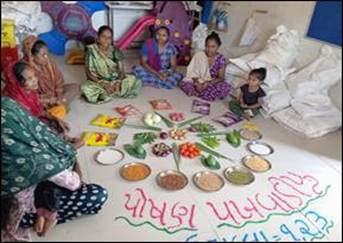
Poshan Vatikas or Nutri-gardens are being set up at Anganwadi Centres, Government schools and Gram Panchayat lands. The initiative promotes diet diversity and the consumption of locally available nutritious food. These gardens provide easy and affordable access to fruits, vegetables, and medicinal plants.
The Ministry of Women and Child Development and the Ministry of Health and Family Welfare have jointly released the Protocol for Management of Malnutrition in Children to manage malnourished children at the community level and reduce associated morbidity and mortality.
Under this protocol, Anganwadi Workers conduct growth monitoring and screening of children at Anganwadi Centres and during community outreach activities. Children identified with severe malnutrition are referred to health facilities and Nutrition Rehabilitation Centres (NRCs) for medical assessment and treatment. Children without medical complications are managed at home using wholesome, locally available nutritious food, along with supportive medical care.
The protocol includes a screening process for children aged 6 months to 6 years who are identified as Severely Acute Malnourished (SAM) or Severely Underweight (SUW). After screening, children with medical complications are referred to Nutrition Rehabilitation Centres (NRCs) or hospital facilities for further treatment and care.
(ii) Early Childhood Care and Education (ECCE) Integration
The National ECCE Policy 2013, framed by Ministry of Women and Child Development, emphasises the “need to ensure Early Childhood Care and Education (ECCE) for every child below six years across the country”.
The National Education Policy (NEP) 2020 sets forth an ambitious new 5+3+3+4 framework beginning with a 5-year Foundational Stage (3 years of preschool / Anganwadi + Classes 1-2), thereby ECCE for children aged 3-6 has been integrated into the foundational stage of 5 years. It emphasises play-based, interactive learning to foster cognitive, social, physical, and socio-emotional development.
The policy seeks to ensure that every child enters primary school with essential school readiness skills. The NEP has been operationalised through the National Curriculum Framework for Foundational Stage, which outlines Aims, Curricular Goals, Competencies and Learning Outcomes, Pedagogy, Assessments and more, for children from 3 to 8 years.
Ministry of Women and Child Development (MWCD) launched the Poshan Bhi Padhai Bhi (PBPB) initiative with the aim to improve the quality of Early Childhood Care and Education (ECCE) through the Anganwadi system by equipping Anganwadi Centres (AWCs) with high-quality infrastructure, play equipment, and well-trained Anganwadi Workers (AWWs). This is in consonance with the recommendations for Early Childhood Care and Education (ECCE) under the National ECCE Policy, 2013 and the National Education Policy 2020.
Capacity building of AWWs has been envisioned as the first step towards improving the quality of ECCE. Under PBPB initiative, 2-tier training module has been adopted wherein Child Development Project Officers (CDPOs), Supervisors and Additional Resource Persons etc. are trained as State Level Master Trainers (SLMTs) with the support of Savitribai Phule National Institute of Women and Child Development (SPNIWCD) and SLMTs, in turn, impart training to AWWs.
As on 31st March 2026, 41,645 SLMTs and 10,58,317 AWWs have been trained in Round-1 in ECCE pedagogy and delivery of nutritional services. Round-2 of the training has been started in November, 2025 for reinforcing Anganwadi workers’ understanding on ECCE and nutrition, innovations in Poshan, new features on Poshan Tracker, feeding practices, and micronutrient deficiencies etc.
In order to improve the quality of ECCE, MoWCD launched in March 2024, Navchetana – a National Framework for Early Childhood Stimulation for children up to 3 years of age, and Aadharshila – National Curriculum for ECCE for children of 3 to 6 years age. Both the frameworks are available in 12 Indian languages viz Assamese, Bengali, English, Gujarati, Hindi, Kannada, Malayalam, Marathi, Odia, Punjabi, Tamil, and Telugu.
Navchetana aims to help children from birth to three years develop holistically, based on the three principles of:
- Serve and return,
- Caregivers three acts: Love, Talk, Play, and
- Positive Guidance
Navchetana provides 140 age and developmentally appropriate stimulating activities, in the form of a 36-month stimulation activity calendar, to be conducted by caregivers at home and Anganwadi workers during home visits for the holistic development of the children. Focus has also been given for the screening, inclusion and referrals of Divyang children.
Aadharshila is driven by the pressing need for a contextual curriculum for children three to six years, that specifically offers Anganwadi Workers a guide grounded in Indian and international ECCE research.
Based on the imperative driven by NEP 2020, it aims to improve the quality of early childhood education transacted at the Anganwadi Centre. NCF-FS defines 5+1 domains of development (physical, socioemotional, cognitive including numeracy, cultural/aesthetic, language and literacy, as well as positive learning habits) which Aadharshila translates into 130+ activities for Anganwadi children, arranged into 4 weeks of initiation, 36 weeks of active learning and 8 weeks of recap and reinforcement.
Each week covers 6 days of activities, with Saturdays retained for free play, ECCE day and parental engagement. Each day covers 3 blocks of activities, spanning 4 hours including lunch and snack.
Aadharshila addresses how children learn in the early years, with a focus on playful joy-based learning, in preparation for primary school. It enables the use of playful classroom activities like conversations, storytelling, DIY and indigenous toys, children’s songs and rhymes, music and movement, arts and crafts, indoor and outdoor games, nature interaction and field trips. It provides for a combination of activities, including in-centre and at-home, indoor and outdoor, child-led and educator-led etc.
Poshan Tracker, IT based platform, is being used for delivery of ECCE at AWCs. Based on Aadharshila, daily learning prompts are delivered to AWWs through Poshan Tracker in the form of over 249 videos, 190 voice notes and 159 unique ECCE activity PDFs for children aged 3–6 years. Based on Navchetana, 14 videos comprising 140 activities of early childhood stimulation for children aged 0–3 years have been developed to support structured home visits by AWWs and caregiver engagement.
Further, a fixed monthly ECCE Day is observed by all Anganwadi Centres in all States. Guidelines for conducting the fixed monthly ECCE days under various themes has been issued, which contains an indicative list of community engagement activities that can be conducted during the 12 monthly ECCE days. One event must be conducted per month, while flexibility remains with the States on topics and themes.
The Ministry of Women and Child Development also allocates Rs. 3000 per Anganwadi Centre per year for Pre-School Education (PSE) kits. This amount is to ensure adequate Teaching-Learning Material at each Anganwadi Centre, supplemented by States’ own spending.
To facilitate the smooth transition of children into formal schooling system in Primary School / Grade 1, as well as to recognise Early Childhood Care and Education which they receive in Anganwadi Centres, a concept of Vidyarambh – Early Childhood Care and Education (ECCE) Certificate has also been introduced in August 2025. All States and UTs have been requested to ensure that this certificate is issued to all eligible children receiving their pre-school education at Anganwadi Centres. As of March 2026, over 22 lakhs Vidyarambh certificates have been issued by States and UTs to children.
The Ministry of Women and Child Development (MoWCD) and the Department of School Education and Literacy (DoSE&L), Ministry of Education, have issued on 3rd September 2025, joint Guidelines for Co-locating Anganwadi Centres within Government Primary Schools. In places where physical co-location is not feasible, AWCs should be mapped with the nearest school. Over 2.9 lakh centres have already integrated into school premises to ensure a seamless educational transition, from early childhood care to formal schooling.
Further, Anganwadi Workers (AWW) undertake home visits to educate the parents/ caregivers on nutrition, health of mother and child and early childhood stimulation activities for ensuring child’s holistic development. During the home visit, AWW also observes whether a child is achieving its developmental milestones or not in order to ensure early detection of any developmental delays. In this context, an IT enabled Home Visit scheduler has been integrated with Poshan Tracker App in April 2026. The new Home Visit Scheduler has the following key features:
- It supports 23 structured home visits, extending coverage to pregnant women and children up to three years (4 during pregnancy, 4 in the first month postpartum, 7 from 2 months to 1 year, 5 from 1–2 years, and 3 from 2–3 years).
- Auto scheduling of Home Visits for pregnant women and children from birth to 3 years.
- Auto selection of video pertaining to nutritional and health advice for pregnant women and early childhood stimulation activities appropriate for the age of the child to be shown to parents and caregivers.
- Auto selection of counselling tips / advice to be given to pregnant women and parents and caregivers of a child regarding pregnancy, nutrition, health indicators to be observed, and early childhood stimulation activities to be conducted.
(iii) Saksham Upgradation
The Saksham Anganwadi initiative is concerned with improving service quality through upgradation of existing Anganwadi Centres. Under this, 2 lakh Anganwadi centres were sanctioned for strengthening with modern amenities such as LED screens, water purifiers, smart learning aids, and Poshan Vatikas (nutri-gardens).
Technology and Governance Transformation
A foundational contribution of POSHAN Abhiyaan to India’s public administration has been the digital transformation of nutrition governance —positioning the programme among the most technologically advanced social sector initiatives in the country.
The Poshan Tracker: A Digital Platform for Nutrition Governance
Launched on 1st March 2021, the Poshan Tracker serves as the primary governance tool for monitoring infrastructure and service delivery. The application has facilitated near real-time data collection for Anganwadi Services, including the opening of Anganwadi Centres, daily attendance of children, ECCE activities, and growth monitoring.
Currently, the system monitors a universe that consists of Pregnant Women, Lactating Mothers, Children up to 6 years of age, and Adolescent Girls. As on March 2026, the mission tracks nearly 14,03,170 Anganwadi Centres and approximately 8,95,29,425 eligible beneficiaries.
For its innovative contribution to public administration, the Ministry of Women and Child Development received the Prime Minister’s Award for Excellence in Public Administration 2024.
Advanced Identity Verification and Transparency
The Ministry has launched ‘Poshan Tracker’ digital application, has enabled the Ministry and States & UTs to review the implementation of the scheme on various parameters including health and nutrition status of the children and to make course corrections.
For last mile tracking of Service Delivery, Facial Recognition System (FRS) has been introduced in Poshan Tracker Application and to ensure that benefit is given only to the intended beneficiary registered in the application. Aadhaar based tracking has enabled proper identification of beneficiaries, prevention of leakages and eliminating ghost entries.
Operational Efficiency: This technological integration has ensured that there are no shortages or delays in the delivery of supplementary nutrition or other related services under the programme.
Accessible Grievance Redressal Cell and Support
Poshan Helpline (14408) operationalised in November 2022 has been made available for registering concerns. Through the help line, a beneficiary can raise a concern about the services offered. The helpline is available in 17 languages. The earlier helpline 14408 was withdrawn, and 1515 became the active number for POSHAN Abhiyaan and Pradhan Mantri Matru Vandana Yojana (PMMVY) grievances/queries with effect from November 2025.
Community Engagement: Nutrition as a Jan Andolan
The defining character of POSHAN Abhiyaan is its positioning of nutrition improvement as a Jan Andolan — a genuine people’s movement rather than a government-administered programme.
The mission recognises that lasting behavioural change around infant feeding practices, dietary diversity, antenatal care, hand hygiene, and institutional health-seeking can only be achieved through active community ownership and ground-level participation. Poshan Maah and Poshan Pakhwada are among the largest nutrition centric community mobilisation campaigns, and are conducted annually in designated months, to reach out to the masses to promote practices that nurture health, wellness and immunity.
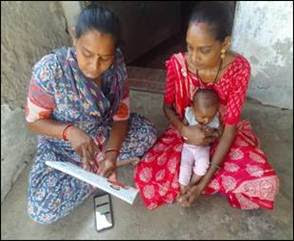
Poshan Pakhwada (April 2026)
Observed annually since 2018, Poshan Pakhwada is a two-week intensive outreach campaign conducted in April to strengthen community mobilisation and reinforce key nutrition behaviours under POSHAN Abhiyaan.
In 2026, the 8th edition of Poshan Pakhwada is being held from 9th to 23rd April. Scientific evidence indicates that more than 85% of brain development occurs by the age of six years, with the most rapid growth taking place during the first 1000 days – a crucial period for optimal brain growth, physical development and holistic well-being.
Recognising the critical importance of care and nutrition for children in the early stage of life, the 8th Poshan Pakhwada seeks to deepen the Jan Andolan by focusing on a scientifically critical and transformative theme “Maximizing Brain Development in the First Six Years of Life” and strengthen awareness among families and communities about practices that support healthy growth and brain development.
It aims to shift the narrative from “nutrition for health” to “nutrition and early childhood stimulation for optimal brain development” through the following Central Theme: Maximizing Brain Development in the First Six Years of Life.
The key focus areas under this year’s theme includes:
- Mother and Child Nutrition
- Early Stimulation for Brain Development
- Play-based Education in Early Years
- Role of Parents & Community in Minimizing Screen Time
- Garnering Community Support for Stronger Anganwadi
The 7th Poshan Pakhwada (8–22 April 2025) focused on four outcome-oriented themes: the first 1,000 days of life, promotion of the Poshan Tracker beneficiary module for self-registration, implementation of community-based management of malnutrition (CMAM) protocols, and healthy lifestyle promotion to address childhood obesity.
A wide range of activities were undertaken across the country, including home visits, growth monitoring drives, community awareness programmes, health camps, nukkad nataks (street plays) and convergence events involving multiple ministries and departments.
Poshan Pakhwada continues to serve as an important platform for grassroots engagement, leveraging the Anganwadi network and community institutions to promote sustained behaviour change and strengthen last-mile delivery of nutrition services.
Rashtriya Poshan Maah
To promote nutrition awareness, Poshan Maah is celebrated every September as a nationwide Jan Andolan. The campaign is implemented across all States and Union Territories through Gram Panchayats, Urban Local Bodies, schools, health facilities and Anganwadi Centres in convergence with partner ministries.
The 8th Rashtriya Poshan Maah was launched by the Prime Minister on 17th September 2025 from Dhar, Madhya Pradesh, along with the Swasth Nari, Sashakt Parivar Abhiyaan. The initiative is jointly implemented by the Ministry of Women and Child Development and the Ministry of Health and Family Welfare.
The 2025 Rashtriya Poshan Maah focused on promoting nutrition literacy and healthy lifestyles. Key themes included maternal nutrition, Infant and Young Child Feeding (IYCF), Early Childhood Care and Education (ECCE) and reduction in sugar and oil consumption to address obesity.
Conclusion
As POSHAN Abhiyaan completes eight years, the mission reflects the growing emphasis on convergence, technology-enabled governance and community participation in addressing nutrition challenges. The programme’s evolution demonstrates the importance of coordinated action across sectors, strengthened service delivery platforms and sustained behavioural change efforts in improving nutrition outcomes.
The transition to Mission Poshan 2.0 underscores a continued focus on improving service quality, expanding early childhood care and strengthening last-mile delivery systems. By integrating nutrition with health, early childhood care, education and community engagement, the mission adopts a comprehensive approach to supporting vulnerable populations.
Nutrition is closely linked to the development ofhuman capital in the country, as improved nutrition contributes to better health, learning outcomes and productivity. As India advances towards the vision of a Viksit Bharat by 2047, continued investments in nutrition, early childhood development and service delivery systems will remain critical for building a healthy, productive and resilient population.

More Stories
Reliance Foundation Presents 25 Electric Buses To TTD.
University Of Canberra – Tournament Brings Together 24 School Teams And More Than 300 Young Cricketers.
Huge Free Health And Legal Counseling Camp Organized In Trilokpuri; Over 70 Women Benefited.