





New Delhi, Delhi, 16th of June, 2026 : India’s community spaces, urban spaces and parks have long brought people together while promoting healthier lifestyles. As urban life becomes increasingly fast-paced, these public spaces are gaining importance as centres of physical and mental well-being. Recognising their potential, the Ministry of Ayush has launched the Yoga Park Portal to transform existing parks across India into community wellness hubs where yoga, meditation, and healthy living become part of everyday life.
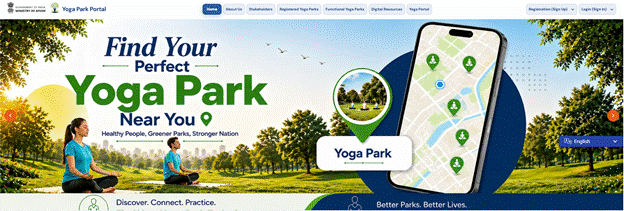
The Yoga Park Portal was launched by Union Minister of State (Independent Charge) for Ayush and Minister of State for Health and Family Welfare, Shri Prataprao Jadhav, during the 25-day countdown event for International Day of Yoga 2026 held at Khajuraho, Madhya Pradesh. Unveiled alongside the relaunched Yoga Sangam Portal, the platform represents one of the Ministry’s major initiatives to deepen the grassroots reach of yoga and create sustainable wellness infrastructure across the country.
At its core, the Yoga Park initiative seeks to reimagine parks not merely as recreational spaces but as community wellness hubs. Through the portal, Panchayati Raj Institutions, Urban Local Bodies, Resident Welfare Associations, non-governmental organisations, corporate entities, and other institutions can participate in developing existing parks into Yoga Parks that encourage regular yoga practice, meditation, preventive healthcare, and community engagement.
Highlighting the significance of the initiative, Shri Prataprao Jadhav has emphasised that Yoga Parks are intended to serve as permanent community assets that promote healthier lifestyles and strengthen India’s preventive healthcare ecosystem. The initiative reflects the Ministry’s broader commitment to integrating yoga into daily life and ensuring that access to wellness becomes available within neighbourhoods and communities across the country.
Unlike conventional infrastructure projects that focus solely on physical development, Yoga Park combines wellness, environmental sustainability, and social participation. The initiative aims to upgrade existing public parks into welcoming spaces equipped for yoga practice, meditation, and community wellness activities. Dedicated yoga platforms, meditation zones, green landscapes, awareness facilities, and open spaces for group sessions can be developed to encourage regular participation by people of all age groups.
A distinctive feature of the initiative is its collaborative implementation model. Local authorities and community organisations are expected to play a leading role in identifying and maintaining suitable parks, while yoga institutions can support awareness programmes and regular yoga sessions. The initiative also encourages participation through Corporate Social Responsibility (CSR), enabling companies to contribute towards the development of wellness infrastructure that directly benefits local communities.
The Ministry has highlighted that CSR-supported Yoga Parks can create a lasting public health legacy by providing accessible spaces for daily yoga practice, health awareness activities, and community wellness programmes. Participating companies may also receive appropriate recognition for their contribution to social well-being, reinforcing the role of the private sector in promoting preventive healthcare and healthy lifestyles.
Beyond infrastructure development, the Yoga Park Portal represents a digital framework for nationwide participation. The platform provides access to guidelines, concept notes, registration mechanisms, and resources required for stakeholders to join the initiative. By bringing together government institutions, local bodies, community organisations, and corporate partners through a single portal, the Ministry aims to create a coordinated national movement centred on wellness and public health.
The initiative also aligns closely with the theme of International Day of Yoga 2026, “Yoga for Healthy Ageing.” As populations around the world face growing concerns related to lifestyle disorders, stress, and age-related health challenges, accessible public wellness spaces can play an important role in encouraging regular physical activity, mindfulness, and social interaction. Yoga Parks are envisioned as inclusive environments where children, youth, working professionals, and senior citizens can all benefit from the practice of yoga in their daily lives.
Importantly, Yoga Park seeks to create an enduring legacy that extends far beyond the annual observance of International Day of Yoga. While mass yoga demonstrations and public events generate awareness, the creation of dedicated wellness spaces offers a permanent community resource that can continue serving citizens throughout the year. In this sense, the initiative represents a shift from event-based participation towards sustained wellness engagement.
Over the past decade, the International Day of Yoga has evolved into one of the world’s largest public wellness movements. The Yoga Park Portal builds on that momentum by translating awareness into infrastructure and participation into long-term community benefit. As more parks across rural and urban India are integrated into the initiative, Yoga Park has the potential to become a lasting symbol of India’s commitment to preventive healthcare, environmental harmony, and holistic well-being.




More Stories
Echoes of Assam : Rodali Bora’s Mission To Share Her Heritage In The UK.
INDIA – Sri Lanka Annual Bilateral Maritime Exercise (SLINEX-26).
Resolved To Elevate India To The No. 1 Position In Global Silk Production: Shri Giriraj Singh, Union Minister Of Textiles.