





New Delhi, Delhi, 16th of January, 2026 : The IndiaAI Mission, MeitY in collaboration with IIT Hyderabad today hosted the Working Group Meeting on Inclusion for Social Empowerment at the IIT Hyderabad campus. The meeting convened senior policymakers, academic leaders, industry experts and researchers to advance national deliberations on inclusive AI development, societal adoption of AI and equitable access to AI-driven opportunities.
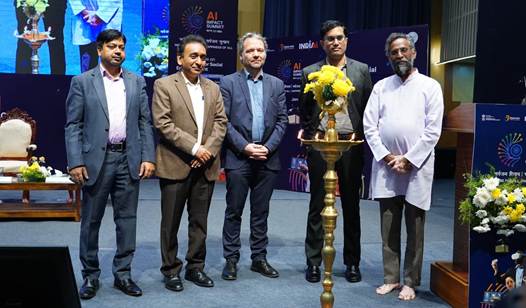
The Meeting is a precursor to the India AI Impact Summit 2026, scheduled to be held in New Delhi from 16–20 February 2026, and is part of the series of Working Group consultations being organised across the country to inform the Summit’s thematic agenda and outcomes.
The inaugural session featured addresses by the Indian chair of the Working Group, Shri Rajesh Aggarwal, Chief Secretary, Government of Maharashtra; Ambassador Thomas Schneider, Director, Federal Office for Communications, Switzerland; Prof. B.S. Murty, Director, IIT Hyderabad; Dr. Nalin Kumar Srivastava, Additional Director, AI & ET Division, MeitY; and Shri Ch. Bharath Reddy, Joint Director (e-Governance), Government of Telangana. The speakers emphasised the importance of embedding inclusion, trust and societal context at the core of India’s AI journey.
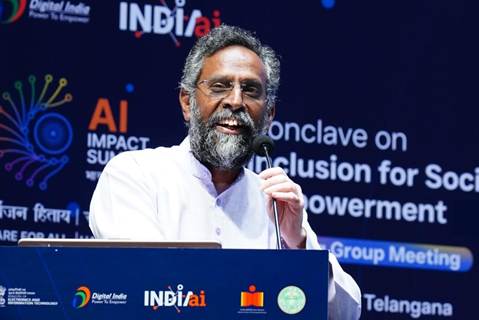
Welcoming the participants, Prof. B.S. Murty, Director, IIT Hyderabad, highlighted, “If India truly aspires to lead in AI, we must take bold steps. AI has to be interdisciplinary, bringing together engineering, materials science, liberal arts, and beyond. From strong fundamentals to real-world applications, our focus must be on improving lives, while also addressing the challenges of responsible and acceptable AI.”
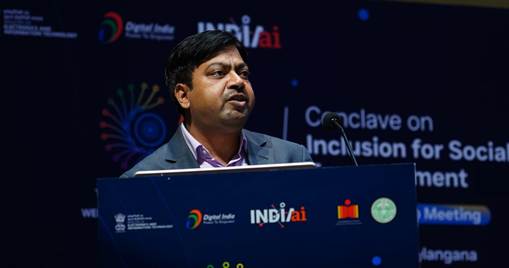
Setting the context for the Working Group, Shri Dr. Nalin Kumar Srivastava, Additional Director, AI & ET Division, MeitY, said, “This gathering brings together ignited minds to address critical issues of inclusion, access, responsibility, and equity in AI. This is not just about technology, it is about social empowerment, with people at the centre. AI is not a technological choice, it is our moral duty.”
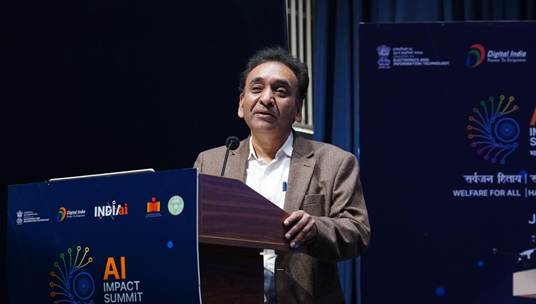
In his plenary address, Shri Rajesh Aggarwal, Chief Secretary, Government of Maharashtra, emphasised, “India’s work on AI is structured around seven verticals, one of which focuses on social empowerment, with active participation from several countries and international organisations. While AI is enabling advances in science, materials, healthcare, and discovery, it must ultimately serve people from very different social and economic backgrounds. India has built strong digital public infrastructure, and the next step is to add an AI layer to these systems. As AI grows, it must work for everyone, address bias in data and language, and ensure that technology does not increase inequalities but helps all sections of society.”
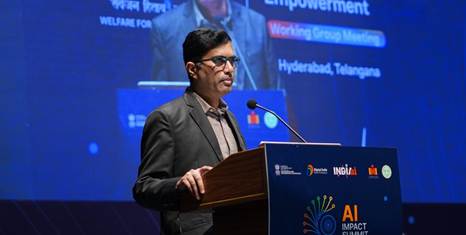
Shri Ch. Bharath Reddy, Joint Director (e-Governance), Government of Telangana, spoke about the Telangana Government’s focus on innovation and said “Our focus has always been on growth, and the adoption of new technologies is central to that objective. I represent the Government of Telangana, and these efforts reflect our commitment to building a strong, future-ready innovation ecosystem. At the upcoming India AI Impact Summit in Delhi, these themes will be taken forward through focused breakout sessions, enabling deeper discussions and collaboration across stakeholders.”
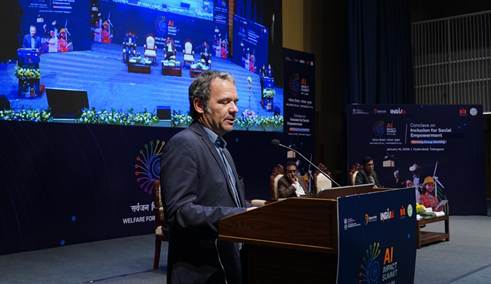
Delivering the high-level keynote address, Ambassador Thomas Schneider, Director, Federal Office for Communications, Switzerland, highlighted, “AI should be used in a sustainable way so that we can keep our planet in a condition that will continue to serve as our home for generations to come. AI should be used for progress, including economic and social development, and the opportunities offered by AI and data must be seized to overcome challenges people face today. This progress must be not just for a few, but for everyone, in a way that respects people’s dignity, fundamental rights, and autonomy, ensuring that no one is left behind. When responsibly designed and deployed, AI can be a powerful force for good, but we must remain vigilant against bias, inequality, and exclusion. Inclusive, multilateral, and multi-stakeholder cooperation is essential to ensure AI serves the common good. In this spirit, the Alliance for advancing inclusion through AI reflects a shared commitment to make AI an opportunity for all, not the privilege of a few.”
The program transitioned into a technical keynote titled “Reimagine Bharat with AI,” by Prof Shailesh Kumar, Chief Data Scientist, Reliance Jio, which examined the role of innovation in scaling national development. This was followed by the first panel discussion on “Promoting Inclusive AI Development,” with participation from Prof. Sumohana Channappayya (IITH); Mr. Romi Shrivastav, Honeywell, Mr. Swarup Shanti Medasani (Mathworks); Mr. Ramia Kannan Babu (Intel) and Prof. Chakravarthy Bhagavati (University of Hyderabad). The expertsexplored how inclusivity can be embedded across the full AI lifecycle, from initial data collection and design to deployment and governance. Drawing on research and industry experience, the panelists discussed practical strategies to mitigate bias, expand access, and fulfill the shared responsibility of building AI systems that advance social and economic inclusion.
The second panel, “Societal Adoption of AI: Opportunities and Challenges,” was kicked off by Shri Rajesh Aggarwal and featured a discussion between industry representatives, researchers, and civil society experts from Avartan Labs, LV Prasad Eye Hospital, 1*Works and Conch DeepTech Venture Studio and the REAN Foundation. This session focused on the transformative opportunities and real-world challenges of AI adoption in critical sectors such as healthcare and public services. Participants explored the themes of trust, accountability, and readiness, drawing on frontline deployment experiences to demonstrate how collaboration between developers and communities can ensure AI delivers meaningful societal benefits.
The event also included startup pitch sessions, student perspectives across education levels, and structured networking discussions, enabling engagement between innovators, researchers and policymakers. The day concluded with a closed-door hybrid meeting of the Inclusion for Social Empowerment Working Group, focused on consolidating insights and recommendations.
The deliberations from the Conclave on Inclusion for Social Empowerment Working Group Meeting at IIT Hyderabad will contribute to national-level discussions at the India AI Impact Summit 2026, reinforcing the Government of India’s commitment to building inclusive, responsible and human-centric AI ecosystems under the IndiaAI Mission, aligned with the vision of Viksit Bharat 2047.
About The Author



More Stories
Adani Gangavaram Port Sets Highest-Ever Monthly Container Throughput Record With 12,637 TEUs.
Prime Minister Welcomes President Of Finland Alexander Stubb To India.
Educators Meet 2026 Successfully Held In Bardhaman, West Bengal.