


Hyderabad, Telangana, 16th of January, 2026 : The Ministry of Tribal Affairs (MoTA), Government of India, hosts the Capacity Building Programme for Tribal Healers on Strengthening Health Outreach in Tribal Areas at Kanha Shanti Vanam, Hyderabad, on 16 January 2026. The programme marks a historic, first-of-its-kind national initiative to formally recognize and engage tribal healers as collaborative partners within India’s public health ecosystem, in alignment with the vision of the Hon’ble Prime Minister to build a Viksit Bharat through inclusive, last-mile, and community-led development.
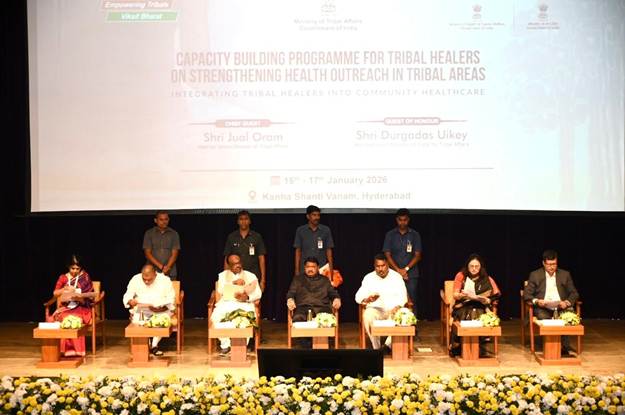
The inaugural plenary session was attended by Shri Jual Oram, Hon’ble Minister of Tribal Affairs; Shri Durgadas Uikey, Hon’ble Minister of State for Tribal Affairs; Shri Adluri Laxman Kumar, Hon’ble Minister, Tribal Welfare Department, Telangana, and Shri Balaram Naik, Hon’ble MP, Mahabubabad, and senior officials of the Government of India; representatives of premier medical and research institutions; state government officials; and approximately 400 tribal healers from across the country.
Addressing the gathering, Shri Manish Thakur, Additional Secretary, Ministry of Tribal Affairs, stated that tribal healers command generations of trust and social legitimacy within their communities. He emphasized that MoTA now envisions tribal healers as collaborative partners across its health programmes, particularly in preventive care, early identification of illness, and timely referral. He highlighted that geographical, cultural, and systemic barriers continue to limit tribal communities’ access to formal healthcare, and that the active engagement of trusted healers can significantly strengthen last-mile service delivery.
Smt. Ranjana Chopra, Secretary, Ministry of Tribal Affairs, underscored the pivotal role of tribal healers in mainstreaming community-based and community-led health solutions. She noted that such approaches are cost-effective, sustainable, and grounded in local realities. Highlighting the continued prevalence of communicable diseases such as malaria, tuberculosis, and leprosy in several tribal districts, she called for a final, targeted push to eliminate these diseases from endemic tribal geographies.
During her interaction with tribal healers from Odisha, Maharashtra, and Rajasthan, the Secretary noted their aspirations for dignity and formal recognition, mechanisms to ensure inter-generational transmission of traditional knowledge, and preservation of rare medicinal plants and herbs. She informed that the Ministry has set an ambitious target to formally recognize and enable one lakh tribal healers as partners in strengthening health services for tribal communities.
Shri Balram Naik, Hon’ble Member of Parliament from Mahabubabad, Telangana, observed that diseases such as tuberculosis remain prevalent in tribal communities due to lifestyle factors, including tobacco consumption. He noted that investments in schools, hospitals, hostels, and social infrastructure have enhanced awareness among historically isolated tribal populations, and emphasized that further investment in roads, education, and healthcare is essential for poverty reduction and accelerated tribal development.
Shri Adluri Laxman Kumar, Hon’ble Minister for Tribal Welfare, Government of Telangana, highlighted the state’s rich tribal diversity, comprising around 33 recognized tribes including the Gonds, Koyas, Chenchus, Kolams, and Konda Reddis, each with distinct cultural traditions and indigenous knowledge systems. He stressed the need to strengthen Primary Health Centres, Community Health Centres, and Sub-Health Centres in tribal-dominated areas, and called for stronger articulation of state-level tribal development priorities at the national level.
Shri Durgadas Uikey, Hon’ble Minister of State for Tribal Affairs, stated that Scheduled Tribes are integral to the vision of Viksit Bharat. While communicable and non-communicable diseases continue to affect tribal areas, he noted that tribal communities have preserved rich generational knowledge of traditional medicine and nature-based living. Emphasizing the rise of lifestyle diseases such as hypertension, diabetes, and cancer, he called for an integrated approach combining ancient wisdom, modern science, technology, and welfare schemes. He further observed that the sustainable lifestyles of tribal communities offer valuable lessons in resilience, immunity, and responsible consumption for wider society.
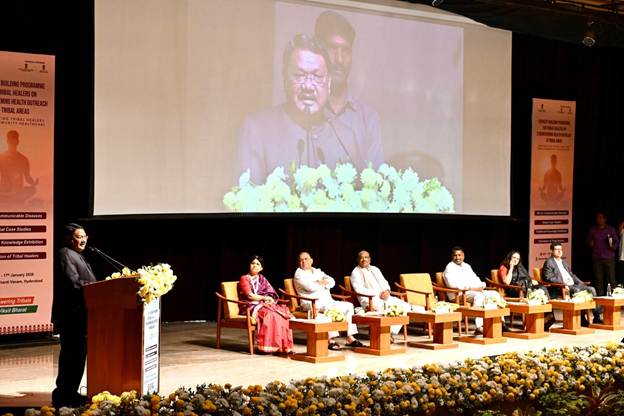
In his address, Shri Jual Oram, Hon’ble Minister of Tribal Affairs, remarked that colonial rule could not eradicate India’s indigenous medicinal traditions passed down through generations. Sharing personal experiences, he highlighted the effectiveness of indigenous healing practices. He noted that technical sessions led by experts from AIIMS Delhi, AIIMS Jodhpur, ICMR Bhubaneswar, WHO, the Ministry of Health & Family Welfare, the Ministry of AYUSH, and the All India Institute of Ayurveda would significantly enhance the technical knowledge and service delivery capacities of tribal healers. The Minister encouraged states to explore market linkages and partnerships with FMCG and pharmaceutical companies to generate livelihood opportunities around traditional medicine. He reiterated MoTA’s sustained focus on addressing tribal health disparities through initiatives such as the National Sickle Cell Anaemia Elimination Mission, PM-JANMAN, and Dharti Aaba Janjatiya Gram Utkarsh Abhiyan (DAJGUA).
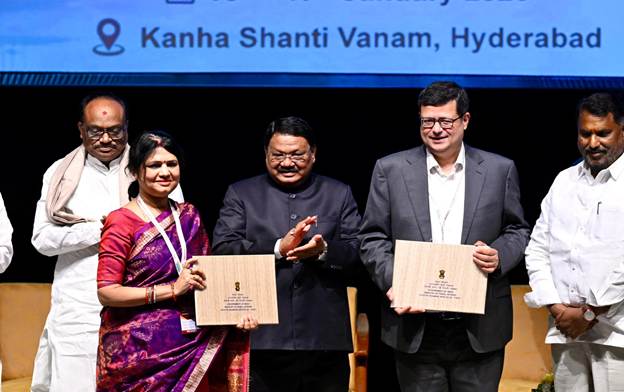
A major highlight of the plenary session was the signing of a Memorandum of Understanding (MoU) between the Ministry of Tribal Affairs and ICMR–Regional Medical Research Centre, Bhubaneswar, for the establishment of India’s first National Tribal Health Observatory – the Bharat Tribal Health Observatory (B-THO) under Project DRISTI. This collaboration will institutionalize tribe-disaggregated health surveillance, implementation research, and research-driven disease elimination initiatives in tribal districts with focus on malaria, leprosy, and Tuberculosis, addressing a long-standing national gap in tribal-specific health data, analytics, and evidence-based planning.
The programme also featured a reflective session on Spiritual Wellness and the Importance of Yoga and Meditation in Daily Life, delivered by Pujya Daaji, Global Guide of Heartfulness and President, Shri Ram Chandra Mission. Drawing parallels with the traditional medicine man paradigm, he cautioned that when healers pass away without structured knowledge transmission, generations of indigenous wisdom risk being lost – particularly as younger tribal members disengage from traditional learning systems. He emphasized that tribal development must extend beyond health services to include livelihood security, environmental sustainability, and overall well-being. Citing examples of CSR-supported clean cooking solutions such as LPG to reduce long-term respiratory harm, and community-centric employment models at the Heartfulness retreat in Uttarakhand, he underscored that the objective should not be to “modernize” tribal healers, but to recognize, protect, and celebrate their indigenous lifestyles and knowledge systems while ensuring respectful inter-generational transmission.
Session-wise Highlights
The opening technical session on the Status of Tribal Health in India, led by Dr. Jaya Singh Kshatri, Scientist-D, ICMR, presented a comprehensive overview of the disproportionate disease burden among tribal communities, including communicable diseases, malnutrition, maternal and child health challenges, and the emerging burden of non-communicable diseases. The session highlighted the impact of remoteness, workforce shortages, and delayed care-seeking, reinforcing the case for empowering trusted community actors.
Building on this, the session on Tribal Health Research and the Tribal Health Observatory in Odisha, also presented by Dr. Kshatri, showcased the Odisha Tribal Family Health Survey and the Tribal Health Observatory as pioneering initiatives in tribe-disaggregated data generation. Findings revealed high prevalence of anaemia and undernutrition, low awareness and control of chronic conditions, and significant gender disparities, demonstrating how locally generated evidence can inform responsive policies.
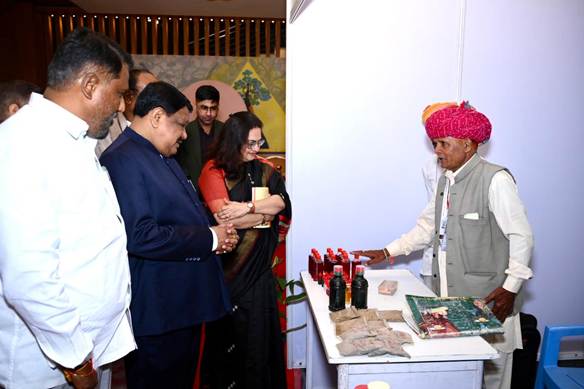
The session on Orientation of Tribal Healers to Public Health Systems, led by Mr. Kannan P., Consultant, NHSRC, Ministry of Health & Family Welfare, outlined the continuum of care from Sub-Centres to District Hospitals and positioned tribal healers as critical connectors to bridge trust, navigation, and referral gaps.
A global perspective was provided in the session on Global Case Studies in Strengthening Health Services Outreach through Tribal Healers, presented by Dr. Dilip Singh Mairembam, National Professional Officer, WHO. International experiences highlighted the importance of clear role definition, cultural safety, and functional referral pathways, reinforcing the effectiveness of engaging healers as community mobilisers and referral agents.
The session on Tribal Healers as Partners in Primary Health Care, presented by Dr. Pradeep Dwivedi, Additional Professor, AIIMS Jodhpur, shared evidence from large-scale mapping, documentation, and training initiatives, demonstrating that structured capacity building is both feasible and socially accepted.
Disease-specific challenges were addressed in the session on Indian Case Studies on Engaging Tribal Healers with Focus on Sickle Cell Disease, led by Dr. Sumit Malhotra, Professor, AIIMS Delhi. The session highlighted the high prevalence of sickle cell disease in tribal populations and the national goal of elimination by 2047, emphasizing the role of tribal healers in early screening, counselling, myth correction, and timely referral.
The final technical session, Role of Tribal Healers in Promoting Preventive Health Practices, presented by Dr. Pukhrambam Ibotom Singh, Deputy Director, Directorate of AYUSH, Government of Manipur, provided practical guidance on preventive health, hygiene, nutrition, ethics, and patient safety, ensuring responsible, referral-oriented healer engagement aligned with public health systems.
The programme represents a paradigm shift in tribal and indigenous development, positioning tribal healers as community-level health leaders while anchoring tribal health action in scientific evidence, institutional partnerships, and culturally rooted approaches. It reinforces the Government of India’s commitment to inclusive, evidence-based, and sustainable tribal development.
About The Author


More Stories
Adani Gangavaram Port Sets Highest-Ever Monthly Container Throughput Record With 12,637 TEUs.
Prime Minister Welcomes President Of Finland Alexander Stubb To India.
Educators Meet 2026 Successfully Held In Bardhaman, West Bengal.