


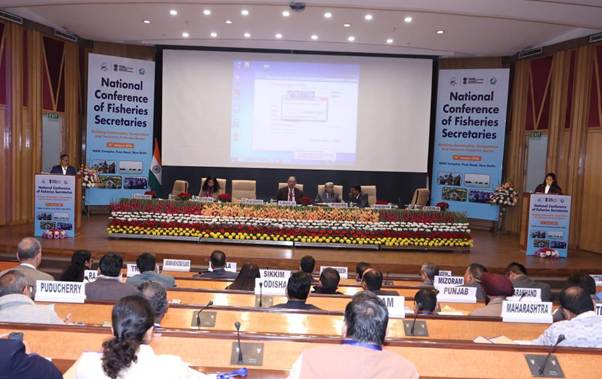
New Delhi, Delhi, 16th of January, 2026 : The Department of Fisheries (DoF), Ministry of Fisheries, Animal Husbandry & Dairying, convened the National Fisheries Secretaries Conference under the Chairmanship of Dr. Abhilaksh Likhi, Union Secretary, Department of Fisheries, to review the implementation of the Pradhan Mantri Matsya Sampada Yojana (PMMSY), Fisheries and Aquaculture Infrastructure Development Fund (FIDF), and Pradhan Mantri Matsya Kisan Samridhi Sah‑Yojana (PM‑MKSSY), alongside updates on the Marine Fisheries Census 2025, value‑added seafood exports, and key deliverables across schemes. The conference was held at the AP Shinde Symposium Hall, NASC Complex, Pusa Road, New Delhi.
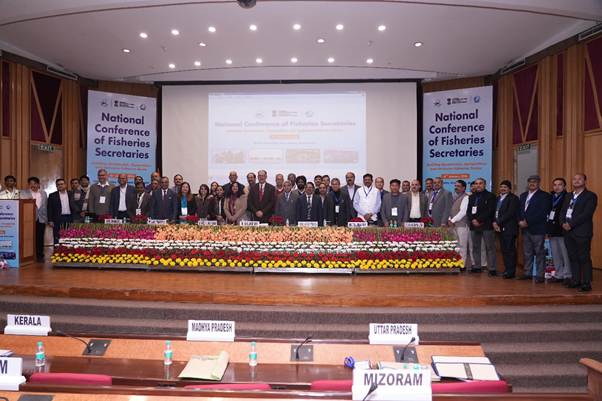
The Conference saw participation from Senior officials of 25 States and Union Territories, along with representatives from ICAR institutes, Small Farmers Agribusiness Consortium (SFAC), National Cooperative Development Corporation (NCDC), National Agricultural Cooperative Marketing Federation of India Ltd. (NAFED), Marine Products Export Development Authority (MPEDA) and other sectoral stakeholders.
Dr. Abhilaksh Likhi, Union Secretary, Department of Fisheries, highlighted the critical issue of fund utilisation and urged States/UTs to prioritise timely and efficient disbursal of funds to ensure smooth progression of approved activities. He emphasised the need for a time‑bound approach toward the development of Integrated Aquaparks, seaweed farming, Climate‑Resilient Coastal Fishermen Villages (CRCFVs), artificial reefs, and cluster development.
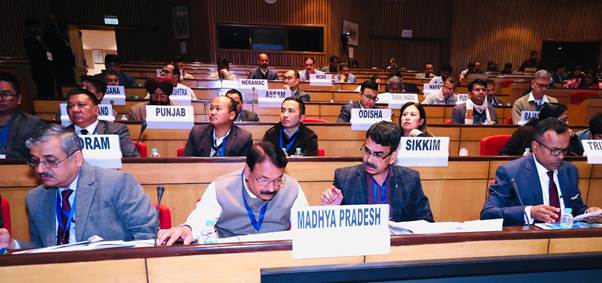
Dr. Likhi called for a concerted push on digitalisation, urging States/UTs to increase the number of registrations on the National Fisheries Digital Portal. He highlighted existing gaps in aquaculture insurance coverage and encouraged States/UTs to promote wider uptake to safeguard fisher livelihoods. He further advised States/UTs to closely track Fisheries and Aquaculture components under the PM Dhan Dhanya Yojana to ensure the benefits of the scheme are delivered effectively at the grassroots level.
Shri Sagar Mehra, Joint Secretary (Inland), DoF, provided an overview of inland fisheries and reviewed progress under PMMSY. He noted that reservoir fisheries and inland clusters remain underdeveloped despite policy notifications. He stressed the need for diversification beyond Indian Major Carps by promoting market‑linked, high‑value species and strengthening export preparedness among inland States.
Ms. Neetu Kumari Prasad, Joint Secretary (Marine), DoF, made a detailed presentation on issues concerning coastal States/UTs. She underscored the urgent need to operationalise the SOP for Mariculture Development (2025) and called for the notification of State mariculture policies with clear seawater leasing norms, biosecurity protocols, and streamlined approvals. She highlighted that despite India’s long coastline, only a fraction of brackishwater resources is currently utilised, and urged diversification into finfish, shellfish, IMTA, seaweed, and open‑sea cage farming. She also emphasised the adoption of climate‑friendly technologies such as solar drying and green fuels to enhance product quality and reduce post‑harvest losses.
Shri Dodda Venkata Swamy, Chairman, MPEDA, delivered a presentation on Opportunities in Value‑Added Seafood Exports, highlighting the need for enhanced skill development, fish‑waste utilisation, and greater emphasis on sustainability, biosecurity, and traceability to strengthen India’s position in global markets.
Dr. J.K. Jena, Deputy Director General, ICAR, outlined ICAR’s expectations from States/UTs, emphasising the adoption of uniform technology for catch‑data collection, robust stock‑assessment systems, adherence to minimum legal size norms, and the establishment of Multiplier Units for wider dissemination of technologies and best practices.
Dr. Bijay Kumar Behra, Chief Executive, NFDB, set the strategic context for the deliberations, noting the need to assess the scale of public investment, identify bottlenecks in project grounding and value‑chain integration, and develop a time‑bound action plan. Shri Subhash Chandra, Controller of Accounts, presented on the just‑in‑time release of funds under Centrally Sponsored and Central Sector schemes, including PMMSY.
Dr. Grinson George, Director, ICAR‑CMFRI, shared updates on the Marine Fisheries Census 2025, including portal synchronisation, finalisation of template summary reports, integration of FSI data for UTs, and the process of converting raw data into the National Marine Fisheries Database.
Industry presentations highlighted best practices and innovations. Shri Arjun Gadre (Gadre Marine Export) shared the success story of surimi products and outlined evolving domestic and global demand for value‑added seafood. He urged States to implement measures that ensure raw‑material integrity and processing excellence, which are essential for international certifications.
The States and Union Territories presented their progress and implementation status, shared operational challenges, reviewed fund‑related issues under the TSA‑hybrid model, and outlined their priorities for the coming period. Several States and UTs sought guidance from NFDB to achieve their physical and financial targets, and a majority committed to conference their expenditure milestones by March 2026. Tamil Nadu informed that work on the Seaweed Park is progressing well, with Hub‑1 nearing completion, while Puducherry highlighted its ongoing initiatives and requested approval for deep‑sea fishing vessels for women groups. Odisha reported that the non‑finalisation of State cooperative guidelines has hindered access to central scheme benefits and requested support in aligning with the central framework. Uttarakhand shared progress on its proposed MoU with ITBP for supplying fresh rainbow trout, a model encouraged for replication by other States. Himachal Pradesh requested allotment of an Aquapark with development of Kullu as a trout cluster.
During the review, Maharashtra was advised to discontinue the lottery system for deep‑sea fishing vessel allotment to enable wider access for cooperatives. Kerala was directed to initiate seaweed farming, while States were instructed to report scheme progress in DISHA conferences. Tamil Nadu requested the establishment of an NFDB regional office in Chennai, and Puducherry was directed to expedite the Pilot C6 Biofuel Energy Project. Madhya Pradesh was instructed to fast‑track work on Aquaparks, Jharkhand to accelerate progress on Matsya Sewa Kendras, DAJGUA, pearl clusters, and reservoir‑based activities, and Chhattisgarh to strengthen its Tilapia cluster. Rajasthan was advised to fully utilise SC/ST and DAJGUA funds, and Haryana to strengthen its Aquapark and shrimp cluster. The need to operationalise cooperative guidelines in Odisha and to strengthen cluster‑based development, reservoir fisheries, and digital integration across States was also underscored.
The Conference served as a key step in aligning national and State‑level efforts, strengthening collaboration, enhancing institutional capacity, and ensuring effective, time‑bound implementation of fisheries sector programmes to advance India’s Blue Economy vision.
About The Author



More Stories
Vice-President Addresses The 8th Convocation Of Nagaland University At Lumami.
Team Of Charak : Fair Of Faith Visits Kolkata Ahead Of Nationwide Release On March 6.
Prime Minister Narendra Modi Addresses Post Budget Webinar On Agriculture And Rural Transformation.