



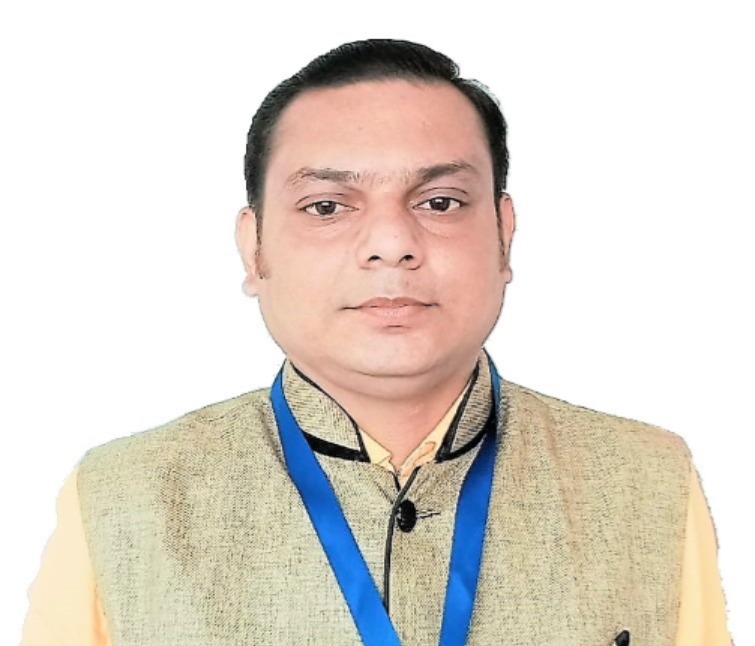
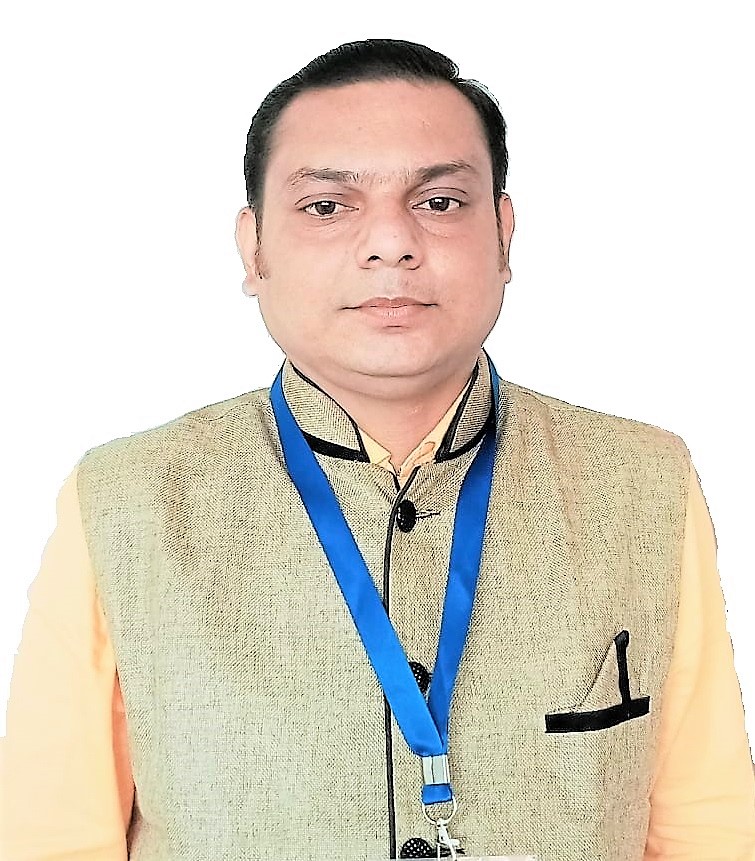
Agartala, Tripura, 27th of February, 2026 : Only 7.97 percent of Madhyamik candidate finally opt science after Higher Secondary and during school passout as an outcome of 50 yr’s TBSE. The facts revealed as an major findings of research work for IGNOU done by Tripura Teacher Anjan Banik, which research work has been accreditated by US Govt, through its Internet Archive Org. Anjan Banik, the in service Assistant Science Teacher is the pride of Tripura and working deeply but silently slowly for last 25 years in favour of science and education of state and has been awarded with the prestigious National Award for Science and Technology Communication, the highest civilian national award due to its monetary prize value also, conferred by the National Council for Science and Technology Communication (NCSTC) under Union Ministry of Science and Technology Govt of India, which has been handed over by Union Minister for PMO and Science and Technology Dr Jitendra Singh in presence of Union Secretary of Ministry of Science and Technology Dr S Chandrashekhar, Out going Principal Scientific Advisor to Prime Minister & Govt of India Prof Dr K Vijayaraghavan, Principal Scientific Advisor to Prime Minister & Govt of India Prof Dr A K Sood, Head Scientist of NCSTC Dr Manoranjan Mohanty and Director of Vigyan Prasar Dr Nakul Parashar at the Dias of Vigyan Bhawan New Delhi on National Science Day 2023. Anjan Banik being the only National Awardee Science Teacher has been selected as National Mentor under National Mission for Mentoring of NCTE under Ministry of education Govt of India and also very recently invited being only National Awardee Science Teacher to the Biggest Ai Global South conference India AI Impact Summit 2026 at Bharat Mandapam Newdelhi too. The Internet Archive, a non-profit congressionally designated depository for U.S. Government documents, is building a digital library of Internet sites and other cultural artifacts in digital form. It began in 1996 by archiving the Internet itself. Today it have 30 years of web history accessible through the Wayback Machine and it work with 1,400+ library and other partners through its Archive-It program, where the archive contains:
1 trillion web pages,
56 million books and texts,
13 million audio recordings (including 280,000 live concerts),
15 million videos (including 3.3 million Television News programs),
5.3 million images,
1.3 million software programs. It began a program to digitize books in 2005 and today it scan 3,700 books per day in 22 locations around the world. The Internet Archive is a world wide member of:
American Library Association (ALA),
Association for Recorded Sound Collections (ARSC),
Biodiversity Heritage Library (BHL),
Boston Library Consortium (BLC),
Califa,
Council on Library and Information Resources (CLIR),
Coalition for Networked Information (CNI),
Digital Library Federation (DLF),
Digital Preservation Coalition (DPC),
Digital Public Library of America (DPLA),
Federal Depository Library Program,
International Federation of Library Associations and Institutions (IFLA),
International Internet Preservation Consortium (IIPC),
Music Library Association,
National Digital Stewardship Alliance (NDSA),
ReShare. The Research work of National Awardee Tripura Science Teacher Anjan Banik has been published at this international digital library platform with recognition on 29 Dec 2024 after the publication date of research work for IGNOU on 01 March 2020 at the digital page of https://archive.org/details/dissertation-thesis-of-anjan-banik-agartala-for-maedu-ignou . The research work is the detailed overview of the secondary and higher secondary level batch wise result for last 45 years of TBSE focusing the decade of 2010s, where prilim analysis revealed the academic journey of the students in HS exam and thereafter who appeared in secondary exams in the different year during the decade. Acknowledging the results of TBSE, the research work revealed, “On completion of the school education after HS, only 7.97 percent by mean score of students achieves success with Science Education, which is increasing through its trend (2017/2019 – 8.01) with an extreme higher level of variation too. But the scenario is not reflecting the targeted plan and policies described, designed and focused in the NCF 2005 and NEP also.” “In Science Education, students are succeeding by mean score only 7.97 percent from the batches i.e. from Madhyamik enrolment. But the enrolment of the students, engaging themselves to the school level Science education, with a dream & greater hope, are mean score of 9.43 percent of Madhyamik enrolment. Present Research also reveals that engaging to the Science education after Madhyamik on behalf of every batch i.e. each and every Madhyamik enrolment gradually decreasing year by year and the fact also focused that the interest of studying Science in HS level is drastically reducing as the variation of enrolment mean is remarkable such as in 2014/2016 batch – 10.09, 2015/17 – 9.44, 2016/2018 – 9.21 and 2017/2019 – 9.01. More, the trend also arising question on the motive of Scientific Nation Building of NCF 2005, even after adaptation of newer Educational strategies following NCERT and CBSE for the Secondary and Higher Secondary Education by the Tripura Board of Secondary Education (TBSE) in Tripura. Students enrolling themselves to Science Education in HS level are facing problems and other educational barriers to be succeed, as by mean score only 12.99 percent of enrolled students are successfully completing the School Education in Science Education and achieving success in school Science Education. The ratio of different batch is also depicting extreme variation in terms of both positive (13.38 & 13.31) and negative (12.78 & 12.49) scores that sharply confirms the uncertainty of making decision in selection of Stream after Madhyamik.
The Mean Score of Pass i.e. Achievement rate in Science education in HS level is 84.62 and the trend of achievement is gradually increasing with positive variations, batch by batch and year by year (i.e. 81.41> 83.77> 84.31> 88.98), hopefully due to adaptation of suggestive recommendations of CBSE and NCERT by the Tripura Board of Secondary Education (TBSE) in Tripura, whereas the pass or achievement ratio of HS overall remain static and closer most to its mean score of 78.02. The Pass ratio and achievement in Madhyamik of different batch also confirms same features with its mean score of 65.13. ” The research revealed the facts of Arts or Humanities Studies also. It Says, “The Mean Score of 49.69 percent students of each batch after secondary stage accepting the stream Humanities Education and out of that mean score 38.18 has been achieving in HS level by studying Humanities Education, where the mean score of both the parameters are comparatively equal standard to its to batch wise scores. The score of Humanities Education achievement is the prime contributor to the total result achievement at HS examination and on this parameter such score is increasing continuously – gradually with the positive variation as exposed as 59.45> 61.12> 63.33> 64.80 compare to the Mean Score of 62.17.
More similarly the batch wise achievement in Humanities Education in HS level compare to the enrollment is also increasing continuously – gradually with the positive variation as stated as 74.04> 76.21> 78.05> 79.05 and its Mean Score of 76.84. The batch wise achievement in Humanities Education against each batch i.e. Madhyamik enrolment is almost static with Mean score of 38.18 and batch wise nearest scores. The achievement i.e. Pass rate in HS level in Humanities Education is extreme nearest and similar to the total achievement i.e. total Pass rate in HS with respective mean score of 76.87 & 78.02. The achievement i.e. Pass rate in HS level in Humanities Education is continuously – gradually increasing batch by batch & year by year as found score respectively 74.04> 76.21> 78.17> 79.05 and with a higher Mean score of 76.87.” In commerce stream, Research surprisingly found, “The achievement i.e. the pass rate in Commerce stream has been increasing with extreme variation (78.13) to the achievement mean score of 72.60 percent and 576 nos candidates due to newer syllabus. Other batch achievements are also comparatively relative to the mean score. The achievement i.e. the pass rate (72.60) in Commerce stream is remarkably closer to the pass or achievement rate (78.02) of HS level. The 1st Division achievement at HS level or at the school leaving or School education completion level of concern batch i.e. Madhyamik enrolment has been raised by 2017/2019 batch scores 13.33, with an extreme variation to the concern mean score of 6.36 only. It happens hopefully due to newer strategies of educational management of the Tripura Board of Secondary Education (TBSE) in Tripura. The Enrolment in Commerce stream at the HS level is too fewer compare to the concern batch starts its journey from Madhyamik Enrolment by the mean score of 2.31. So, comparison of HS Commerce Enrolment (Mean Score 2.31) and HS Commerce Pass ratio (Mean Score 1.66) is specifically half in ratio. The statistics revealed students interested to the Commerce Stream is lesser and continuously decreasing, even silently too as Enrolment to the Stream Commerce compare to Madhyamik Enrolment i.e. concern batch has been squeezed drastically in 2017/2019 batch to 1.84 only and hence for achievement of this 2017/2019 batch marked praiseworthy raised success rate of 78.13 percent of pass rate. The pass rate i.e. achievement rate of Commerce stream in HS level is 1.66 percent by mean score of Madhyamik Enrolment i.e. of concern batch. Variation in this regard to other batches are also not remarkable being to its close similarities.” In the Research work of National awardee Tripura Science Teacher Found: “Batches, undergoing to the sequence wise examinations of Madhyamik (Secondary) and thereafter the Higher Secondary towards completion of the school education and getting pass out from the basic school education, are consists of the mean score of 32963 candidates and gradually increasing year by year. The Success rate (PASS) of each batch in Madhyamik Examination is 65.13 percent and 21440 candidates by mean score, though after 2014 onwards the success rate (PASS) is raised even over the mean score hopefully due to newer approach of Assessment and Academic curriculum based educational strategies following the educational managements and guidance of NCERT and as a part of introduction of parallel policies to the CBSE. The HS result and the candidate PASS from each batch revealed that its or school education completing students are only 50 percent of the total batch and by mean score the succeed candidate volume is 15705 only. More the rate of pass in HS level by mean score is 78.02 percent and year wise this rate remain same or utmost unchanged. The Success rate (PASS) of each batch in HS Examination is similar and at same level. In Science, Humanities (Arts) and Commerce stream respectively the mean score is 84.62 (2767.75 nos), 76.87 (13241 nos) and 72.60 (576 nos) percent.
The stream wise, in HS Examination, no remarkable success raises or increase has been recognized unlike Madhyamik Examination.” The interpretation of the results prompted the research to draw the important conclusions and it revealed, “Enrolment to the Science Stream after Madhyamik and the interest of studying Science in HS level is gradually decreasing year by year and batch by batch even drastically reducing too, due to uncertainty of making decision in selection of Stream after Madhyamik. More The achievement in terms of scoring 1st Division at HS level or at the school leaving or School education completion level of concern batches i.e. of Madhyamik enrolment has been raised by 2017/2019 batch and scores 13.33 percent, with an extreme variation to the concern mean score of 6.36 only hopefully due to adaptation and implementation of newer strategies of educational management by the Tripura Board of Secondary Education (TBSE) in Tripura.” The research depicts the final outcome of batch wise nurturing of students by the TBSE and reveals, On completion of School Education, the education system (Primary -5+Upper Primary -3+Secondary -2+Higher Secondary -2) sharing the society of each batch consists of 80% students from Humanity Education Back ground, only 17% from Science and only 3% from Commerce Background.” National Awardee Teacher Anjan Banik also suggested few educational implications for the betterment of the educational eco system of State Tripura here in his research work according to his experience of attending more then 25 National level educational seminars organized by NCERT & its five RIEs and Vigyan Prasar, DST, CSIR institutes.
About The Author



More Stories
Chief Minister Of Tripura Dr. Manik Saha Launches State Innovation Mission With Support From NITI Aayog.
Northeast Holds Potential To Develop As Southeast Asia Trade Corridor, Says Union Minister Dr Jitendra Singh.
People Trust BJP For Work, Development In Tripura: Chief Minister Of Tripura Dr. Manik Saha.