

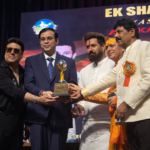



New Delhi, Delhi, 17th of March 2026 : Celebrating India’s Tribal Artistic Heritage
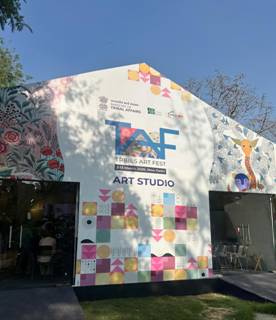
The historic Travancore Palace in New Delhi came alive with colour, rhythm and stories of India’s tribal heritage during the Tribes Art Fest (TAF) 2026. Organised from 2–13 March 2026, the fest brought together over 75 tribal artists and nearly 1,000 artworks representing more than 30 distinct tribal art forms from across the country.
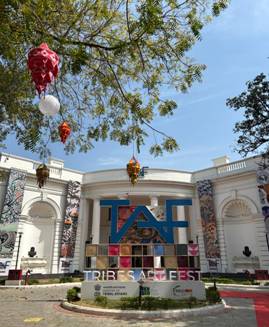
Organised by the Ministry of Tribal Affairs in partnership with FICCI and the National Gallery of Modern Art, the festival reflected a broader government commitment to tribal empowerment. Initiatives such as PM JANMAN for Particularly Vulnerable Tribal Groups, DAJGUA for benefit saturation, the expansion of Eklavya Model Residential Schools, and strengthened market linkages through TRIFED formed the policy backbone behind TAF.
The Tribes Art Fest moved beyond symbolic celebration to build structured market ecosystems. It connected artists directly with collectors, galleries, corporates, design institutions and citizens. This ensured fair value for their work, transforming cultural heritage into sustainable livelihoods.
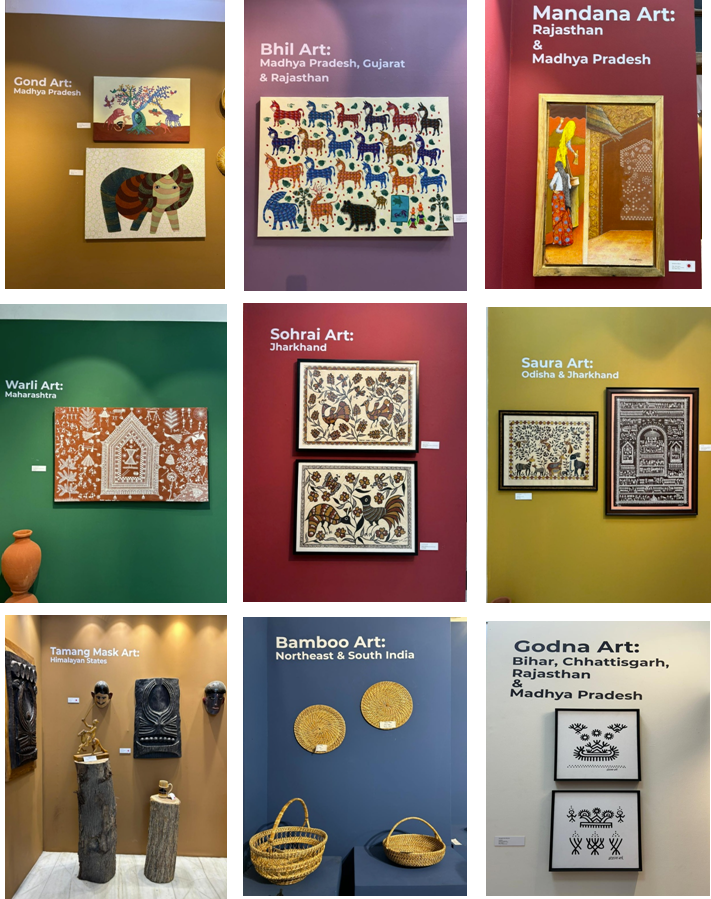
The exhibition presented a vibrant spectrum of tribal artistic traditions from across India. It included Warli from Maharashtra, Gond from Madhya Pradesh, Bhil from Madhya Pradesh, Rajasthan and Gujarat, Dokra metal craft from West Bengal, Chhattisgarh and Odisha, Sohrai from Jharkhand, Koya art from Telangana and Andhra Pradesh, Kurumba art from Tamil Nadu, Saura painting from Odisha, Bodo art from Assam and the North-East, and Oraon art from Jharkhand and Chhattisgarh. The festival also featured Mandana from Rajasthan and Madhya Pradesh, Godna from Bihar, Madhya Pradesh and Chhattisgarh, bamboo crafts from the North-East, and several other indigenous traditions. Together, it reflected India’s remarkable regional diversity and a shared civilisational continuity rooted in nature, ritual and collective memory.
Women as Custodians of Cultural Memory
Across many tribal communities in India, women have long played a central role in sustaining visual traditions. From decorating the mud walls of homes during festivals to narrating stories of nature, harvests and rituals through art, women have been custodians of cultural memory and creativity.
At the Tribes Art Fest 2026, this legacy found renewed expression through the works of several women artists who brought these traditions to national audiences. Their paintings not only preserve ancestral knowledge but also reinterpret it for contemporary platforms.
Art Rooted in Nature
For Sumitra Ahake, 38, a Warli artist from Amravati, Maharashtra, art is not merely a form of expression but a reflection of the deep spiritual relationship between tribal communities and nature. Practising Warli painting for nearly fourteen years, she uses simple geometric forms and rhythmic patterns to depict scenes of farming, harvesting, dancing and community gatherings.
“In our community, nature itself is like a deity. Before beginning activities like harvesting, we first offer prayers and express gratitude to the earth and the forest.”
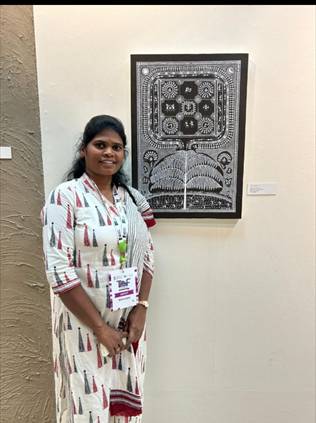
Many of these rituals are reflected in Warli paintings, which often portray scenes of nature worship, community gatherings, and festive dances celebrating the harmony between humans and their environment. After a successful harvest, the community offers the first produce to local deities and celebrates together with music and dance — traditions that frequently find their way onto the canvas.
A graduate by education, Sumitra balances her artistic practice with teaching children, introducing them to their cultural heritage through art, music and storytelling. Through exhibitions, art fairs and online platforms, she reaches wider audiences beyond her village, yet her purpose remains firmly rooted in community and cultural continuity.
Generations of Gond Heritage
“I feel very happy that through my paintings I can help protect and carry forward the Gond Pardhan tradition. Each painting reflects the cultural identity of my people.”
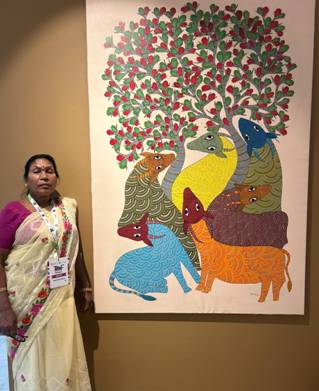
Nankushiya Shyam, 55, a practitioner of Gond painting, carries with her nearly four decades of artistic experience. She began painting at the age of 18, learning the craft within her family and gradually developing her own distinctive style over the years.
Gond paintings are known for their vibrant colours and intricate patterns that bring animals, forests and mythological narratives to life. For Nankushiya, painting is both a personal passion and a cultural responsibility.
Through platforms like the Tribes Art Fest, she said, artists from remote regions gain opportunities to showcase their heritage to wider audiences while preserving the cultural identity of their communities. For Nankushiya Shyam, the purpose of her work remains clear — to ensure that the Gond artistic tradition continues to flourish and reach new generations.
A Young Voice for Environment and Ecology
“For tribal communities, nature itself is like a form of worship. If we respect and protect nature, it will continue to sustain us and keep our lives healthy and balanced.”
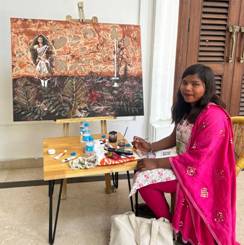
At just 26 years old, Sudha Kumari from Harda district of Jharkhand represents a younger generation of tribal artists using art as a medium of environmental awareness. Her contemporary paintings draw inspiration from the tribal philosophy of “jal, jameen, jungle” — water, land and forests — highlighting the importance of protecting natural resources.
Today she works across multiple mediums including painting, murals and crafts, while continuing to explore themes rooted in tribal life and environmental consciousness.
Participating in the Tribes Art Fest for the first time, she said, was an inspiring experience. Seeing artists from across India presenting their distinct traditions on a single national platform reinforced her belief that tribal art has a vital place in India’s creative future.
A Canvas of India’s Tribal Diversity
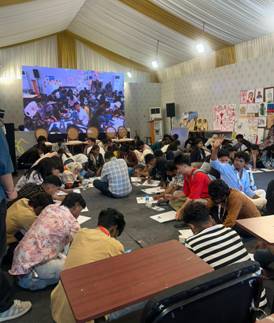
The Tribes Art Fest went well beyond a conventional exhibition. The festival featured contemporary expressions and collaborative works between tribal and contemporary artists, with strong participation from the North-East.
The 12-day programme included thematic panel discussions on Tribal Art Revival and Sustainable Futures, Tribal Art in Contemporary Spaces, and Livelihoods and Market Linkages. It brought artists, curators, institutions and policymakers into structured dialogues. Participatory workshops, storytelling sessions and live demonstrations allowed visitors to engage directly with living traditions rather than observing them from a distance.
Inclusive workshops designed for persons with special needs further broadened community participation. In addition, daily cultural performances featuring tribal music and dance animated the festival grounds each evening.
Over 100 tribal art students from across India received curated walkthroughs and mentorship sessions with senior artists, linking heritage to the next generation of practitioners.
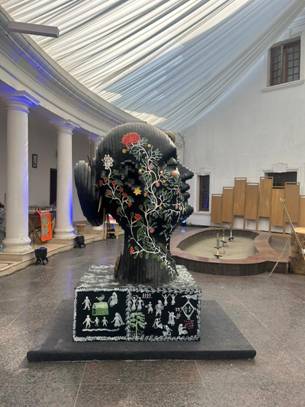
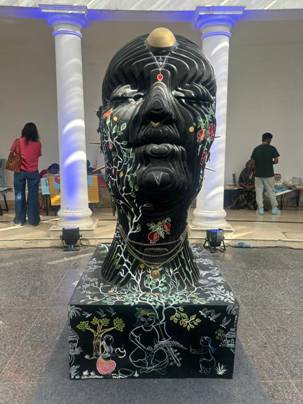
A special highlight of TAF 2026 was Project Khum – Rooted in Creativity. “Khum,” meaning flower in Kokborok (Tripura), symbolises blossoming, vitality and full creative expression. Designed as a participatory installation, tribal women artists collectively transformed a shared visual framework into a vibrant artwork through colour, motif and lived tradition. Presented in the spirit of International Women’s Day, the installation foregrounded women’s creativity, leadership and cultural memory, affirming that when women create, culture blossoms.
Carrying Heritage into the Future
For many of the women artists at the Tribes Art Fest, painting is more than a profession — it is a way of safeguarding the stories of their communities. These artists transformed personal memories and cultural traditions into visual narratives that resonate far beyond their villages.
As the halls of Travancore Palace filled with colour and creativity, the Tribes Art Fest stood as a living gallery of India’s indigenous visual traditions. It reinforced the Government of India’s commitment to inclusive growth, cultural preservation and sustainable economic empowerment of tribal communities.
In doing so, it aligned with the Prime Minister’s vision of Viksit Bharat @ 2047 — a future built as much on living heritage as on economic progress. The women artists who participated in the festival stand as proof of that promise, carrying their traditions forward one brushstroke at a time.
About The Author


More Stories
India’s Housing Market Remains Resilient Amid West Asia Tensions; Long-Term Outlook Stays Positive.
Advocate Shashank Bajpai Honoured With Jankalyaan Samman Award For Excellence In Law And Legal Services.
Hyatt Announces Signing Of Agreement For Hyatt Place Ahmedabad Nikol, Expanding Its Essentials Portfolio In India.