




New Delhi, 20th of February, 2026 : Union Minister of Health and Family Welfare Shri J.P. Nadda addressed the Leadership Conclave for the Presidents and the Executive Directors of new All India Institutes of Medical Sciences, convened by the Ministry of Health and Family Welfare in New Delhi today. The Conclave is envisaged as an ongoing endeavour to build institutional capacities, promote inter-institutional collaboration, and establish a strong and cohesive network of AIIMS institutions to further strengthen public health systems in the country.
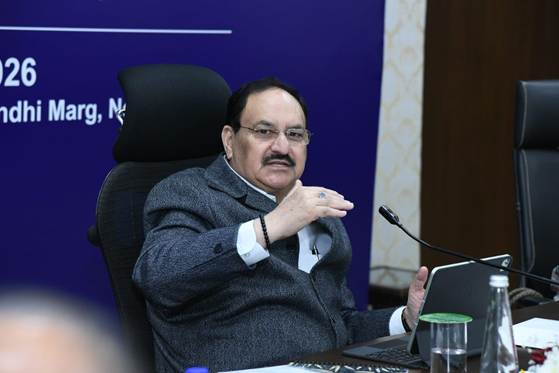
Delivering the keynote address, the Union Health Minister emphasized that the Leadership Conclave is both contextual and relevant in the present phase of expansion of the All India Institutes of Medical Sciences network. He stated that a balanced approach must be maintained among patient care, teaching, and research, with a clear focus on strengthening a patient-centric model. He underscored the need to institute structured patient feedback mechanisms and to take concrete steps to enhance patient satisfaction. He expressed his expectation that the new AIIMS should progressively establish world standards in patient care and medical education, while preserving the institutional ethos associated with the AIIMS system.
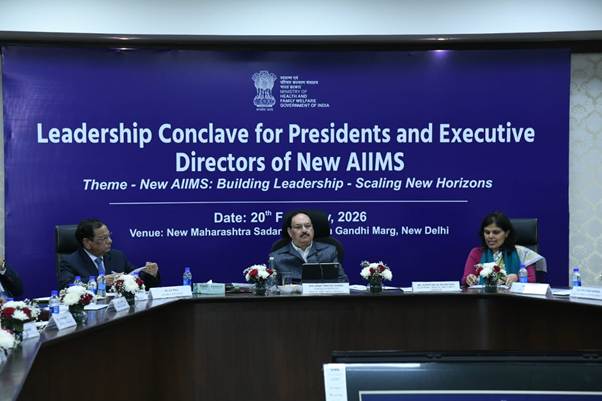
Noting that the new AIIMS are at different stages of development, the Minister stressed the importance of mutual support and structured collaboration so that institutions may grow together in a coordinated manner. He expressed satisfaction that 20 AIIMS have established a collaborative research consortium to advance coordinated health research aligned with national priorities, and stated that institutional leadership must blend administrative efficiency with academic excellence to guide this initiative effectively.
Clarifying governance roles, he reiterated that the President of each Institute represents the Ministry and provides guidance and oversight, while the Executive Director is responsible for day-to-day administration. He emphasized that this functional distinction must be respected to ensure effective institutional management. The Minister called for moving beyond conventional practices and fostering greater transparency, accountability, and objectivity in decision-making processes.
He urged the adoption of cutting-edge technologies, particularly the integration of Artificial Intelligence in diagnostics and clinical decision-making, and emphasized the need to institutionalize telemedicine services as a regular component of AIIMS functioning. He also called for strengthening outreach programmes to expand community engagement and reinforce the public health role of the institutions.
On human resource development, the Minister stressed the need to accelerate faculty recruitment without compromising knowledge standards and quality of healthcare delivery. He suggested conducting at least four cycles of interviews annually and noted the recent increase in faculty recruitment across AIIMS. He reiterated that structured mechanisms such as NORCET and the Common Recruitment Examination (CRE) for nursing and non-faculty staff should be conducted regularly, with an emphasis on timely appointments.
The Minister further directed that facilities such as Jan Aushadhi Kendras and AMRIT Pharmacies should be established and maintained in every AIIMS to ensure affordable access to medicines. He called for developing a structured mechanism for faculty and student exchange between AIIMS and other Institutes of National Importance, with AIIMS playing a leading role in teaching and nursing capacity building.
He emphasized the importance of collaborative research with premier institutions such as Indian Institutes of Technology and Indian Institutes of Management, particularly in areas such as rare diseases, genetic disorders, and medical technology innovation. While acknowledging the expansion in the number of AIIMS, he cautioned that increased capacity must not dilute established standards, and reiterated that the quality of healthcare and medical education for which AIIMS is known must be preserved.
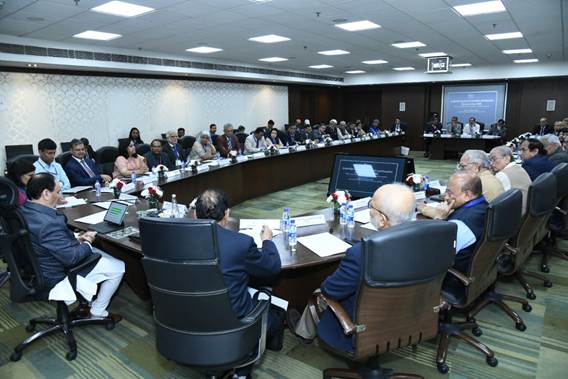
The Minister also highlighted the importance of promoting a culture of responsible student leadership aligned with the dignity and values of the AIIMS system. He called upon institutional leaders to develop appropriate mechanisms to nurture such leadership while upholding academic discipline and institutional integrity.
On the occasion, the Union Health Minister also released a publication titled “Compilation of Office Memorandum and Guidelines on Various Matters” prepared by the Finance Division of the Ministry of Health and Family Welfare. The publication consolidates key financial and administrative instructions issued from time to time and is intended to serve as a ready reference for institutions under the Ministry, including the new All India Institutes of Medical Sciences.
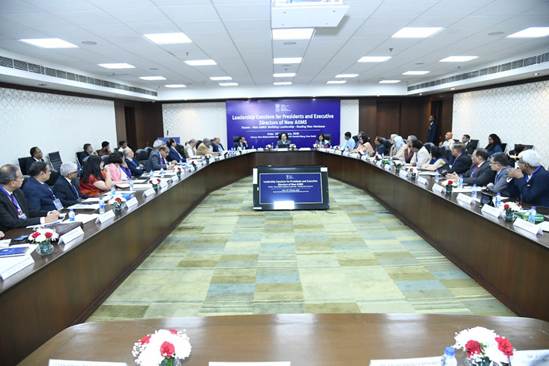
Senior officials of the Ministry, Presidents and Executive Directors of various newly established AIIMS institutions participated in the deliberations.
About The Author



More Stories
Glaucoma Institute At L V Prasad Eye Institute.
Diet During Chemotherapy: What Helps Reduce Nausea, Fatigue, And Appetite Loss : Dr. Sneha Kommineni, Consultant – Medical Oncology, Aster RV Hospital, Bangalore.
CEOs And Delegates Participating In India AI Impact Summit Call On Vice-President Shri C. P. Radhakrishnan At Uprashtrapati Bhavan.