




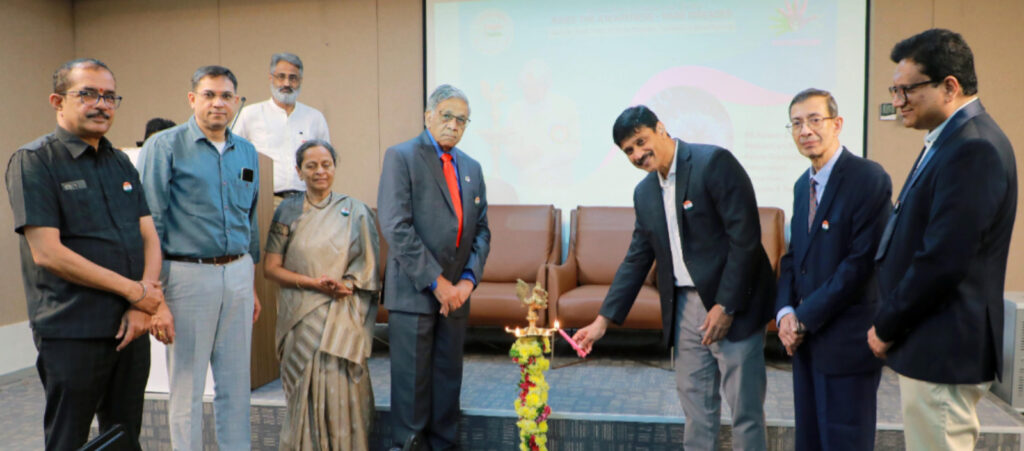
Hyderabad, Telangana, 28th of February, 2026 : The Indian Organisation for Rare Diseases (IORD), in collaboration with L V Prasad Eye Institute (LVPEI) and Rainbow Children’s Hospital, marked World Rare Disease Day 2026 in the city with a focused scientific conference titled “Raise the Awareness – Rare Diseases”, spotlighting Rare Diseases in Ophthalmology.
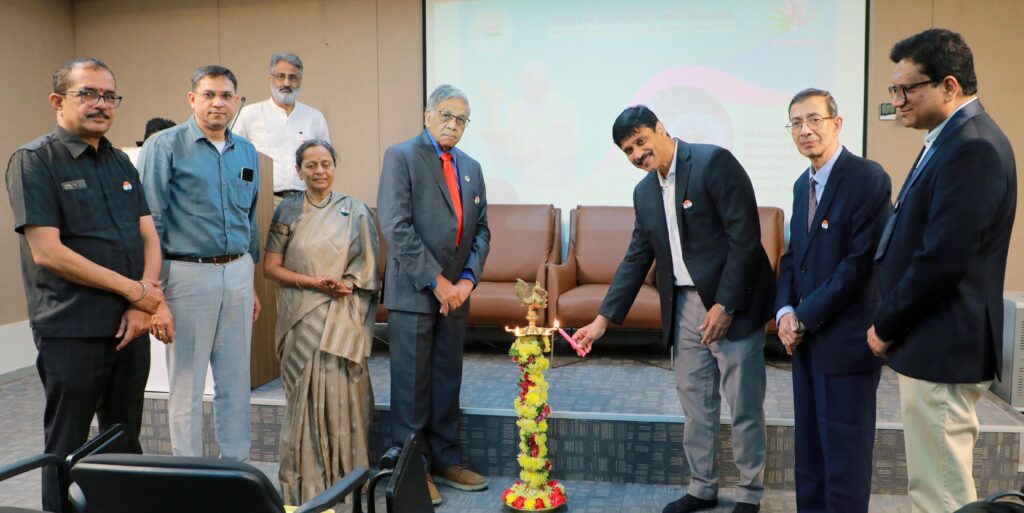
The conference – which featured the release of the IORD Annual Report 2025 and a screening of a Rare Disease awareness short film “I am not Alone” directed by filmmaker Mr. Muralidhar Indrakanti – underscored critical gaps in diagnosis, genetic services, and comprehensive care for rare eye conditions in India.
Prof. Ramaiah Muthyala, President and CEO of IORD, emphasized that rare diseases represent a significant yet under-recognized public health challenge in India. He noted that India is home to a large number of patients with rare diseases due to its large population — a reflection of sheer population volume rather than disproportionate disease frequency.
“As you all know, all diseases are not the same. Patients have different needs, treatments, and outcomes. Therefore, we thought we would observe Rare Diseases Day with a specific thematic category,” he said, explaining the organization’s decision to focus this year on rare ophthalmic conditions.
Rare Disease Day, launched in 2008 by Eurordis and now observed in over 190 countries, was originally intended to raise public awareness about rare diseases. Over the past decade, IORD has conducted numerous awareness initiatives. However, Prof. Ramaiah noted that most such events have traditionally addressed rare diseases in a generalized manner.
Dr. Muralidhar Ramappa, Head of the Center for Rare Eye Diseases and Ocular Genetics and Senior Faculty, Pediatric Cornea and Anterior Segment at L V Prasad Eye Institute, called for greater awareness, earlier diagnosis, and stronger referral systems for rare eye diseases and ocular involvement in rare systemic disorders. He emphasized that while individual conditions may affect only a small number of patients, collectively they impose a significant burden on children, families, and society — often impacting education, independence, career prospects, and overall quality of life.
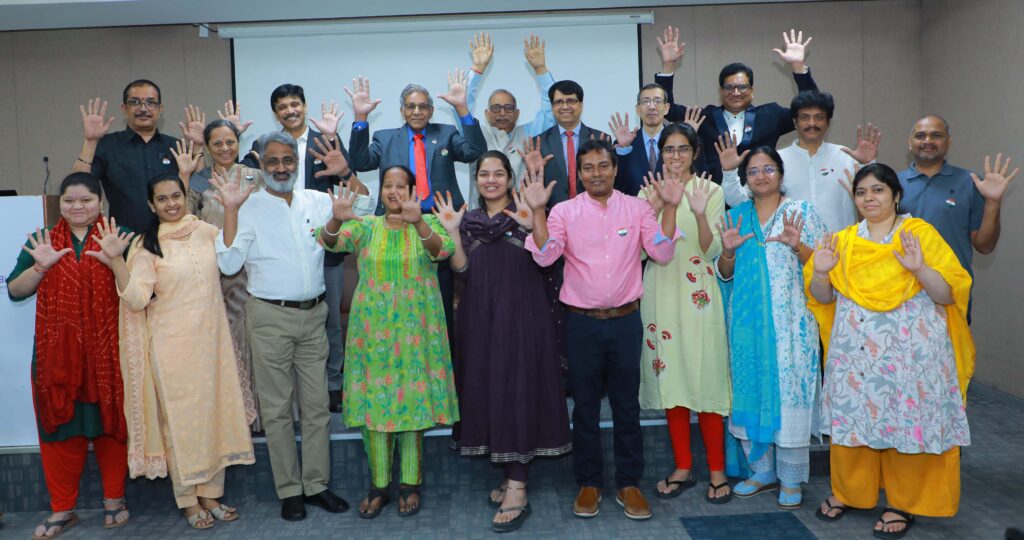
Highlighting the challenges faced by families, Dr. Ramappa noted that many rare eye conditions are frequently missed or diagnosed late, leading to prolonged uncertainty and loss of valuable time for intervention and counselling.
“Rare eye diseases may be uncommon, but the people living with them should never feel unseen or unheard. With greater public awareness, stronger referral pathways, multidisciplinary care, and continued scientific progress, there is real reason for hope,” he said. He further explained that not all rare eye diseases are purely genetic; some are linked to metabolic disorders, developmental abnormalities, inflammation, infections, trauma, or other systemic conditions, making comprehensive evaluation essential.
India currently recognizes approximately 450 rare diseases as per ICMR listings, while globally an estimated 7,000 rare diseases have been identified. Notably, a significant number of these are associated with visual impairment.
Experts highlighted the pioneering work of the Center for Rare Eye Diseases (CERED) at LVPEI, Hyderabad — a first-of-its-kind center exclusively focused on rare systemic disorders affecting the eye. He acknowledged the leadership of Dr. Muralidhar Ramappa, Head of the Center for Rare Eye Diseases and Ocular Genetics at LVPEI and noted that CERED provides high-quality care at affordable cost, including free treatment for underprivileged patients, along with awareness and outreach initiatives. IORD, he said, was fortunate to collaborate with the center in its formative stages.
The conference brought together distinguished experts and dignitaries who enriched the scientific deliberations, including Dr. Dinesh Kumar Chirla, Dr. Gayatri K and Dr. Anil Kumar Mandal, who delivered the keynote address. Leading experts from LVPEI, Rainbow Children’s Hospital, medicos, researchers and rare disease survivors participated in the deliberations.
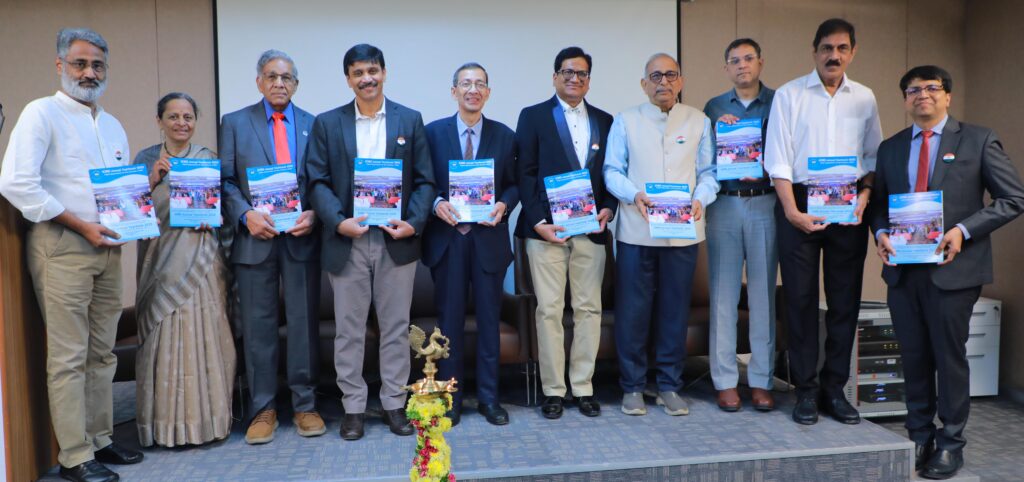
Note for Editor:
The Indian Organization for Rare Diseases (IORD) is a national non-profit organization committed to advancing research, policy advocacy, and holistic support for rare disease patients across India. Founded to address the systemic gaps in rare disease care, IORD works closely with government bodies, medical institutions, and global organizations to drive awareness, improve diagnostics, and ensure equitable access to treatments.
IORD’s ongoing long-term initiatives include policy advocacy, newborn screening approvals under the National Policy for Rare Diseases (NPRD), development of rare disease registries, prevalence estimation through ASHA workers, addressing the diagnostic odyssey, orphan drug discovery, facilitating availability of generic orphan drugs, studying the natural history of identified common rare diseases, and strengthening international collaborations including engagement with global bodies such as WHO and the United Nations.
Short-term initiatives include integrating rare diseases into medical school curricula, launching young leader programmes, educating high school students, and promoting awareness through educational campaigns and visual materials.
About The Author

More Stories
Dr. Sukanta Majumdar Presides Over Football Distribution Programme In West Bengal; Football For Schools (F4S) Programme Completed In 33 States/Uts.
Two-Day Workshop By DFS On Reservation Policy Of Government Of India And Accessibility For Pwds Concludes Today.
‘Double Engine’ Momentum Can Fast-Track Kerala’s Progress; State’s Next Decade Crucial To India’s Development Vision : Dr Jitendra Singh.