





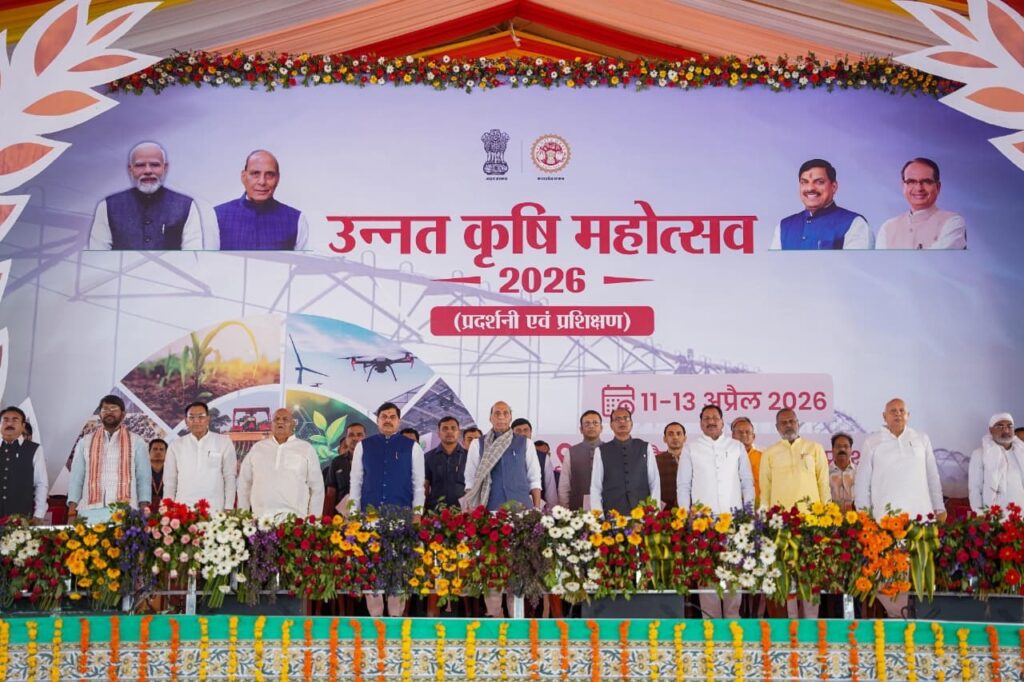
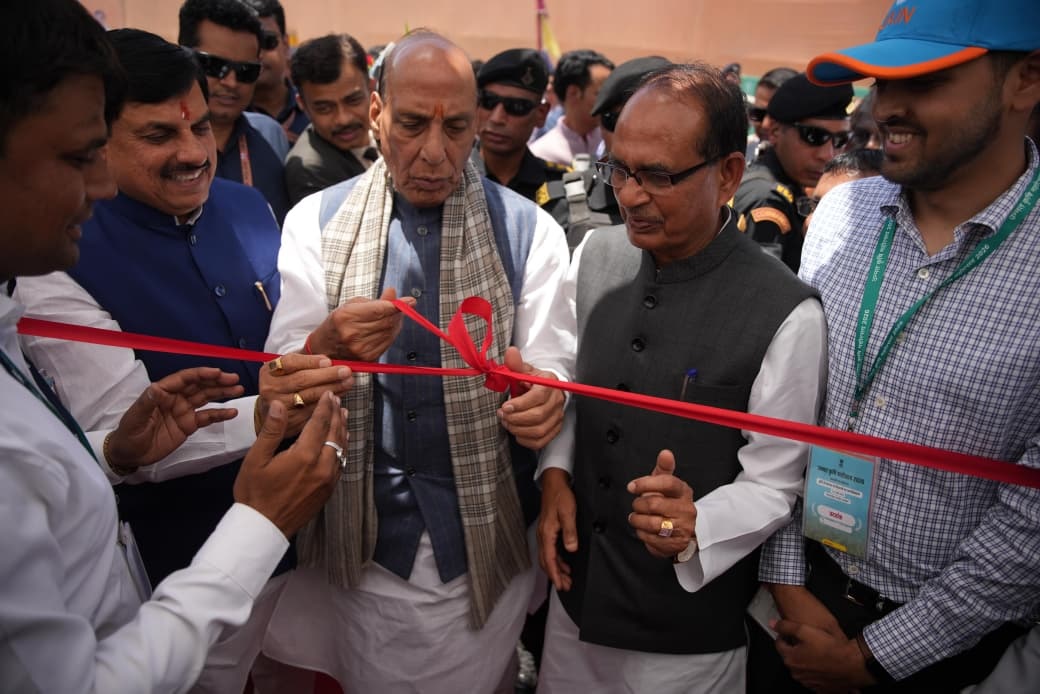
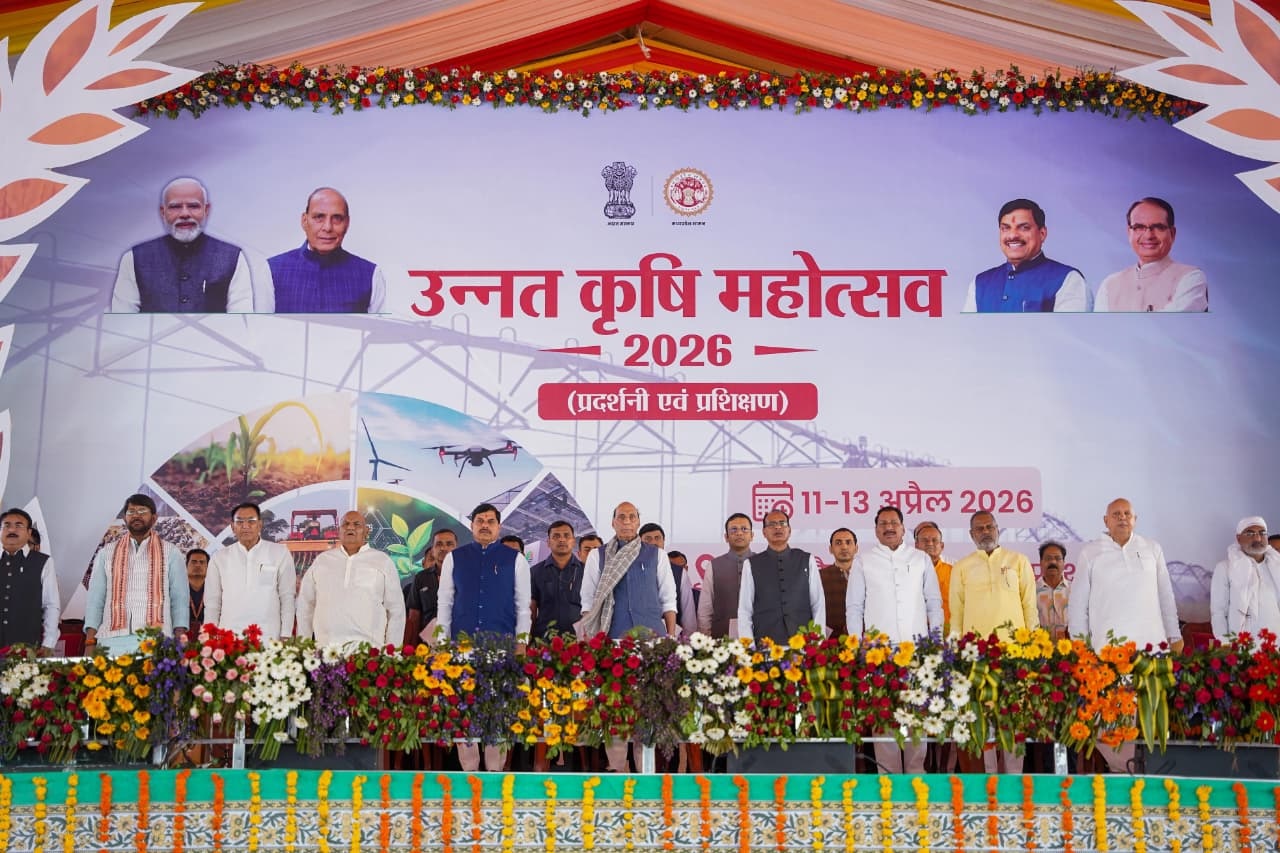
New Delhi, Delhi, 11th of April 2026 : In a momentous occasion at the sprawling Dussehra Maidan in Raisen, Madhya Pradesh, the three-day Advanced Agriculture Festival, Exhibition, and Training programme commenced on Saturday with great pomp and ceremony. The inauguration was jointly conducted by Union Defence Minister Shri Rajnath Singh, Madhya Pradesh Chief Minister Dr. Mohan Yadav, and Union Minister for Agriculture and Farmers’ Welfare, and Rural Development, Shri Shivraj Singh Chouhan. This grand event brought together thousands of farmers from various districts across Madhya Pradesh, along with leading agricultural scientists, domain experts, and representatives from agriculture and allied sectors, all converging on a single platform to share knowledge, innovations, and actionable insights for modern farming.
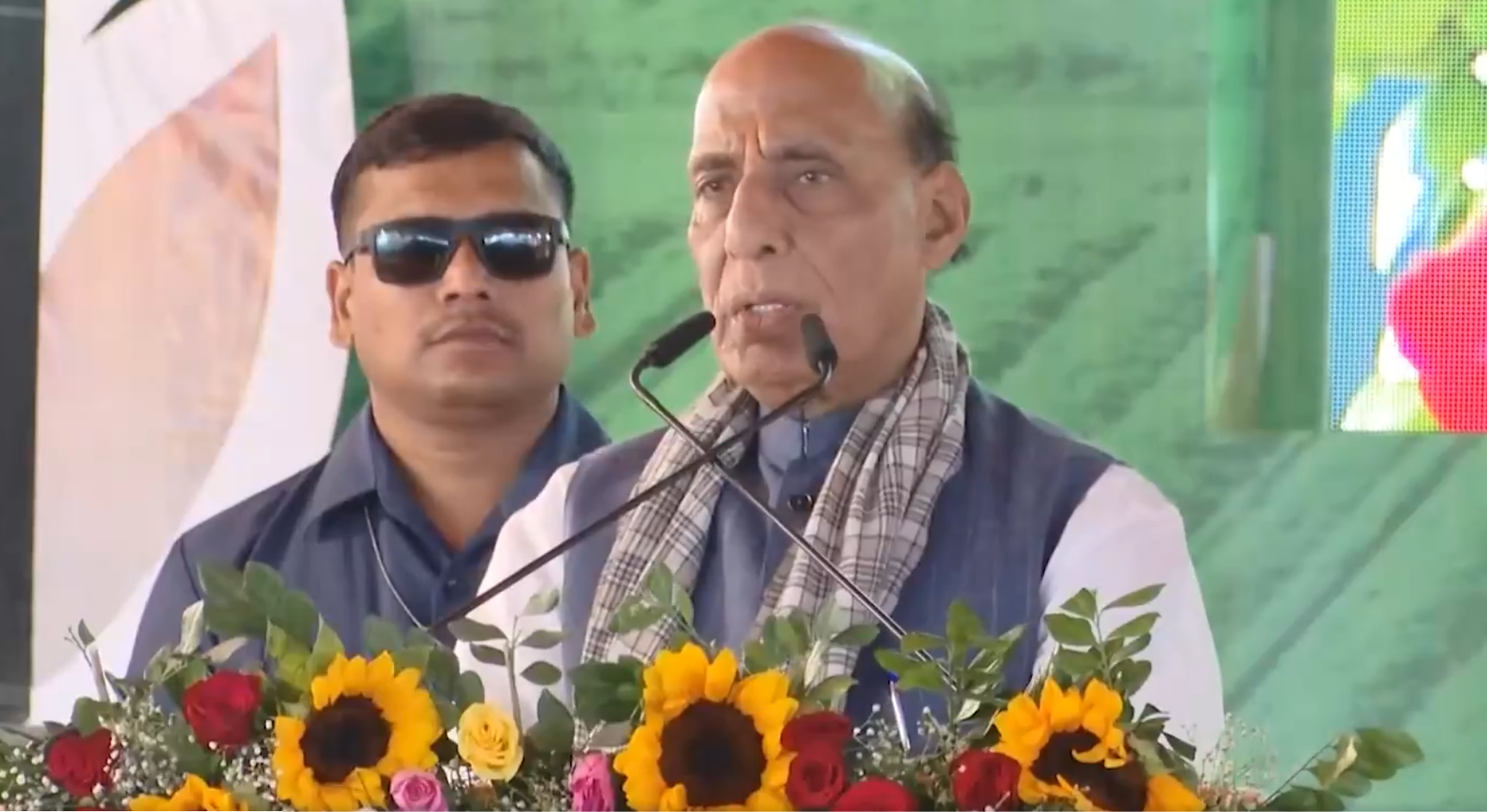
Union Defence Minister Shri Rajnath Singh shares personal connection, deeply understands farmers’ hardships and dedication from the heart
From the dais, Union Defence Minister Shri Rajnath Singh began by humbly bowing his head in reverence to the assembled ‘annadatas’ – the brothers and sisters who provide grain to the nation – “standing on the blessed soil of Raisen”. He revealed his own roots in a farming family, having been nurtured in the fertile soil of villages, which gives him an intimate, heartfelt understanding of the relentless hard work, daily struggles, and profound sacrifices that define a farmer’s life. With strong conviction, he asserted that this Advanced Agriculture Festival being hosted in Raisen would not merely offer benefits to farmer brothers and sisters but would fundamentally transform the picture of their lives, ushering in prosperity and empowerment. Extending hearty congratulations to the key organiser, Union Agriculture Minister Shri Shivraj Singh Chouhan, he praised the event as a highly focused, thematic initiative truly worthy of admiration for its singular dedication to farmers’ welfare. Shri Rajnath Singh underscored that Prime Minister Shri Narendra Modi consistently describes farmers as the backbone of India’s economy, and this statement is far from empty words – it stands validated by the extraordinary, tangible achievements implemented on the ground over recent years under the government’s proactive policies. Citing the flagship PM Kisan Samman Nidhi scheme as a prime example, he contrasted the past, where funds allocated in farmers’ names often disappeared midway into the pockets of intermediaries, with the present direct benefit transfer system. Today, every rupee released from Delhi lands directly in farmers’ bank accounts – free from middlemen, devoid of deductions, and unburdened by bureaucratic hassles. He stressed that this financial support is no act of charity or handout; rather, it is a rightful honouring of the sweat, toil, and perseverance of farmers, empowering them to procure essential inputs like quality seeds, fertilisers, and other field necessities without financial distress. He lauded the Pradhan Mantri Fasal Bima Yojana as an indispensable protective shield for the inherently risky endeavour of agriculture, explaining that in the face of calamities such as hailstorms, floods, droughts, or pest invasions that destroy crops, compensation now flows straight into farmers’ accounts. This mechanism prevents their economic backbone from breaking, replaces hopelessness with renewed hope, and instils the courage to rise again and sow the next season with confidence. Additionally, he highlighted the transformative impact of the Soil Health Card scheme, which equips farmers to scientifically test their soil and apply fertilisers in precise quantities tailored to the land’s specific needs, thereby enhancing productivity while significantly reducing input costs and environmental strain.
“If farmers stop growing even wheat, the entire economic chain would collapse,” explains Defence Minister with vivid analogy
Elaborating further, Defence Minister Shri Rajnath Singh articulated that farmers cultivate far more than just food grains; they are the very foundation sustaining the nation’s entire economy, generating employment across sectors, and fuelling industries of all kinds. He explained how the three core pillars of the economy – primary (agriculture and livestock), secondary (manufacturing and industry), and tertiary (services) – all draw their vitality directly from the farmers’ fields. To drive home the point, he painted a comprehensive picture: a farmer sows and harvests wheat, which is then transported by trucks to bustling mandis (markets), processed in flour mills, and transformed into products at biscuit and bread factories where labourers operate sophisticated machinery. From there, the goods undergo packaging, further transportation, and distribution through retail networks to reach consumers’ tables. In this intricate chain, if even the initial step – the farmer growing wheat – falters, the entire system would stagger and collapse. With this irrefutable logic, he declared with full confidence that farmers are the true drivers of the economy. The government, he affirmed, stands fully committed to elevating agriculture to a source of pride and ensuring that every farmer can live a life filled with honour, dignity, and material prosperity. Turning to the youth, he made a passionate appeal for them to embrace agriculture through innovative startups and entrepreneurial ventures in cutting-edge domains such as drone technology for precision farming, soil sensors for real-time monitoring, mobile-based applications, smart farming techniques, soilless hydroponic cultivation, protected greenhouse farming, horticulture, and value-added food processing. He emphasised the boundless opportunities in these areas, noting that the more village youth engage, the more pathways to new technologies and higher incomes will open up, revolutionising rural economies. On a practical note, he shared an inspiring initiative by the Defence Ministry: procuring organic vegetables and traditional millets like jowar, bajra, and ragi directly from neighbouring farmers for supply to cantonment areas. This not only boosts farmers’ incomes but also ensures soldiers receive fresh, nutritious meals, thereby breathing new life into the iconic slogan ‘Jai Jawan, Jai Kisan’ in contemporary times.
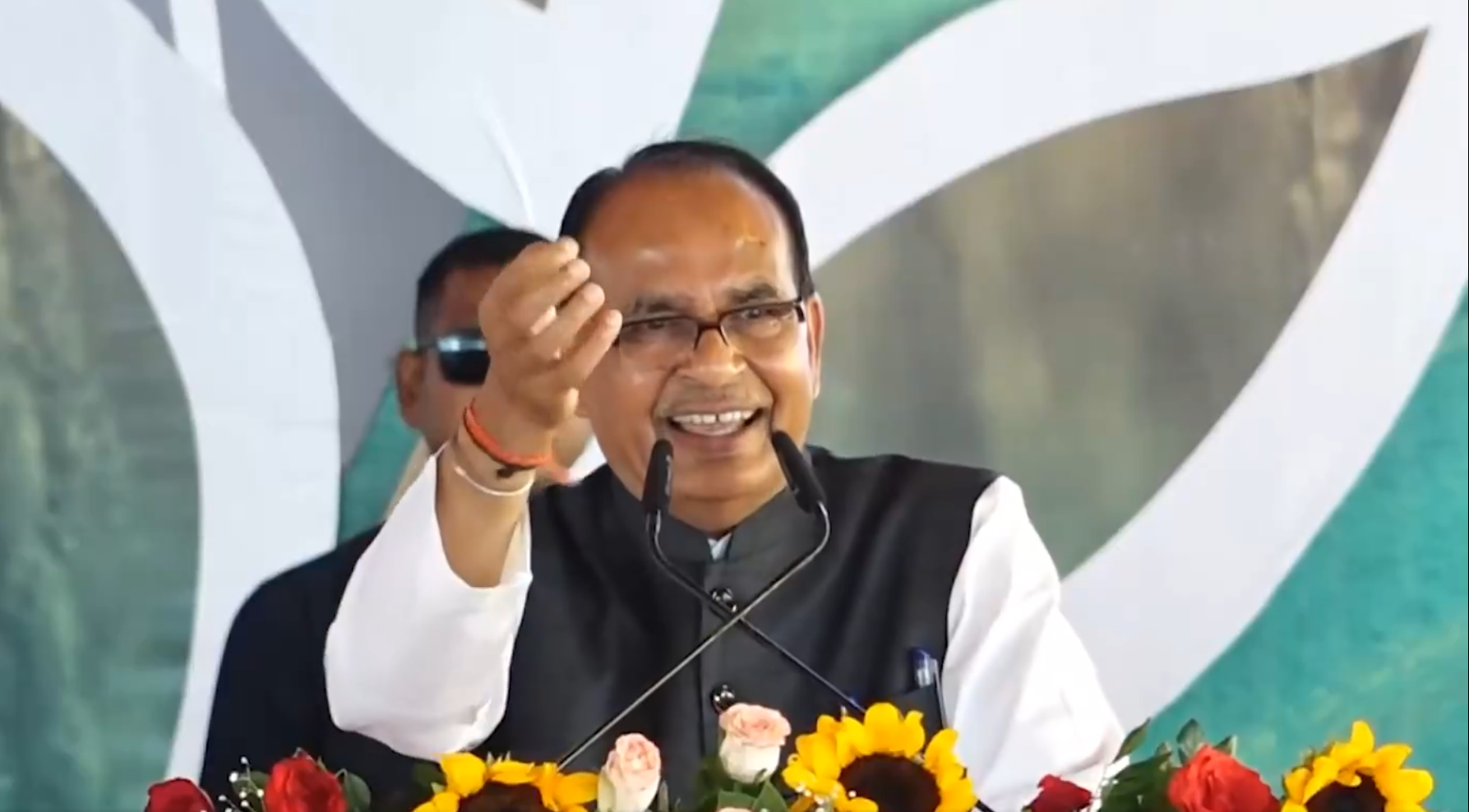
Raisen’s traditions, policies, affection, identity, pride, and the radiant smiles of its people are all uniquely distinctive
Union Agriculture Minister Shri Shivraj Singh Chouhan opened his address by celebrating the sacred soil of Raisen, clarifying that today’s gathering transcends a conventional political rally or mere public meeting. Instead, it represents a magnificent confluence where knowledge, cutting-edge science, groundbreaking research, and the collective wisdom of farmers merge seamlessly. This platform provides an unparalleled opportunity for attendees to witness, comprehend, and master modern technologies, contemporary knowledge systems, scientific methodologies, research-driven innovations, and advanced farming practices firsthand. He described Raisen as a district of wonders, where everything from time-honoured customs and progressive policies to deep-rooted affection, distinct identity, inherent pride, and even the infectious smiles of its people exude a unique charm. Its renowned varieties of rice and wheat have earned global acclaim, complemented by prestigious UNESCO World Heritage sites like Sanchi and Bheembetka, the colossal Shivling at Bhojpur temple, and the holy flows of Narmada and Betwa rivers, all of which elevate the district’s stature on the world map.
In the grand national ‘yajna’ for ‘Atmanirbhar Bharat’, Defence and Agriculture stand as equally indispensable pillars
Shri Shivraj Singh elaborated that under the visionary leadership of Prime Minister Shri Narendra Modi, India is engaged in a monumental ‘yajna’ (sacred fire ritual symbolising collective effort) to forge a developed, prosperous, glorious, and self-reliant nation. Within this national endeavour, defence and agriculture emerge as two equally critical and interdependent pillars upholding the structure. He commended the robust fortification of India’s security apparatus under Defence Minister Shri Rajnath Singh’s stewardship, outlining the nation’s firm policy: India neither initiates aggression against anyone nor tolerates it when provoked – a stance of resolute strength. This defensive posture is matched by an equally vigorous nationwide campaign to advance farmers and agriculture comprehensively.
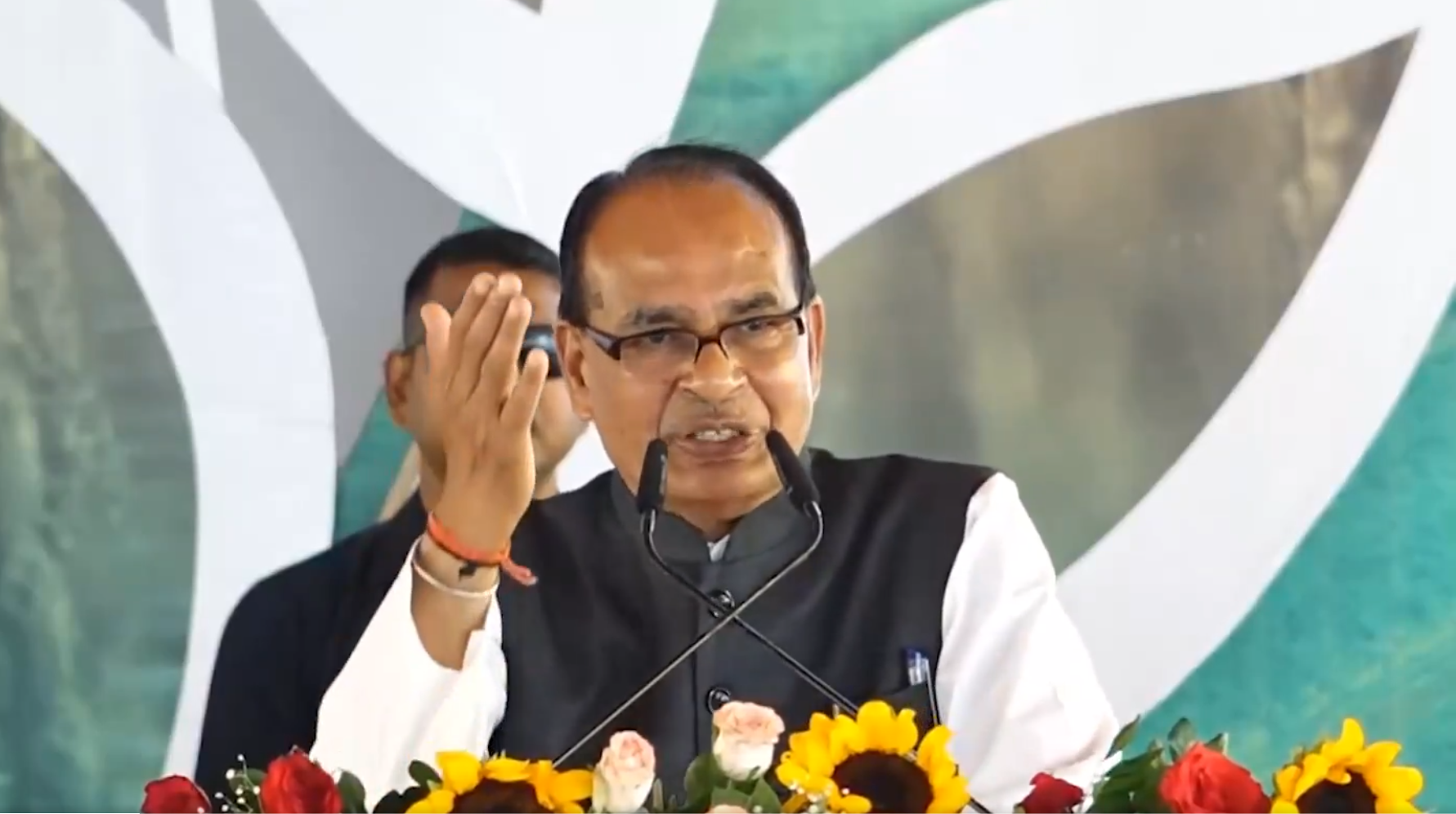
For me, farmers are divine, and the people are my supreme deities
In an emotional vein, he recounted how the people of his home region have reposed unwavering faith in him by securing victories in six assembly elections and six Lok Sabha polls – a total of twelve triumphs. For him, therefore, farmers embody divinity itself, and the public represents Janardan (the supreme lord in human form); serving them is tantamount to the highest worship. As Union Minister, Shri Shivraj Singh Chouhan outlined the government’s clear priorities: safeguarding national food security by ensuring nutritious grains, fruits, and vegetables reach the plates of all 140 crore Indians without fail; diminishing dependence on foreign imports; and achieving this through ramped-up agricultural production, slashed cultivation costs, and strategic diversification of cropping patterns – imperatives of the current era.
Farmers must evolve beyond traditional grain-dominant farming to embrace integrated farming systems for real profitability
Addressing farmers specifically from Raisen, Vidisha, Sehore, and Dewas districts, he earnestly urged a shift from conventional grain-focused agriculture to holistic integrated farming models. Even on modest landholdings of one, two, or three acres, combining staple grains with fruit orchards, vegetable cultivation, livestock rearing, beekeeping, goat farming, and poultry operations unlocks genuine profitability and resilience. To illustrate, the festival features a fully operational live demonstration of a complete one-acre integrated farming model, meticulously guided by scientific expertise. Adopting such models, he assured, enables farmers to generate annual incomes exceeding Rs 2 lakh from just a single acre, revolutionising smallholder economics.
This mela is envisioned as a true learning school, far beyond mere speeches or ceremonial events
Union Agriculture Minister Shri Shivraj Singh Chouhan emphasised that the entire fair has been meticulously curated not as a platform for oratory or ritualistic programmes but as an authentic educational institution – a ‘paathshala’ (school) for practical empowerment. Over the three days, India’s top agricultural scientists, seasoned experts, and progressive farmer-innovators will lead approximately 20 specialised technical sessions across dedicated halls. Topics span horticulture techniques, advanced gardening practices, integrated farming systems, machinery for cost reduction, multifaceted drone applications in agriculture, forging direct market linkages, and precise soil testing protocols, among others. With around 4,000 farmers already registered, each session follows a structured format: expert presentations followed by open interactive Q&A forums where farmers can pose questions freely. This participatory approach distinguishes the event – it is no tamasha (spectacle) but a concrete, results-oriented initiative to alter the condition and direction of Indian farming profoundly.
Central Government diligently preparing tailored agriculture roadmaps for every single state
Further detailing future plans, Shri Chouhan revealed that acting on the Prime Minister’s direct instructions, the Central Government is formulating customised agriculture roadmaps for each state, recognising the diverse agro-climatic conditions and regional specificities prevalent across India. For Madhya Pradesh, a comprehensive state-wide roadmap is being co-developed with the state government. Additionally, a specialised scientific team has crafted a focused agriculture roadmap exclusively for the Raisen, Vidisha, Sehore, and Dewas cluster of districts. This blueprint will be formally unveiled and announced right here tomorrow (Sunday, April 12) at 1 PM. The roadmap provides an exhaustive scientific framework: prescribing optimal crops for each zone, suitable horticultural varieties, pulse crop recommendations, high-yield seed types, and even specific plant species for those venturing into gardening or orchards – a complete, data-backed blueprint for success.
No stone will be left unturned in translating this roadmap into ground-level reality
Offering firm assurance, Shri Shivraj Singh affirmed that under the dynamic leadership of Chief Minister Dr. Mohan Yadav, the Madhya Pradesh government, in seamless coordination with Central schemes, will leave no effort in implementing this roadmap on the ground. He reiterated that this is no perfunctory formality but a genuine, life-altering mission for farmers.
Central Government approves opening 55 pulse processing mills Across Madhya Pradesh
The Union Agriculture Minister articulated the ambitious vision to position this region as a premier horticulture hub, where farmers integrate fruit and vegetable cultivation with food processing units to capture higher value – much like how establishing a single basmati processing unit spurred widespread basmati cultivation and income growth in similar areas. The pulses mission will receive maximum thrust here, with the Central Government deciding to establish 55 dedicated pulse mills in Madhya Pradesh to strengthen markets for chana, masoor, urad, and tur. He made a categorical declaration: whatever quantities of masoor, urad, and tur farmers produce and wish to sell, the Government of India commits to procuring the entire volume at Minimum Support Price (MSP). Furthermore, all schemes spanning farm production to market access will be executed with full effectiveness tailored to this region.
Launch of the revolutionary new Soil/eFARM mobile application
Shri Shivraj Singh Chouhan spotlighted the brand-new Soil/eFARM mobile app, a game-changer for farmers: simply walk through fields with a smartphone, and it instantly reveals soil nutrient profiles along with exact fertiliser dosage recommendations. This scientific tool eliminates outdated practices like ‘If Ramlal used one bag, so does Shyamlal’, promoting precision nutrient management that curtails wasteful expenditure, optimises yields, and safeguards soil health. He called upon farmers to participate in the three-day sessions with utmost seriousness, absorb the learnings, and overhaul their farming practices accordingly – for achieving high incomes from limited land through diversified cropping is the festival’s core mission. Personally committing, he stated he would remain on-site all three days, actively attending various sessions rather than delivering speeches and departing; he exhorted farmers likewise to engage dynamically as per the schedule.
The work culture of governance has fundamentally transformed across India
Madhya Pradesh Chief Minister Dr. Mohan Yadav, in his address, declared that the governance ethos nationwide has undergone a complete metamorphosis: silos between departments have dissolved, replaced by integrated, mission-driven operations – all fruits of Prime Minister Shri Narendra Modi’s transformative vision and work style. Amid thunderous applause, he congratulated Union Agriculture Minister Shri Shivraj Singh Chouhan, noting his track record of winning six assembly and six parliamentary seats, and his hallmark of successfully advancing every responsibility entrusted to him. Describing the event as a matter of collective pride despite time constraints, he affirmed that while time may be limited, resolve remains boundless. He portrayed the dais as a unique platform uniting the Defence Minister who safeguards the nation at borders with the farmers who sustain the economy in fields – a historic event dignifying both, ensuring secure frontiers and empowered agricultural lives.
Exhibition grounds resemble a bustling new township from above
The Chief Minister highlighted India’s doubled grain exports compared to Congress-era import dependencies; remarkably, Raisen alone now exports basmati rice to 47 countries – testament to farmers’ diligence and government policies. Contrasting eras, he recalled that after Madhya Pradesh’s formation in 1956, approximately 55 years of Congress rule limited irrigation coverage and kept wheat MSP stagnant at Rs 90-100 per quintal. In contrast, BJP governments under Shri Chouhan, Smt. Uma Bharti, Shri Babulal Gaur, and the current dispensation have elevated wheat MSP to Rs 2,625 per quintal, expanded irrigation unprecedentedly, and ensured reliable daytime electricity for farming. Prime Minister Modi’s development paradigm prioritises farmers, women, the poor, and youth – vividly manifest in this exhibition and festival. Viewed aerially, the exhibition complex evokes a city under construction: vast displays on livestock, horticulture, advanced machinery, diverse sessions, and training programmes sprawl like the colossal form of Lord Hanuman, illustrating boundless farmer potentials across domains. The state government has proclaimed the entire year as ‘Kisan Kalyan Varsh’ (The Year of Farmers’ Welfare); this massive Centre-supported expo-training initiative will decisively steer Madhya Pradesh agriculture forward. Expressing gratitude to Shri Chouhan and Shri Singh, the Chief Minister pledged collective commitment to extract maximum value from every session and perpetuate this development trajectory.
Prior to the main speeches, following the Defence Minister’s arrival, live demonstrations captivated attendees: corn cutter machines, solar panels coupled with pumps, micro-irrigation setups, and even hydrogen-powered drones. Subsequently, stalls were toured, covering livestock management, soil health improvement and nutrition, fertilisers (Indian Farmers Fertiliser Cooperative – IFFCO), crop sciences, fisheries, National Horticulture Board initiatives, and CIMMYT-BISA collaborations. The programme commenced with a welcome address by Sanchi area MLA Dr. Prabhu Ram Choudhary, followed by speeches from State Agriculture Minister Shri Endal Singh Kansana and Union Agriculture Secretary Shri Atish Chandra. Farmer benefit distributions occurred under various schemes, alongside the official launch of the Soil/eFARM mobile app, enabling instant mobile-based soil health checks, nutrient management, and scientific recommendations. Over the three days, more than 20 technical sessions, hands-on trainings, and theme-based halls will immerse farmers in advanced technologies.
The inauguration saw the presence of State Animal Husbandry Minister Shri Lakhan Patel, Horticulture Minister Shri Narayan Singh Kushwaha, In-charge Minister Shri Narayan Singh Pawar, District Minister Shri Narendra Patel, Narmadapuram MP Shri Darshan Choudhary, other MPs and MLAs, senior leaders, Farmer Front office-bearers, district presidents, and ICAR (Indian Council of Agricultural Research) Director General Dr. M.L. Jat.




More Stories
Aptech Limited And Film And Television Institute Of India (FTII) Enter Into Partnership To Democratise Access To Film And Creative Education Across India.
Tripura’s National Award-Winning Science Teacher Anjan Banik Invited As Solo Invitee Delegate For Prestigious ESTIC 2026 In New Delhi Bharat Mandapam.
Sarbananda Sonowal Woos Korean Firms For India’s Shipyards, Seeks Global Shipping Rules All Can Follow.