

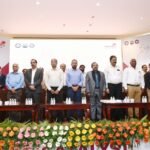



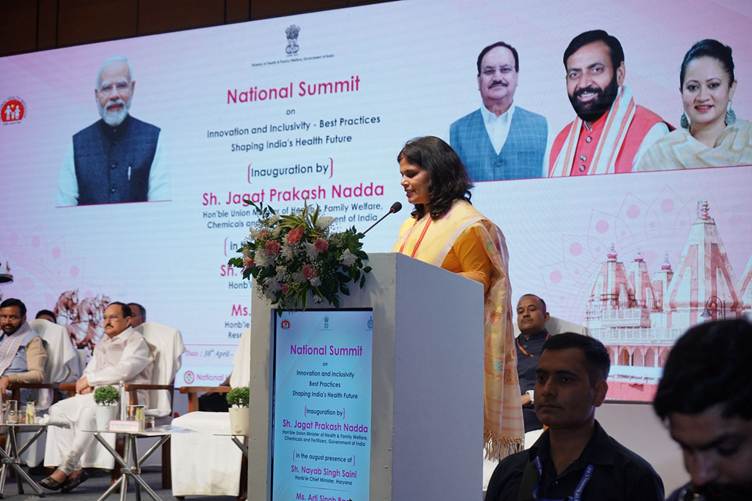
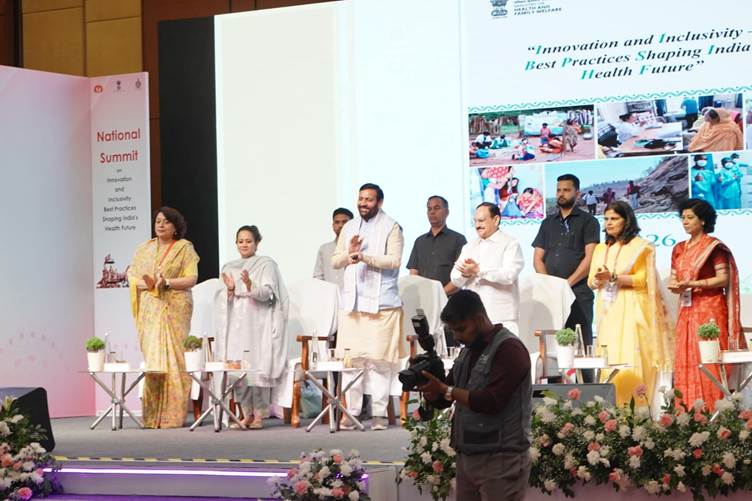
New Delhi, Delhi, 30th of April 2026 : Union Minister of Health and Family Welfare Shri Jagat Prakash Nadda today inaugurated the 10th National Summit on Innovation and Inclusivity: Best Practices Shaping India’s Health Future, in the august presence of the Hon’ble Chief Minister of Haryana Shri Nayab Singh Saini and the Hon’ble Health Minister of Haryana, Smt. Arti Singh Rao.
The Summit serves as a premier platform for States and Union Territories to showcase path-breaking innovations and best practices in the health sector, with a focus on advancing inclusive, accessible, and affordable healthcare across the country.
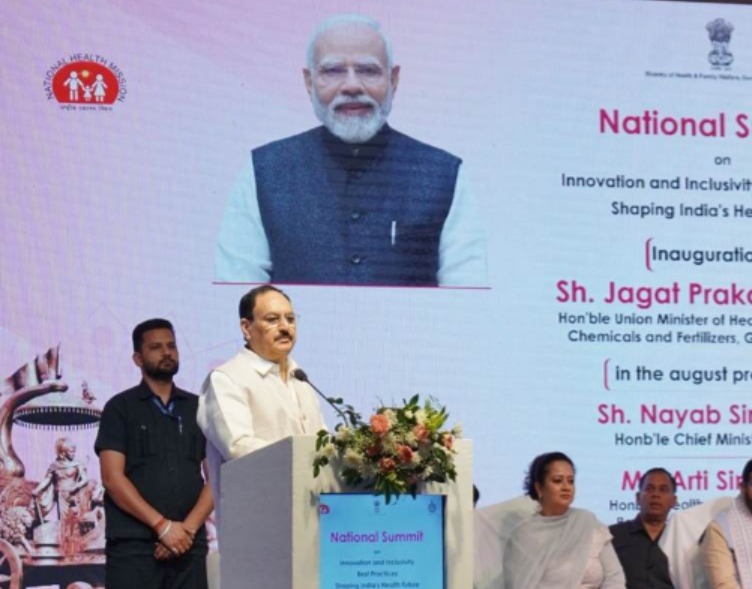
Addressing the gathering, the Union Health Minister expressed gratitude to the Government of Haryana for hosting the Summit and commended the State for its leadership in advancing healthcare innovations. The Minister noted that the Summit reflects how practical, field-driven strategies can collectively shape an effective and responsive public health ecosystem.
Highlighting the significance of the initiatives launched on the occasion, the Minister stated that these interventions are designed to ease the working environment of frontline healthcare workers while enhancing service delivery and improving health outcomes. The focus, he emphasized, is on enabling systems that are efficient, integrated, and responsive to the needs of both providers and beneficiaries.
Reflecting on India’s healthcare transformation over the past decade, the Minister stated that under the guidance of the Hon’ble Prime Minister, Shri Narendra Modi, the country has made significant strides towards the vision of Viksit Bharat. A key milestone in this journey has been the shift from a predominantly curative approach to a comprehensive and holistic healthcare framework. He highlighted that while the earlier National Health Policy of 2002 focused largely on curative care, the National Health Policy 2017 brought a paradigm shift by incorporating preventive, promotive, curative, and palliative aspects of healthcare, thereby ensuring a more inclusive and people-centric system.
The Minister underscored the critical role of over 1.85 lakh Ayushman Arogya Mandirs, which now serve as the first point of contact for nearly 1.5 billion people. These centres have significantly strengthened preventive healthcare, including large-scale screening for non-communicable diseases such as hypertension, diabetes, and cancers (oral, breast, and cervical) for individuals above 30 years of age.
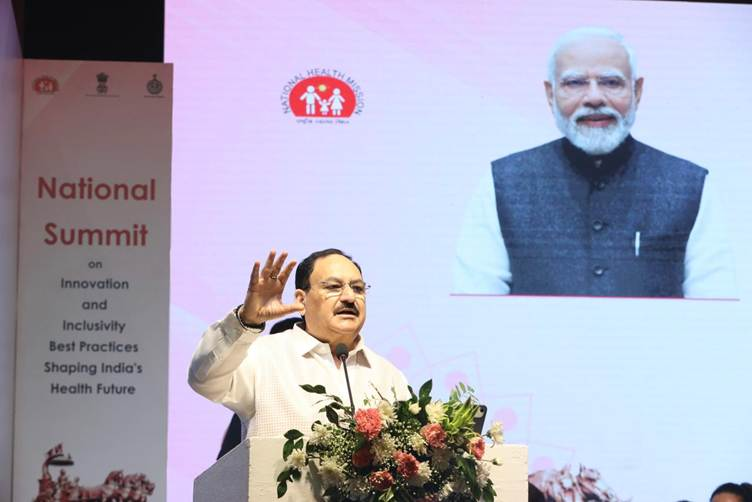
Emphasizing the need to move towards consolidation and quality enhancement, the Minister noted that while over 50,000 Ayushman Arogya Mandirs have been certified under the National Quality Assurance Standards (NQAS), there is a need to further scale up quality certification and strengthen regular audits to ensure consistent performance and improved outcomes.
Highlighting key health achievements, the Union Health Minster stated that institutional deliveries have increased from 79% to 89%, reflecting improved access to maternal healthcare services. Maternal Mortality Ratio has seen a significant decline, with sustained progress over the years. Citing recent global estimates, the Minister noted that India has achieved a 79% decline in under-five mortality and a 73% decline in infant mortality. He further highlighted India’s progress in disease control, stating that despite having nearly one-sixth of the world’s population, India accounts for only a small fraction of the global malaria burden. Similarly, tuberculosis incidence in India has declined at a faster rate than the global average, with treatment coverage reaching 92%.
The Minister also recalled major public health milestones, including India being declared polio-free in 2014, elimination of neonatal tetanus in 2015, and trachoma no longer being a public health concern. He expressed confidence that India is on track to eliminate kala-azar in the near future.
Addressing emerging challenges, the Union Health Minister highlighted the growing burden of non-communicable diseases and stressed the need to further strengthen Ayushman Arogya Mandirs for effective screening, timely diagnosis, and continuum of care. He noted that while large-scale screenings have been conducted across the country, greater focus is now required on ensuring timely follow-ups, treatment adherence, and referral mechanisms.
Shri Nadda also emphasized the need for improved planning and implementation under the National Health Mission. He noted that greater awareness among field-level functionaries, including Chief Medical Officers (CMOs) and Community Health Officers (CHOs), regarding NHM provisions is essential for optimal utilization of resources. He further stressed the importance of timely fund utilization, stronger coordination among stakeholders, and active engagement with public representatives to ensure accountability and better outcomes.
Concluding his address, Union Health Minister stated that while financial resources are available, the key lies in their effective and timely utilization. Strengthening governance, enhancing communication, and ensuring last-mile implementation will be critical in achieving the vision of a robust, inclusive, and future-ready healthcare system for India.
The Hon’ble Chief Minister of Haryana, Shri Naib Singh Saini in his address highlighted the importance of the Summit as a key platform for sharing best practices and fostering cross-learning among States and Union Territories to strengthen public health systems.
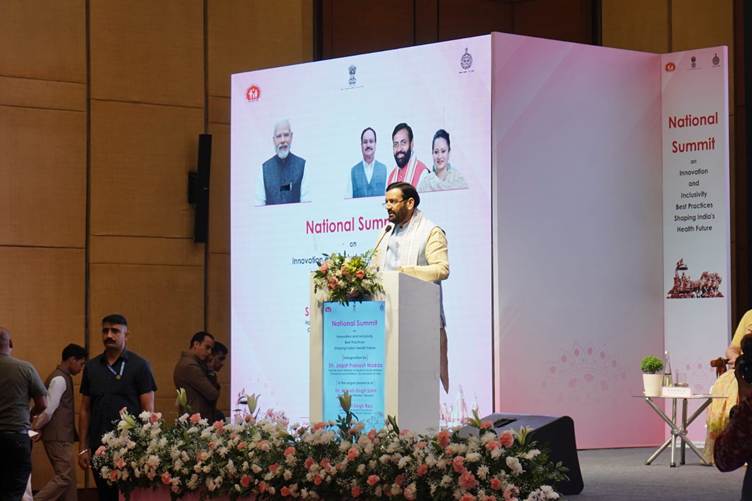
Showcasing Haryana’s initiatives, he informed about the CARE Campaign, under which families of patients are being trained across 188 centres to support care at home. He also highlighted the State’s progress in digital health through eSanjeevani, with around 2,000 teleconsultations being conducted daily at Ayushman Arogya Mandirs, connecting patients with specialists.
The Chief Minister noted that Haryana has significantly increased its health budget by 32.89%, reaching approximately ₹14,000 crore. He further highlighted the expansion of medical education infrastructure, with the number of medical colleges increasing from 6 in 2014 to 17, and MBBS seats rising from 700 to 2,710.
Emphasizing quality healthcare, he stated that 1,479 health institutions in the State have achieved NQAS certification. He also highlighted key achievements in service delivery, including establishment of maternal and child health wings in all district hospitals, a network of 500 ambulances for emergency care, and provision of free dialysis services in 22 district hospitals.
The Chief Minister reaffirmed the State’s commitment to strengthening accessible, affordable, and quality healthcare for all.
The Hon’ble Health Minister of Haryana Smt. Arti Singh Rao highlighted the State’s progress under the leadership of the Hon’ble Chief Minister, Shri Naib Singh Saini, noting strengthened primary healthcare, expanded medical education, and improved access to free medicines.
She stated that healthcare delivery has been enhanced across hospitals, medical colleges, CHCs, PHCs, and Ayushman Arogya Mandirs, and thanked the Union Health Minister for supporting key institutions like AIIMS, National Cancer Institute, and NCDC. He also highlighted the rollout of HPV vaccination as a step towards improved maternal and child health.The Minister noted the increase in health budget from ₹2,640 crore in 2014 to ₹14,000 crore, and emphasized the State’s focus on large-scale NCD screening. She reaffirmed Haryana’s commitment to being a frontrunner in achieving Viksit Bharat @2047.
Speaking at the Occasion, Union Health Secretary Smt. Punya Salila Srivastava stated that the Compendium of Best Practices serves as a key reference document showcasing evidence-based, context-specific solutions aligned with national priorities. He highlighted the transformative role of technology under the Ayushman Bharat Digital Mission, enabling integration of ABHA IDs across platforms like HMIS, JANANI, and eSanjeevani, thereby improving efficiency and supporting data-driven decision-making.
She also noted that the Swasth Bharat Portal marks a major step towards convergence by integrating multiple health programmes into a single interoperable platform, while the JANANI platform strengthens maternal and child healthcare through real-time tracking and digital integration.
Highlighting the 17th Common Review Mission report, she said it provides valuable insights for States to strengthen implementation and Jan Bhagidari. She also emphasized the importance of addressing rising non-communicable diseases, noting that RBSK 2.0 and the Diabetes guidance for children will support early detection and continuity of care.
The Secretary further highlighted improvements in quality of care, with over 48,000 IPHS-compliant and 50,000+ NQAS-certified facilities, and progress under TB Mukt Bharat Abhiyan. She also noted strengthened preparedness measures, including fire safety audits, heatwave response, and efforts to tackle antimicrobial resistance.
Citing findings from the 80th round of the NSO survey, she noted that the median out-of-pocket expenditure for outpatient care in public health facilities is now zero, reflecting the Government’s commitment to ensuring free and accessible healthcare services for a large section of the population.
On the Occasion, several key initiatives were launched, including the Best Practice Compendium on replicable innovations under NHM, the 17th Common Review Mission (CRM) Report, the Swasth Bharat Portal, the JANANI Portal, the Integrated Training Module for Primary Healthcare Teams, and RBSK 2.0 along with a guidance document on Diabetes in Children and Adolescents.
About 17th CRM report
Common Review Mission (CRM) is an annual monitoring activity of Ministry of Health and Family Welfare (MoHFW), which is held annually for review and assessment of implementation of National Health Mission (NHM) and related relevant programmes.
This year, the 17th round of the CRM was undertaken across seventeen States – Andhra Pradesh, Assam, Bihar, Chhattisgarh, Kerala, Madhya Pradesh, Maharashtra, Meghalaya, Nagaland, Odisha, Punjab, Rajasthan, Sikkim, Tamil Nadu, Telangana, Uttar Pradesh, and Uttarakhand. This extensive exercise reflects the inclusivity of the CRM process, ensuring diverse contexts are represented, and innovation in monitoring is captured across the country. By engaging multiple States and UTs simultaneously, the Mission strengthens accountability, fosters cross‑learning, and reinforces the collective commitment to evidence‑based health system strengthening.
Swasth Bharat Portal
The Swasth Bharat Portal is a one-stop integrated platform designed to bring multiple national health programmes onto a single digital interface. By eliminating the need for multiple logins and repetitive data entry, the portal significantly reduces the administrative burden on healthcare providers and enhances efficiency at all levels of service delivery.
India’s frontline health workers — including ASHAs, ANMs, CHOs, and Medical Officers (MOs) — often spend considerable time navigating multiple applications for programme reporting. The Swasth Bharat Portal addresses this challenge by enabling single platform for easy access, and data visualisation and use at local level for monitoring and evidence based planning . The portal is ABDM-compliant and supports integration with ABHA (Ayushman Bharat Health Account), enabling seamless and secure exchange of patient health records. It is designed to evolve into a comprehensive and interoperable digital health ecosystem, further integrating with national registries such as the Healthcare Professionals Registry (HPR) and Health Facility Registry (HFR).
JANANI portal
JANANI – Journey of Antenatal, Natal and Neonatal Integrated Care – Sehat ke Sath, Every Step of Care , a robust digital platform aligned with the ABDM framework, designed to serve as a single source of truth for Reproductive, Maternal, Newborn, Child, and Adolescent Health (RMNCH) data across the country. JANANI adopts a lifecycle approach to ensure continuum of care from pre-pregnancy through pregnancy, childbirth, and childhood. The application captures real-time, high-quality data on critical health parameters, enabling early identification of vulnerable groups, including High-Risk Pregnancies and children with specific health conditions, and facilitating timely interventions. By integrating service delivery with digital intelligence, JANANI empowers frontline health workers and policymakers alike to strengthen evidence-based decision-making, improve health outcomes, and accelerate progress towards achieving SDG targets related to maternal and child health.
Integrated Training Module for Primary Health Care worker team
Integrated Training for Primary Healthcare Teams marks a significant step in strengthening this foundation. By bringing together multiple programme-based trainings into a single, structured, and competency-driven framework, the initiative simplifies learning while enhancing the capabilities of frontline providers. It equips them to deliver comprehensive care—from prevention and early detection to treatment and follow-up—ensuring that people receive the right care, at the right time, closer to their homes. In alignment with India’s technological progress, digital platforms such as iGOT Karmayogi will enable continuous learning, making the workforce more adaptive and future-ready.
This initiative is unique in two important ways. First, it strengthens the capacity of the community-based workforce to deliver care that is empathetic, responsive, and high-quality. Second, it empowers the women who form the backbone of primary healthcare—over 70% of this workforce, including ASHAs, ANMs, and CHOs. The Hon’ble Prime Minister has consistently emphasized the importance of Nari Shakti, and this initiative is a strong embodiment of that vision. By investing in women at the frontlines, India is driving transformative change across communities.
The Integrated Training Modules will enable primary healthcare teams to deliver holistic, people-centred care while strengthening trust between communities and the health system. This is not merely a training reform—it is a strategic investment in the future of public health in India.
RBSK 2.0 & Guidance document on Diabetes in Children and adolescent
The RBSK 2.0 Guidelines mark an important progression from the 2013 framework, reinforcing and expanding the 4Ds approach—Defects at Birth, Diseases, Deficiencies, and Developmental Delays. The updated guidelines are designed to address evolving child health needs, including emerging conditions and non-communicable diseases among children.
Key highlights include:
- Expanded scope covering additional congenital conditions, developmental and behavioural concerns, and childhood NCDs
- Robust digital platform for child-wise tracking, improved referral systems, and programme monitoring
- Strengthened service delivery mechanisms ensuring early identification, timely intervention, and sustained follow-up
- Enhanced continuity of care through stronger linkages between community screening, facilities, and long-term management
RBSK continues to be one of the largest child health screening programmes globally, covering children from birth to 18 years.
The Summit features technical sessions, panel discussions, and presentations by States/UTs on a wide range of themes, including digital health innovations, strengthening primary healthcare, financial protection, and community participation. Selected best practices, identified through the National Healthcare Innovation Portal (NHInP), are being showcased for cross-learning and potential replication.



More Stories
Kauvery Hospital, Trichy Hosted 10th Edition Of CATALYST Advanced Laparoscopic Surgical Skills Course.
No Viksit Bharat Without Sport Says Padma Bhushan Pullela Gopichand At PRana 2026.
The F4 Indian Championship 2026 Round 2 Sees Action-Packed Racing At Kari Motor Speedway.