




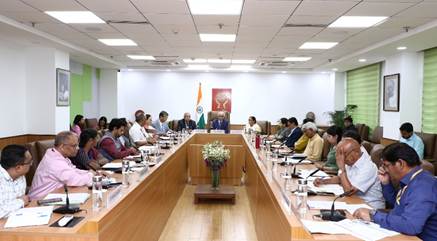
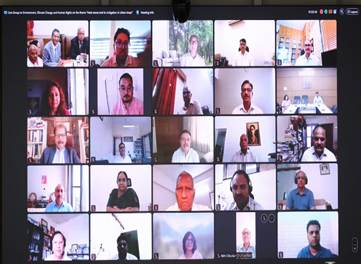
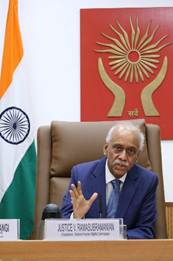
New Delhi, Delhi, 4th of June 2026 : The National Human Rights Commission (NHRC), India organised a meeting of its Core Group on Environment & Climate on the theme ‘Heat Wave and its Mitigation in Urban Areas’ in hybrid mode at Manav Adhikar Bhavan, New Delhi. The meet generated lots of interest among various stakeholders and saw a very meaningful participation. Chairperson, Justice V. Ramasubramanian while presiding the meeting, said that there is a recurring annual discourse on pollution in winter and heat waves in summer for some time now without any visible effects of the mitigation efforts to protect human life from the impact of these crises. NHRC Members, Justice (Dr.) Bidyut Ranjan Sarangi, Smt. Vijaya Bharathi Sayani; Secretary General, Shri Bharat Lal; DG (I), Smt. Anupama Nilekar Chandra; Joint Secretary, Smt. Saidingpuii Chhakchhuak; Core Group members, Special Rapporteurs, Special Monitors, senior functionaries of Government of India and various parastatal organisations; Municipal Commissioners of Ahmedabad and Indore, eminent domain experts and members of civil society organisations were present in the meeting.
Justice Ramasubramanian said that the evolution of human rights initially focused on civil, political, social, cultural and economic rights after the First and Second World Wars, while environmental rights remained largely overlooked. Although the Universal Declaration of Human Rights (UDHR) was adopted in 1948, serious discourse on environmental rights began around 1970 following growing awareness of environmental degradation and major ecological disasters.
He said that the industrial revolution contributed so much to climate change and the consequent heat wave that we started realising it after it really impacted our lives. He said that if you read about the Gandhian economy, he never contemplated the industrialisation of the entire country. He thought that every village should be self-reliant, but the reverse happened, resulting in migration from villages to urban areas. He said that unliveable rural conditions and the growth of ‘concrete jungles’ in cities have further contributed to rising temperatures and heat wave-related challenges. The damage caused to the environment over the decades cannot be reversed and the focus must be on mitigating its impact. It is not possible for us to put the clock back. He emphasised that the destruction of water bodies and forests is the primary cause of increasing heat stress, advocating for stronger protection of existing natural ecosystems, stricter regulation of construction around water bodies and actionable recommendations focused on sustainable urban development.
NHRC, Member, Justice (Dr.) Bidyut Ranjan Sarangi said that there is a need to balance urban development with environmental protection, urging collective action to conserve nature, expand green areas and safeguard resources for future generations.
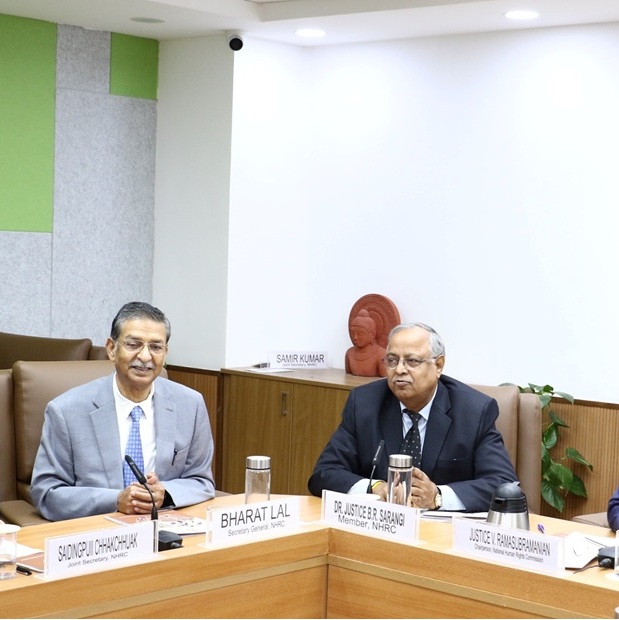
Earlier, NHRC Secretary General, Shri Bharat Lal in his opening remarks, highlighted the background convening the meeting of the Core Group on Environment and Climate. He underscored heat waves as a growing human rights concern linked to environmental degradation and climate change. He said that its impact is more on vulnerable groups, including construction workers, outdoor labourers, gig workers, elderly, pregnant women and those without adequate housing or access to cooling facilities. He said that heat waves are becoming an increasingly acute challenge in urban areas and expressed concern over the rising number of heat-related deaths across the country in recent years.
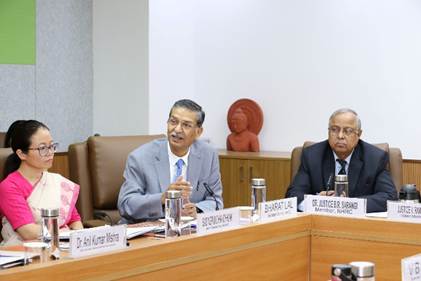
Emphasising that the rights to life, health and clean environment are inherent human rights, he said that the NHRC has been urging States and UTs to take proactive measures. He said that several states and municipal corporations have taken initiatives to mitigate the impact of extreme heat. However, despite this, the number of deaths caused by heat waves continues to rise as per the NCRB data.
He also gave an overview of the three thematic sessions of the meeting which included a.) Understanding heat waves and their impact on human rights; b.) Governance frameworks and city–level response to heat waves in urban areas; and c.) Rights-based pathways for resilient and inclusive cooling in urban areas. He requested the participants to suggest measures – short, medium and long-term to mitigate heatwaves and save people’s lives and their livelihoods particularly in urban areas.
Prof. (Retd.) N. H. Ravindranath, Centre for Sustainable Technology, Indian Institute of Science, Bengaluru called for a broader heat wave definition incorporating humidity, vegetation and land-surface factors, alongside ward-level forecasting, AI-driven vulnerability mapping, stronger heat action plans, dedicated heat officers and protection for vulnerable workers. Dr. Akhil Srivastava, DG, IMD said that above-normal heat wave days are expected in June across several states and outlined IMD’s multi-tier forecasting and warning system and highlighted efforts to deliver heat alerts and advisories directly to vulnerable groups such as street vendors and gig workers.
Shri S. Rakesh Kumar, Advisor (Policy & Plan and CBT), NDMA said that all 23 states vulnerable to heat waves now have Heat Action Plans and advocated stronger district and city-level planning, institutionalisation of the implementation mechanism, enhanced early warning systems, robust reporting mechanisms and dedicated funding for heat wave mitigation. Smt. G. S. Chitra, Joint Secretary, Public Health, Ministry of Health and Family Welfare said that the Ministry is strengthening health-sector preparedness through advisories and climate-health programmes while emphasising the need for coordinated action to address the growing health impacts of climate change and heat waves.
Dr. Aakash Shrivastava, Additional Director, Ministry of Health & Family Welfare cautioned that heat-related health risks are projected to rise significantly by 2035 and called for expanded Heat Health Action Plans, stronger surveillance systems, greater healthcare capacity, wider training of medical personnel and improved hospital preparedness to reduce fatalities. Shri V. K. Chaurasia, Advisor, MoHUA advocated integrating heat resilience into urban planning through cooling action plans, water body rejuvenation, urban greening, cool roofs, sustainable transport and climate-resilient city infrastructure.
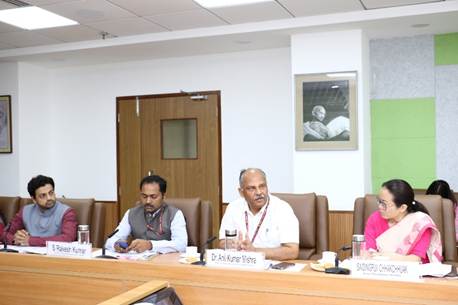
Shri Rajneesh Sareen, Programme Director, Sustainable Building & Habitat Programme, CSE called for worker-centric heat safety protocols, expanded city-level temperature observatories, distributed green and blue infrastructure and performance-based standards to reduce urban heat and improve climate resilience. Dr. Anil Kumar Mishra, Additional Secretary, National Rainfed Area Authority suggested modifying working hours to avoid peak heat exposure, expanding the use of treated wastewater for cooling urban green spaces, enhancing rainwater harvesting and groundwater recharge and increasing heat-mitigating vegetation cover in cities.
Dr. Aarti Khosla, Founder-Director, Climate Trends stressed the need for vulnerability-based prioritisation of heat action plans, promotion of affordable and structural cooling solutions, protection of gig and informal workers from heat-related impacts, improved data transparency on heat-related health effects and stronger cross-sector coordination and public awareness to address rising climate and heat risks. Shri Vimal Meena, Director (Safety) & HOO, Regional Labour Institute, Faridabad highlighted provisions under the Occupational Safety, Health and Working Conditions Code and Social Security Code for worker welfare. He emphasised equal workplace protections for contractual and unorganised workers and called for greater awareness of the early symptoms and prevention of heat stress and heatstroke.
Ms. Prerna Ojha, Research Analyst, CEEW highlighted their work on developing Heat Action Plans through risk-based mapping, preparedness planning, targeted interventions for vulnerable wards, monitoring and evaluation frameworks, gender-sensitive approaches, dynamic updates based on local realities and retrofitting existing infrastructure to improve heat resilience. Shri Sundaram Verma, Environmentalist, flagged the issue of deforestation and called for augmentation of afforestation efforts. Shri Kshitij Singhal, Municipal Commissioner, Indore outlined the challenges faced by urban local bodies, including rapid urbanisation, financial and manpower constraints and competing civic priorities, while sharing Indore’s efforts to improve heat resilience through low-cost measures such as solar-reflective roof coatings in vulnerable housing areas.
Dr. H. S. Ginwal, Deputy Director General, ICFRE, Dehradun said that there is a need to increase urban green cover and use of reflective rooftop measures to mitigate heat. He also urged strengthening early warning systems. Shri Niranjan Dev Bharadwaj, Distinguished Advisor, Global Foundation for Advancement of Environment and Human Wellness highlighted the need to shift from reactive to predictive heat governance through ward-level heat-risk mapping, hyperlocal heat intelligence, digital alert systems, protection of outdoor workers, integration of heat resilience into urban planning and dedicated financial and institutional preparedness for heat waves.
Shri Banchhanidhi Pani, Municipal Commissioner, Ahmedabad highlighted Ahmedabad’s pioneering Heat Action Plan, highlighting its role in reducing heat-related deaths through early warning systems, urban greening, cool roofs, shaded public spaces, micro-level heat-risk mapping, worker protection measures, public awareness campaigns and climate-resilient urban planning. Dr. Promode Kant, Adjunct Professor, Advanced Institute of Wildlife Conservation, Chennai stressed the importance of affordable space-cooling measures such as reflective roofs and paints, transplantation of larger plants for immediate cooling benefits and expanding shade cover around schools and public spaces. Dr. Prerna Joshi, Assistant Professor, NIDM called for legal enforcement of heat-protection measures for outdoor workers, promotion of passive and energy-efficient cooling solutions for low-income groups, wider accessibility of heat wave alerts and effective implementation of urban green cover norms through decentralised green spaces and micro-forests.
Smt. Patricia Mukhim, Editor, The Shillong Time emphasised that weak enforcement of environmental laws, degradation of rivers, wetlands and forests and encroachment on natural ecosystems are key drivers of climate vulnerability in the North-East, calling for stronger protection of water bodies, green spaces and forest cover. Shri Gautam Talukdar, Scientist, Wildlife Institute of India advocated incorporating land surface temperature into heat assessments, monitoring heat emissions from large establishments, using the City Biodiversity Index to track urban blue-green spaces and avoiding maladaptive measures.
Dr. Shalini Dhyani, Dr. Shalini Dhyani, Scientist-E, CSIR, NEERI highlighted the need to address inequitable distribution of urban green spaces, restore ecological corridors and wetland buffers, adopt ecosystem-based urban planning, expand accessible public green spaces and introduce heat-sensitive work schedules for vulnerable workers. Shri Sunil Sharma, Joint Director (Wildlife) MoEFCC also echoed the suggestion for staggered work shifts, improved urban living conditions, greater investment in urban parks and stronger enforcement of environmental and planning measures to reduce heat stress. Shri V. B. Kumar, NHRC Special Monitor for Environment and Climate Change called for audits of compliance with building and urban planning norms, promotion of green infrastructure through mandatory and incentive-based measures, integration of various heat-related plans onto a single monitoring platform and development of a heat wave index.
The key suggestions that emanated from the discussion were:
- Develop ward-level heat vulnerability and resilience maps using GIS, remote sensing, AI, land surface temperature and social vulnerability indicators, supported by localised forecasting, early warning systems and a composite Heat Vulnerability Index;
- Institutionalise Heat Action Plans and their implementation across all states, districts and cities through dedicated Heat Officers, integrated governance dashboards, regular monitoring and inter-departmental coordination;
- Improve heat wave mortality and morbidity surveillance through a unified, scientifically validated reporting and data management system;
- Protect vulnerable populations through occupational heat-safety standards, social protection measures, community cooling centres, accessible public green spaces and targeted interventions for migrants, gig workers, women, children, older persons and persons with disabilities;
- Strengthen heat-health preparedness through specialised heatstroke management units, trained healthcare personnel, emergency cooling equipment, ambulances and integration of heat-health education into medical and public health curricula;
- Mandate heat-resilient and climate-sensitive urban design, including passive cooling, cool roofs, reflective materials, retrofitting of existing buildings, ventilation corridors and climate-responsive building standards;
- Expand nature-based solutions by increasing urban green cover, native tree plantations, urban forests, green corridors, wetland buffers and restoring rivers, lakes, wetlands and other blue-green infrastructure;
- Promote sustainable water management through rainwater harvesting, groundwater recharge, wastewater reuse and protection of urban water bodies and catchment areas;
- Regulate waste heat emissions, introduce heat-resilience ratings for buildings and residential complexes and strengthen enforcement of environmental, building and urban planning regulations through periodic compliance audits;
- Strengthen public awareness and risk communication through multilingual, accessible and community-based outreach, including voice-based alerts for digitally excluded populations; and
- Mainstream heat resilience into city master plans, development plans, municipal budgets and climate action strategies, backed by dedicated funding and institutional support at all levels of government.
The Commission will further deliberate on these suggestions to finalise its recommendations to the centre and state governments.



More Stories
‘VIMARSH’ DRDO-Industry Synergy Meet: Raksha Mantri Unveils Key Policy Initiatives To Empower Msmes & Start-Ups And Launches Framework To Share Software Source Codes With Licensee Industries.
Approach Communications & Approach Entertainment Launch Dedicated Spiritual & Wellness Vertical.
Union Environment Minister And Gujarat Chief Minister Inaugurate World Circular Economy Forum (WCEF) 2026 At Gandhinagar.