
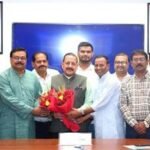
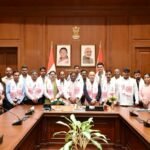

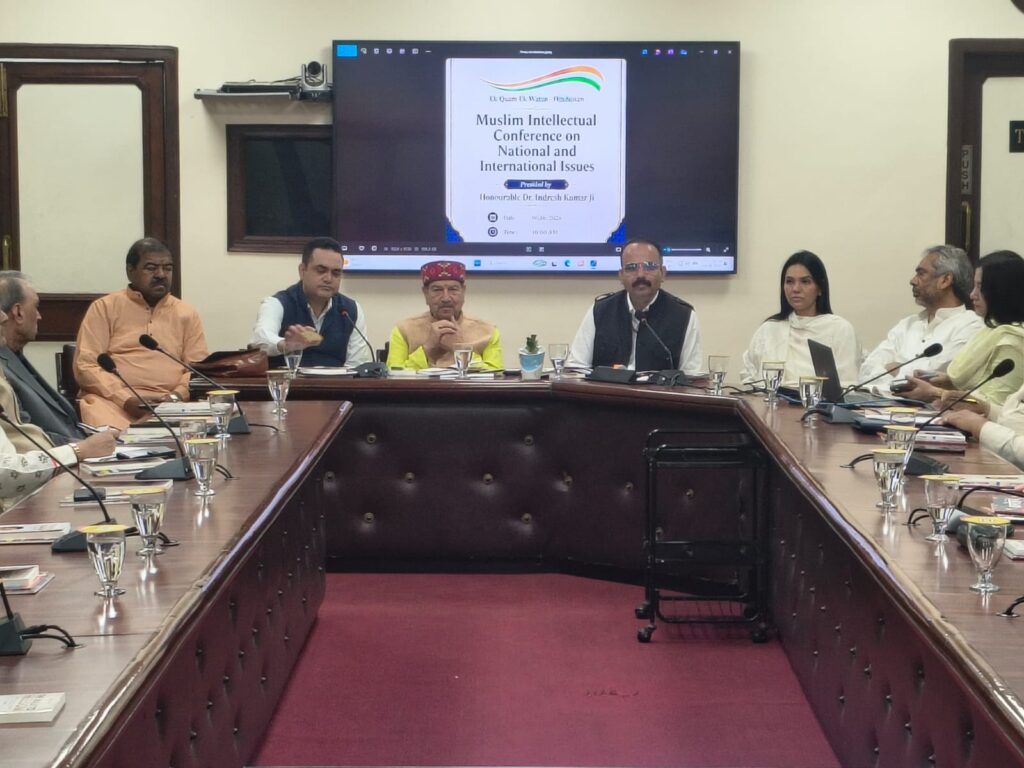
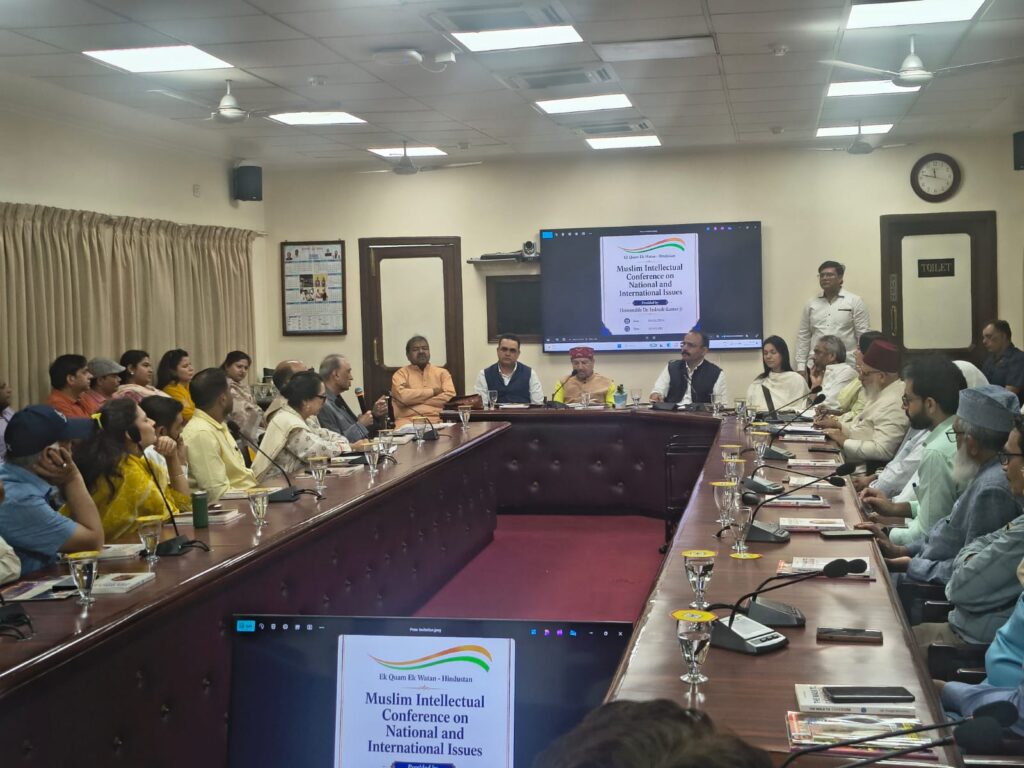
New Delhi, Delhi, 7th of June, 2026 : The Muslim Intellectual Conference on National and International Issues, organized under the theme “Ek Qaum, Ek Watan – Hindustan”, brought together leading Muslim intellectuals, academicians, religious scholars, legal experts, social activists, youth leaders, and policy practitioners at Haryana Bhawan, New Delhi.
Presided over by Hon’ble Dr. Indresh Kumar, Margdarshak, Muslim Rashtriya Manch, the conference served as a platform for meaningful dialogue on national unity, social harmony, educational advancement, and the role of Indian Muslims in shaping the future of the nation.
Delivering the keynote address, Dr. Indresh Kumar emphasized that all Indians share a common heritage, destiny, and responsibility towards the nation. He reminded the gathering that India’s strength lies in its unity amidst diversity and urged citizens to rise above divisions and embrace a shared national identity.
Drawing inspiration from the life of former President Dr. A.P.J. Abdul Kalam, Dr. Indresh Kumar highlighted the importance of choosing role models who symbolize knowledge, patriotism, service, innovation, and humanity. He observed that the future of any community is determined by the ideals and personalities it chooses to follow. He stressed that young people should be inspired by nation-builders rather than symbols of conflict and division.
A key theme that resonated throughout the conference was the vision of “Ek Qaum, Ek Watan – Hindustan”, which advocates a shared sense of belonging rooted in citizenship, constitutional values, and national commitment. Speakers noted that India’s progress depends upon strengthening social cohesion and fostering constructive dialogue among all sections of society.
Prof. Shahid Akhtar, National Convenor, Muslim Rashtriya Manch, and Officiating Chairman, National Commission for Minority Educational Institutions (NCMEI), emphasized that India’s civilizational ethos and constitutional framework provide a strong foundation for unity. He called upon intellectuals and community leaders to promote dialogue, bridge social divides, and encourage greater participation in nation-building initiatives.
Col. Tahir Mustafa, National Convenor, Intellectual & Public Relations Wing, Muslim Rashtriya Manch, described the conference as a solution-oriented platform aimed at addressing contemporary national and social challenges. He stated that discussions must move beyond identifying problems and focus on practical solutions that strengthen national integration, public trust, and social harmony.
Dr. Shalini Ali, Social Activist and National Convenor, Muslim Rashtriya Manch, highlighted the transformative role of education, skill development, and social investment in community advancement. She emphasized that lasting progress requires patience, consistency, and long-term vision. Referring to Zakat as a powerful tool for empowerment, she advocated its strategic use in education, entrepreneurship, and youth development.
Mohd. Afzal, National Convener, Muslim Rashtriya Manch, echoed the message of shared responsibility and collective nation-building. Referring to Dr. Indresh Kumar’s address, he noted that communities prosper when they embrace values such as patriotism, service, knowledge, and social responsibility.
Participants also reflected on the historical legacy of Nalanda as a symbol of knowledge, character, and Bharatiya values. Speakers observed that India’s greatness has always been rooted not only in learning but also in the ethical and civilizational principles that bind society together.
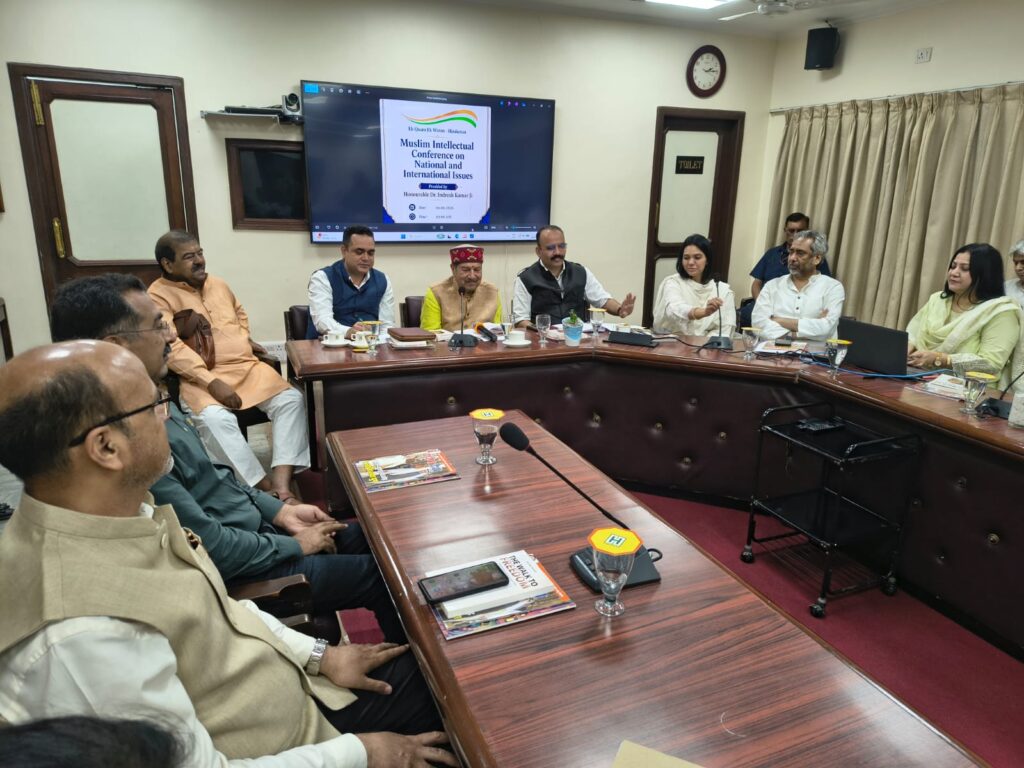
The conference witnessed active participation from scholars, professors, advocates, members of the judiciary, researchers, students, women leaders, and representatives from various professional and social sectors. Discussions covered a wide range of national and international issues, with a common focus on promoting social harmony, educational empowerment, constitutional values, and inclusive development.
The event concluded with a collective commitment to the vision of “Hindustan First, Hindustani Best”, reaffirming that national unity, mutual respect, and shared responsibility are essential for realizing the goals of Viksit Bharat and Shreshtha Bharat.
The gathering ended with a strong message that India’s future will be shaped by dialogue over division, cooperation over confrontation, and nation-building over narrow identities.
More Stories
Postal Employee Organisations Hail The Government For ‘Reinventing’ India Post , Thank PM Modi For Turning It Into A Modern, Citizen-Centric Service Network.
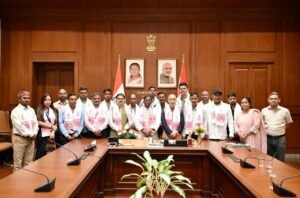
UP Media Delegation Calls On Assam Governor On First Day Of Six-Day Northeast Visit.
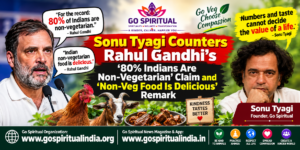
Sonu Tyagi Counters Rahul Gandhi’s ‘80% Indians Are Non-Vegetarian’ Claim And ‘Non-Veg Food Is Delicious’ Remark.