





New Delhi, Delhi, 15th of July 2026 : The Translational Health Science and Technology Institute (THSTI), an institute of the Biotechnology Research and Innovation Council (BRIC), Department of Biotechnology, Government of India, today successfully hosted its third annual industry business meet, SYNCHN 2026 (Synergistic Collaboration in Healthcare Innovation), at the NCR Biotech Science Cluster campus in Faridabad. The event brought together prominent global health leaders, biotechnology experts, venture capitalists, startups, and policymakers to address coordination gaps and build a concrete pipeline to transfer lab-bench science into commercial-scale patient solutions.
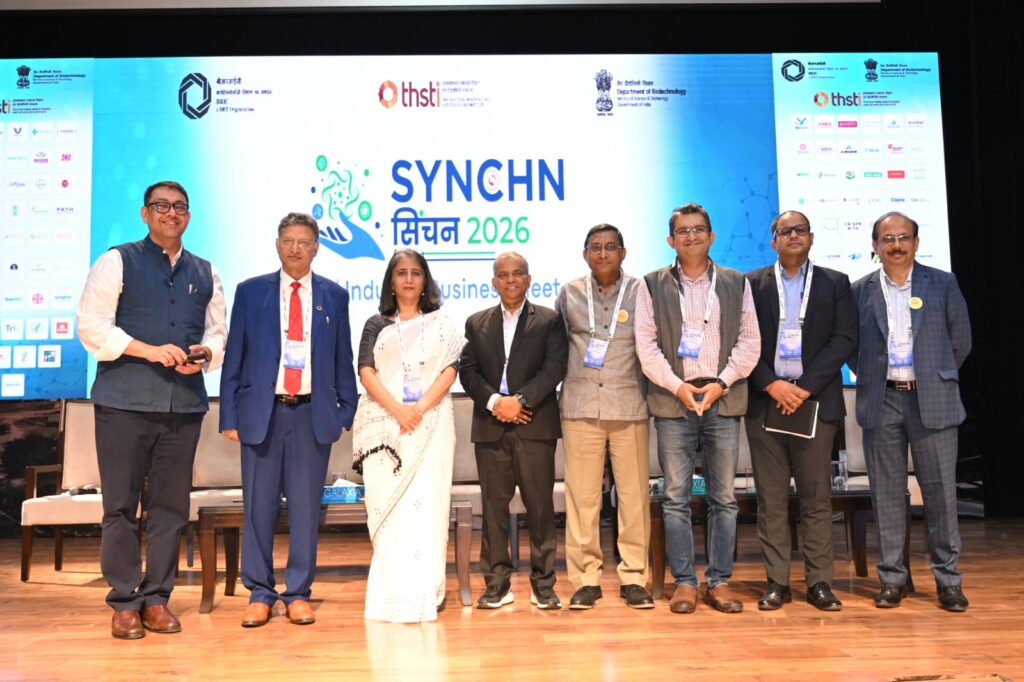
Chief Guest Dr. Kiran Mazumdar-Shaw, Executive Chairperson, Biocon, delivered a virtual address outlining the profound technological transitions reshaping global healthcare:
“I believe the 21st century will increasingly belong to Biology and Biotechnology, led by AI. While India has built world-class scientific institutions, our challenge has never been science but its translation. Building an ecosystem that takes innovation seamlessly from discovery to commercialization is precisely why advanced institutes like THSTI and platforms like SYNCHN are so critical. Value is created only when scientific excellence matches translational excellence through cross-boundary trust and collaboration.”
Welcoming delegates, Prof. Ganesan Karthikeyan, Executive Director of THSTI, outlined the summit’s strategic trajectory, noting that while SYNCHN’s initial edition in 2024 saw 13 Letters of Intent signed, the second edition in 2025 reached a more robust milestone of 19 binding strategic agreements. Prof. Karthikeyan reasserted THSTI’s accountability to outcomes rather than mere outputs, pledging the institute’s state-of-the-art facilities and research acumen to de-risk commercialization and drive continuous academia-industry dialogue. He highlighted THSTI’s robust translation capacity, its fully operationalised Medical Research Centre (MRC) and the Accelerated Productisation and Epidemic Preparedness (APEX) initiative. MRC has an early-phase clinical trial unit, an advanced CAR-T cell research unit, and India’s first Controlled Human Infection Studies (CHIS) facility. The APEX leverages a national-scale pilot production platform designed to aggressively close the “valley of death” between validated research leads and manufacturable biologics.
The summit also anchored pivotal strategy updates from national health administrators. Dr. Rajeev Singh Raghuvanshi (Drugs Controller General India, CDSCO) said that CDSCO is actively shaping a new regulatory system for biologics that integrates non-government industry experts to transform national policy and operational process flows. Concurrently, Prof. M. Srinivas (Member, NITI Aayog) focused on transforming scientific discoveries into affordable, scalable, and real-world healthcare solutions, advocating for reinforced collaboration corridors between premier clinical centers and core research hubs.
Addressing the deep-tech financial landscape, Dr Manish Diwan highlighted the newly operationalised BIRAC Research Development and Innovation (RDI) Fund as a primary catalyst to bridge lifecycle funding gaps for startups, industry, and national labs. This is supported by an impressive macro-environment, with Mr. Amit Pandey (IVCA) noting that India’s bioeconomy is sustaining a remarkable 18% year-on-year growth.
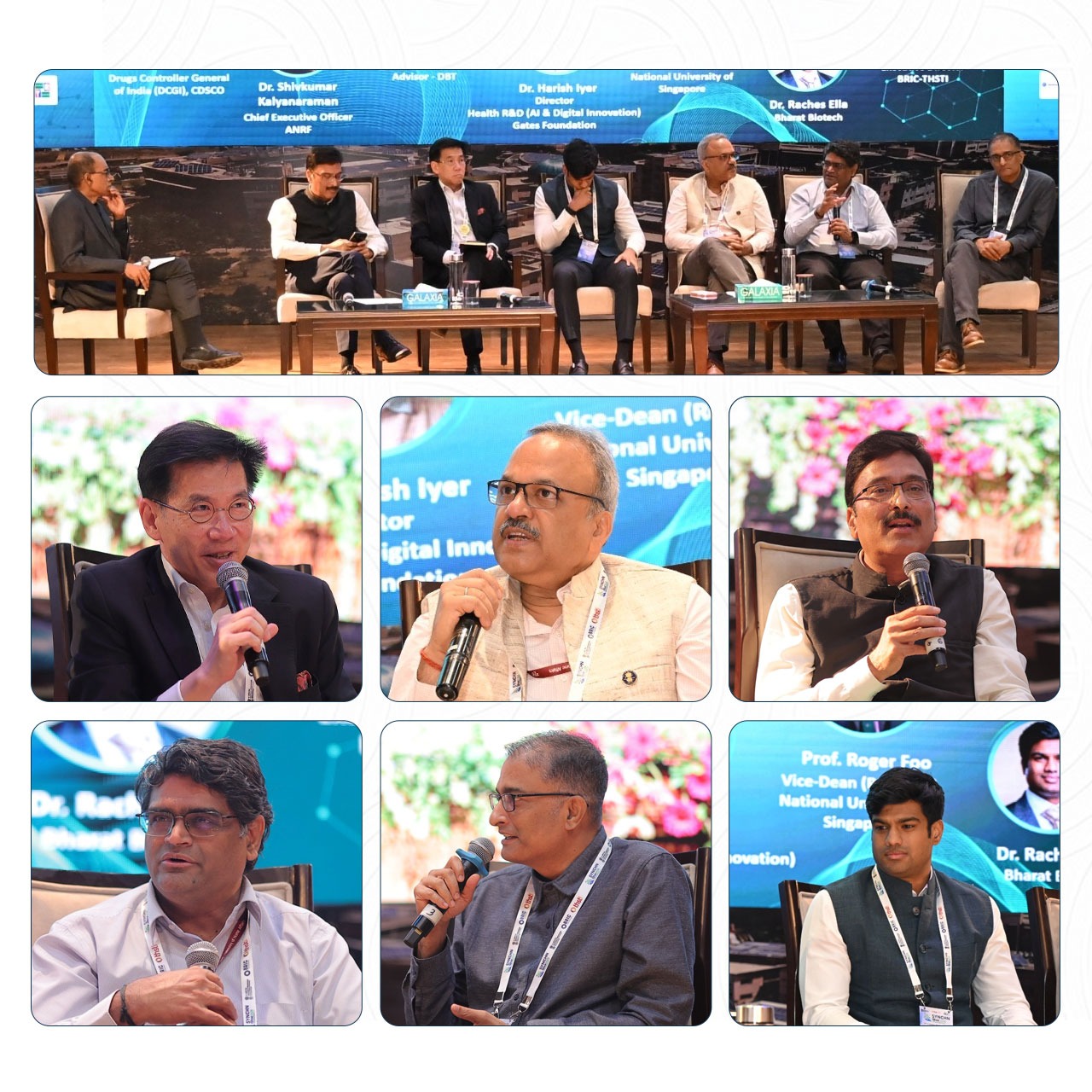
There were crucial panel sessions during the SYNCHN 2026, as highlighted below:
| Panel / Session | Key Takeaways |
| Plenary Panel: Global Health – Science, Manufacturing & Partnerships | This panel highlighted India’s expanding influence in addressing global healthcare challenges by strengthening international scientific collaborations and integrated research ecosystems. The focus was on building competitive manufacturing, understanding the regulatory aspects, robust public-private partnerships, and resilient research ecosystems. |
| Panel 2: Accelerating Early Clinical Translation – From Discovery to First-in-Human | Streamlining pathways to transition academic breakthroughs to first-in-human trials faster and utilizing integrated clinical research platforms as critical enablers for real-world validation. |
| Panel 3: Building the Bridge – Enhancing the Efficiency of Translational Platforms | The discussion highlighted the need to bridge the gap to commercialisation by aligning innovators, investors, and accelerators to scale biotech startups. |
The day concluded with open, interactive forums that allowed industry representatives to interface directly with THSTI scientists, alongside guided tours of the institute’s state-of-the-art core infrastructure platforms.
6CTQ.jpeg)




More Stories
Amit Trivedi Reveals He Cried While Working On ‘Ek Main Aur Ekk Tu’ On Komal Nahta’s Game Changers: The Music Series: “If Shakun Batra Liked A Song, Karan Johar Wouldn’t Like It; If Karan Liked A Song, Shakun Didn’t, And I Was Lost.”.
The Omaxe State Hosts Two-Day Navratri Celebration With ‘The Raas Affair.
Inorbit Mall Cyberabad Brings The Festive Spirit Alive With ‘Rhythms Of Dasara’ And Exciting In-Mall Experiences.