





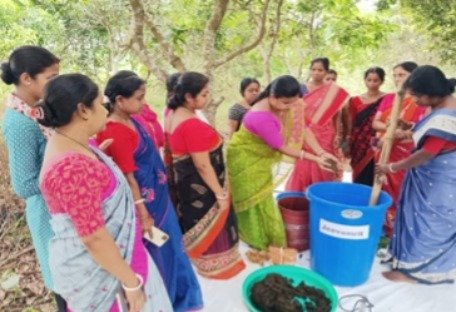
Sepahijala, Tripura, 2nd of September, 2026 : The innovation on Maize–Green Gram intercropping under natural farming promotes sustainable, chemical-free agriculture using Beejamrut seed treatment, Ghan Jeevamrut (500 kg/ha), straw mulching (10 t/ha), and foliar sprays of Jeevamrut (5%) and Neemastra (5%). It addresses challenges of high input cost, soil degradation, and pest pressure through improved soil biology, moisture conservation, and natural pest management. The scientific approach integrates intercropping for better resource use efficiency and nitrogen fixation. It recorded maize yield of 5193 kg/ha, green gram 504 kg/ha, MEY 7912 kg/ha, net return Rs. 63,724/ha, and BCR 1:2.50. Its uniqueness lies in replacing chemical inputs with indigenous formulations, making it more sustainable and cost-effective than conventional systems.
The Cauliflower–Marigold intercropping under natural farming uses Beejamrut seed treatment, Ghan Jeevamrut (500 kg/ha), and foliar applications of Jeevamrut (5%), Neemastra (5%), and Bramhastra (5%) to ensure sustainable and chemical-free production. It addresses challenges such as high input costs, pest and disease pressure, and inefficient land utilization. The scientific approach integrates vegetable–flower intercropping to enhance resource use efficiency, natural pest suppression, and soil biological activity. The system achieved cauliflower yield of 9027 kg/ha, marigold yield of 3,25,725 flowers/ha, net return of Rs. 1,11,876/ha, and BCR of 1:5.81. Its uniqueness lies in combining high-value dual cropping with indigenous natural inputs, making it highly profitable, eco-friendly, and superior to conventional chemical-based vegetable production systems in the region.
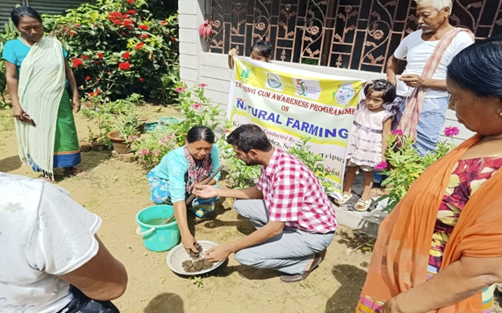
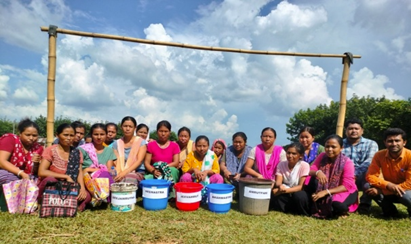

The natural farming demonstration on potato uses Beejamrut seed treatment, Ghan Jeevamrut (500 kg/ha), straw mulching (10 t/ha), and foliar applications of Jeevamrut (5%), Neemastra (5%), and Bramhastra (5%) to ensure chemical-free production. It addresses challenges of high input cost, soil degradation, and pest incidence through enhanced soil microbial activity, moisture conservation, and natural plant protection. The scientific approach focuses on biologically active soil systems and integrated nutrient–pest management. The system achieved 16,947 kg/ha yield, Rs. 88,970 net return, and BCR 1:2.11. Its uniqueness lies in complete replacement of synthetic inputs with indigenous formulations, making it more sustainable and cost-effective than conventional potato technologies in the region.
The increased microbial load in the soil enhanced nutrient availability and uptake, thereby improving overall crop productivity.
Adoption and extension approaches for promotion of natural farming:
The Natural Farming demonstrations across Maize–Green Gram, Cauliflower–Marigold, and Potato systems have shown strong potential for promoting sustainable, chemical-free agriculture while improving farm profitability and soil health. These systems rely entirely on indigenous inputs such as Beejamrut for seed and rhizome treatment, Ghan Jeevamrut (500 kg/ha) for soil enrichment, straw mulching (10 t/ha) for moisture conservation, and foliar sprays of Jeevamrut (5%), Neemastra (5%), and Bramhastra (5%) for nutrient supplementation and pest management.
The Maize–Green Gram intercropping system demonstrated efficient resource utilization through crop diversification and biological nitrogen fixation. It achieved a maize yield of 5193 kg/ha and green gram yield of 504 kg/ha, with a maize equivalent yield (MEY) of 7912 kg/ha, net return of ₹63,724/ha, and a benefit-cost ratio (BCR) of 1:2.50.
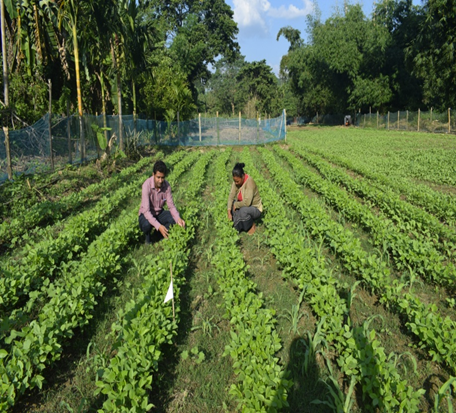
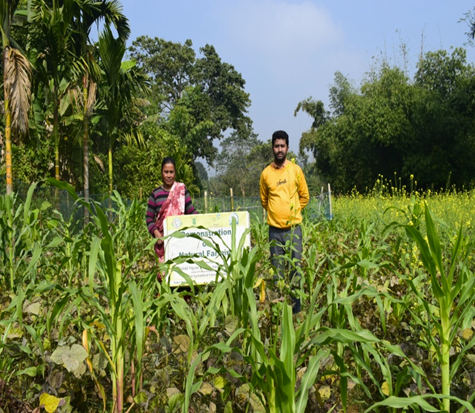

The Cauliflower–Marigold intercropping system proved highly profitable by combining vegetable and flower production, enhancing both income and pest suppression through ecological balance. It achieved a cauliflower yield of 9027 kg/ha and 3,25,725 marigold flowers/ha, with a net return of ₹1,11,876/ha and an impressive BCR of 1:5.81. The Potato-based natural farming model also showed strong performance, yielding 16,947 kg/ha with a net return of ₹88,970/ha and a BCR of 1:2.11, demonstrating that even staple crops can be effectively produced without synthetic inputs.
Conclusion:
Across all systems, a key scientific finding was the significant improvement in soil microbial activity. The continuous use of organic formulations and mulching enhanced microbial populations, which in turn improved nutrient availability, nutrient uptake by crops, and overall soil fertility. This biological activation of soil systems replaced the need for chemical fertilizers and pesticides while maintaining productivity.
An important outcome of these demonstrations was the strong adoption by neighbouring farmers. Observing higher profitability, reduced input costs, and the availability of safe, chemical-free vegetables, many farmers in nearby areas began adopting these natural farming practices. The visible improvement in soil health, particularly increased microbial load and better moisture retention, further strengthened their confidence in the system.
Overall, these natural farming models demonstrate a viable, eco-friendly alternative to conventional agriculture by integrating intercropping, indigenous inputs, and soil biology enhancement. They not only ensure sustainable production and higher economic returns but also promote long-term soil health and environmental conservation, making them increasingly acceptable among farming communities.
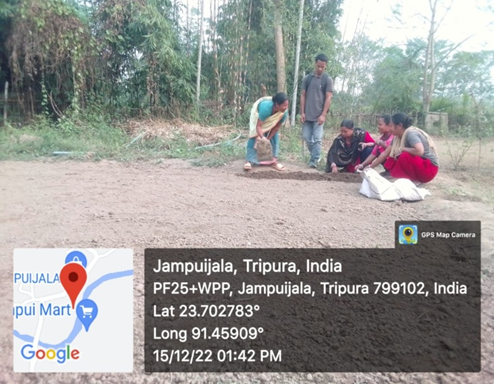
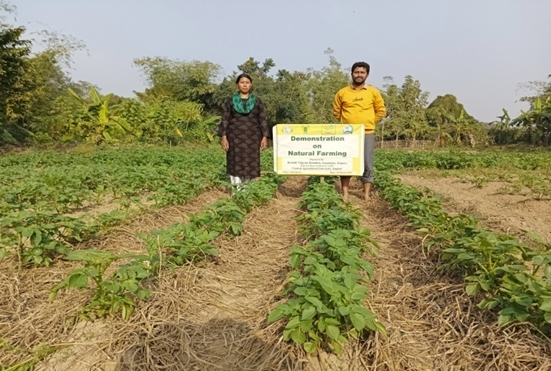

Commercialization of the natural farming produce is being carried out through organized local marketing channels. The enterprise has obtained firm registration from the Sub-divisional Zonal Development Office, Jampuijala, for the sale of chemical-free natural farming products. Further their lands are applied for PGS certification. The products are supplied through natural farming outlets and directly marketed to school hostels, hotels, wholesalers, and local buyers in Agartala. The initiative is helping expand the market for safe and naturally produced food products while creating sustainable income opportunities for farmers involved in natural farming practices.
[The article is written by Dr Utpal Dey (SMS plant protection) , Dr Shatabhisa Sarkar( Senior Scientist and head) Krishi Vigyan Kendra Sepahijala, & Prof A.B.Patel, Dean, College of Fisheries, CAU (I), Tripura for publication on the occasion of forthcoming three days National Conference on Natural farming: pathways to Self Relitant Farming and Rural Prosperity, with Motto ‘ one farm, one Ecosystem and one Health’ during 9-11 September 2026 under Agesis of Central Agricultural University, Manipur, to be held at college of Post Graduate Studies in Agricultural Sciences, Umiam, Meghalaya]




More Stories
Indian Army Successfully Concludes Tripura Agniveer Recruitment Rally 2026.
Durga Puja 2026 : Azad Hind Sangha Club’s Goddess Durga Idol And Puja Pandal.
Unnatural Death Of 45-Year-Old Man Triggers Grief In Madhya Ganaki, Khowai.