





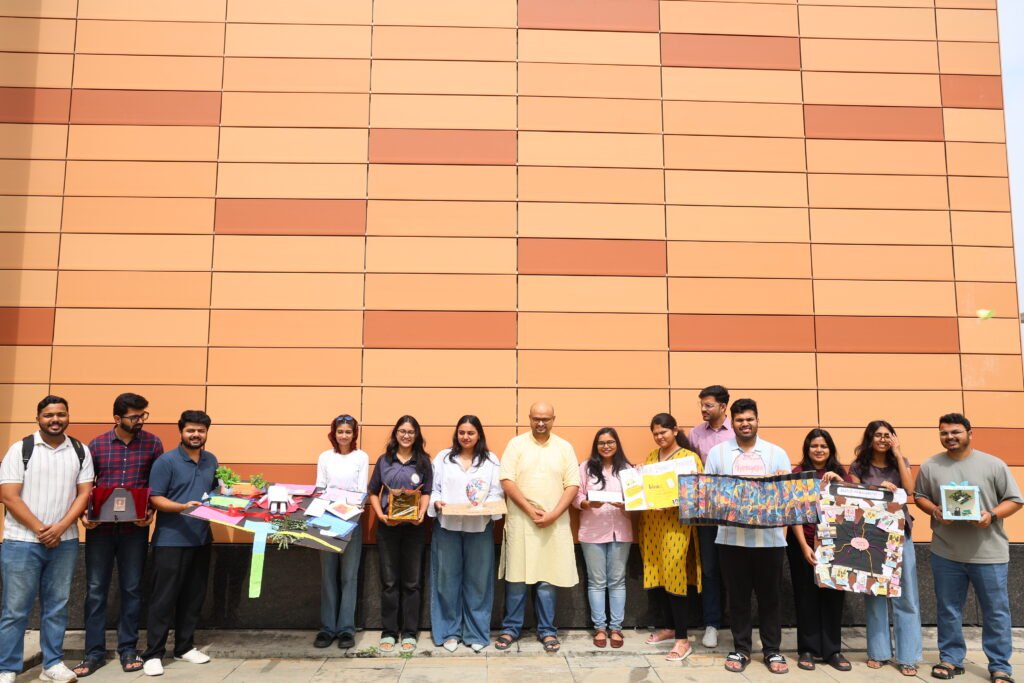
Nagpur, 31st of August, 2026 : Students of the Brand Management course at the Indian Institute of Management Nagpur recently demonstrated an innovative blend of creativity and experiential learning by transforming classroom theories into a series of engaging phygital models that combined tangible structures with digital and interactive elements.
Moving beyond conventional textbook-based learning, the students developed models illustrating important aspects of brand management, including brand identity, positioning, personality, storytelling and other factors contributing to a brand’s success. Several models examined well-known brands and their distinctive styles, while others creatively represented theoretical concepts included in the Brand Management curriculum.
The classroom model-making activity was conceived and guided by Prof. Rahul Kumar Sett. It encouraged students to examine how brands communicate their values, differentiate themselves in competitive markets and build lasting relationships with consumers. By converting abstract theories into tangible representations, the exercise helped students develop a deeper understanding of the strategic thinking behind successful brands.
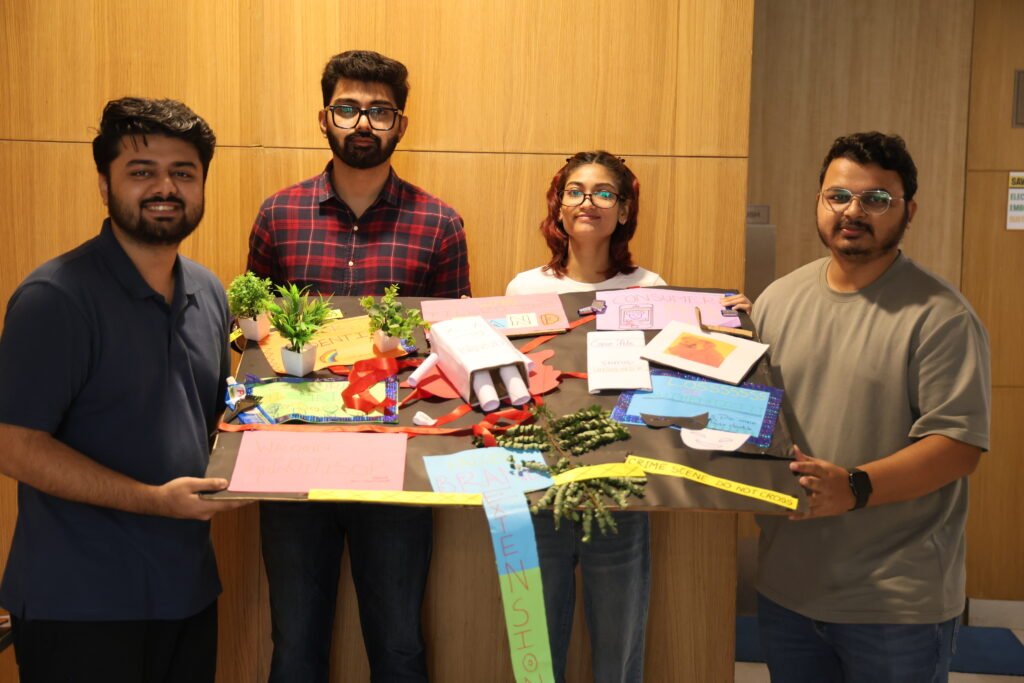
Among the exhibits was a rotating stage inspired by traditional Japanese Kabuki theatre, used to explain filmmaker Sergei Eisenstein’s montage theory. Another model demonstrated the Kuleshov effect, named after filmmaker Lev Kuleshov, showing how the juxtaposition of images can create new meaning. A third presented the idea of a brand as āpta, or a trustworthy authority, drawing on classical Indian thought.
Director of IIM Nagpur, Dr.BhimarayaMetri, visited the exhibition and interacted with the students. He closely observed the models and appreciated the creativity, research and conceptual understanding reflected in their work. The students explained the ideas behind their models and how different visual elements were used to represent specific branding concepts.
Speaking about the initiative, Prof. Rahul Kumar Sett said, “Brand management cannot be understood only through definitions and frameworks. Students must learn to observe brands, interpret their choices and connect theoretical concepts with market practices. This activity was designed to make learning participative and application-oriented. The enthusiasm with which the students translated complex ideas into creative models was truly encouraging. The exercise drew upon a wide range of disciplines, including art, cinema, music and theatre, while remaining firmly connected to the core concepts of brand management.”
For the students, the exercise offered an opportunity to explore branding from the perspectives of both managers and consumers. It involved research, teamwork, conceptualisation and visual storytelling, while also requiring them to communicate their ideas clearly to faculty members and peers.
Sharing their experience, participating students said, “The activity helped us see brand management beyond logos and advertisements. While creating the models, we understood how positioning, colours, identity, consumer perception and consistency work together to build a successful brand. It made the concepts easier to understand and remember, while also giving us an opportunity to learn collaboratively.”
Appreciating the initiative, Dr.BhimarayaMetri said, “This activity is closely aligned with the vision of the National Education Policy 2020, which places strong emphasis on experiential, multidisciplinary and learner-centric education. Management education must enable students to apply knowledge, think creatively, work in teams and address real-world situations. Such initiatives make the classroom more dynamic and prepare students to become thoughtful, innovative and responsible managers.”
The exercise reflected IIM Nagpur’s continuing emphasis on innovative pedagogy and practice-oriented management education. It demonstrated how classroom learning can become more meaningful when students are encouraged to experiment, create and apply management theories in imaginative ways.




More Stories
Chetan Sharma And Bollywood Stars Come Together For Salute Tiranga Cricket League.
A-One Group Hosts Czech Republic Delegation In Bengaluru; Signs Mous To Advance Defence And Aerospace Collaboration.
Young Boys Club Inaugurates Its 57th Durga Puja With The Theme ‘Ram Rajya’, Promoting Peace, Dignity And Harmony.