



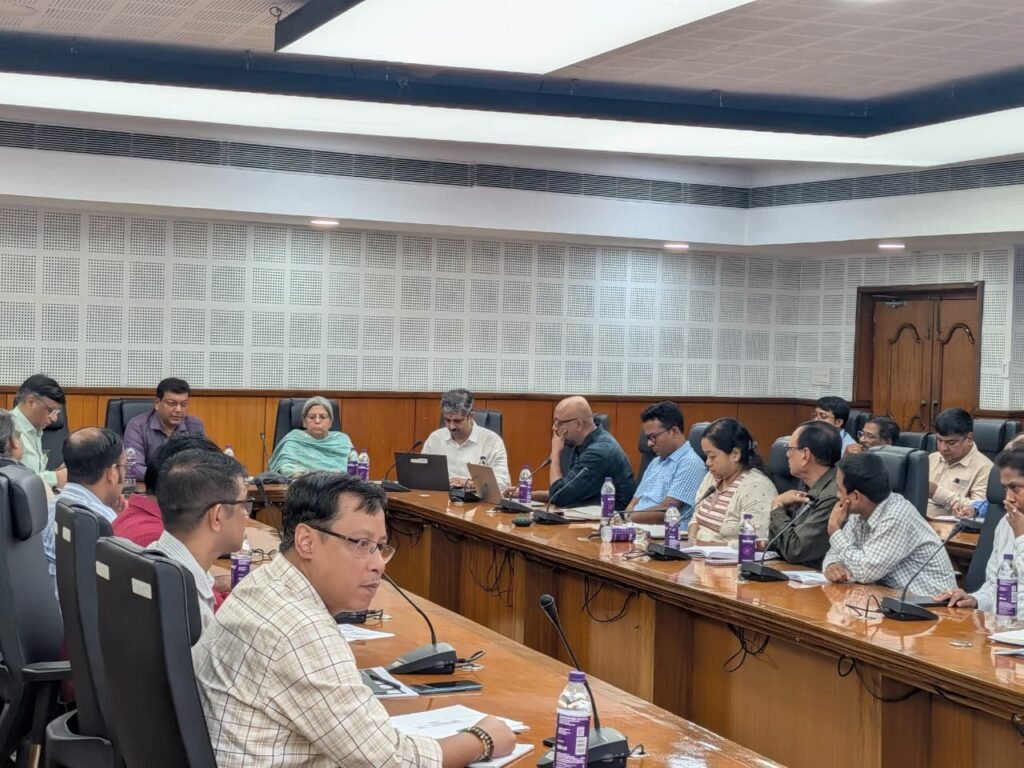
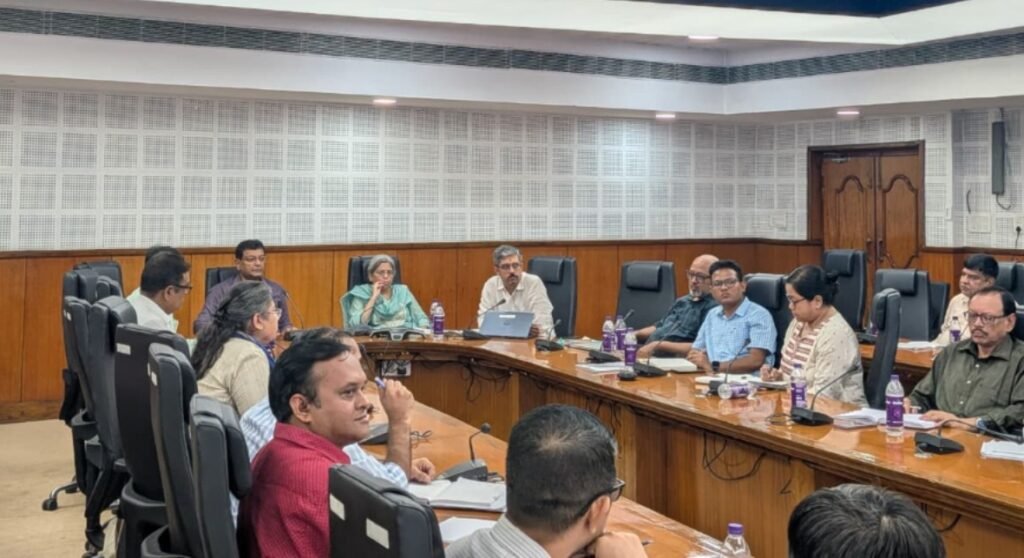
Agartala, Tripura, 29th of September, 2026 : A high-level review and technical discussion on the progress of the Tripura Rural Economic Growth and Service Delivery Project (TRESP) was held with the World Bank, focusing on accelerating livelihood activities, strengthening community institutions and deepening participatory development in tribal areas of Tripura. The meeting was chaired by TRESP Project Director Shri Subhashis Das, with World Bank Task Team Leader Preeti Kumar, along with Amit Arora, Souvik Mitra, Nilanjana Gupta, Kamlesh and other members of the World Bank team participating in the discussions.
A major focus of the review was the transition of Producer Groups (PGs) from formation to active and sustainable economic enterprises. Against a target of 2,531 PGs, around 2,543 PGs have been formed, while nearly 2,494 PGs have opened bank accounts, strengthening their institutional and financial linkage. The review also noted that around 20,748 PG members have started economic activities, representing approximately 45% of the total PG membership. To assess the performance and future support requirements of PGs, grading under A, B, C and D categories has been initiated, with around 956 PGs already graded.
The meeting also reviewed the implementation and utilisation of Viability Gap Funding (VGF) for supporting viable livelihood enterprises. Greater emphasis was placed on ensuring that VGF reaches productive activities and contributes to business growth, particularly among better-performing PGs. Agriculture, fisheries and livestock-based activities, along with working capital, infrastructure, value-chain development and market linkage, were discussed as important areas for strengthening the livelihood ecosystem.
Strengthening Cluster Level Federations (CLFs) was another key area of discussion. Proper maintenance of cash books, ledgers and other financial records, improved financial management and regular monitoring were highlighted as essential for building accountable and sustainable community institutions. The CLFs are envisaged as important platforms for supporting PGs through collective procurement, marketing, financial management and business facilitation.
The review also highlighted the role of Community Managed Training Centres (CMTCs) as local centres for knowledge, capacity building and livelihood support. Of the 23 proposed CMTCs, 16 have been established. The discussion emphasised regular training calendars, monthly meetings, coordination with PIUs and demand-based skill development. The possibility of developing CMTCs as knowledge hubs for women farmers was also highlighted, with a focus on strengthening their access to knowledge, technology, enterprise development and markets.
Beyond livelihood interventions, Project Director Shri Subhashis Das placed special emphasis on three strategic areas—capacity building through SIPARD, participatory Village Development Plans (VDPs), and research on tribal development. He stressed the need to further strengthen the training of government officials through SIPARD so that officials associated with TRESP and other relevant departments are better equipped to deliver services effectively in tribal areas.
He also underlined the importance of preparing Village Development Plans across the 23 TRESP operational blocks, along with the preparation and implementation of 23 Model VDPs. The VDP initiative is intended to bring local needs, community priorities and available development resources together through a participatory planning process, thereby providing a more integrated framework for village-level development.
The Project Director further stressed the need to advance research-oriented activities to generate evidence and knowledge on tribal development. Areas such as access to public infrastructure, education, health and wellbeing, livelihoods, primary-sector growth and delivery of public services can provide valuable evidence for future planning and policy interventions in tribal areas.
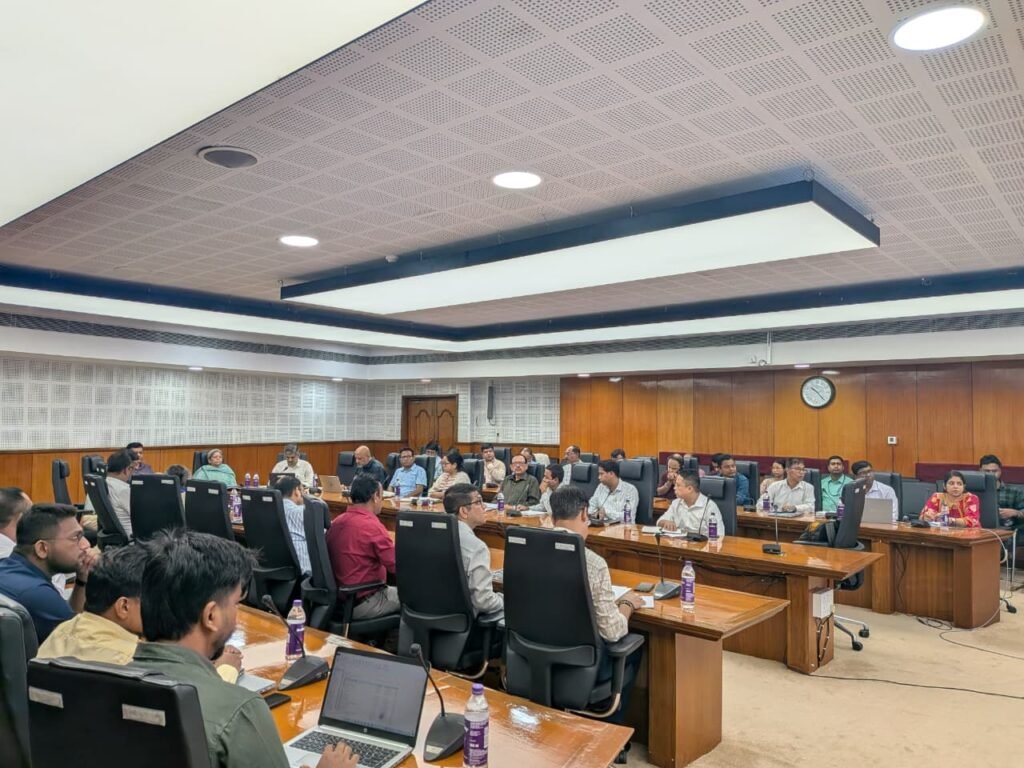
The World Bank review also examined the progress of livelihood interventions under Agriculture, Fisheries and ARDD, with discussions focusing on PG activation, market linkage, infrastructure, working capital and field-level monitoring. The need for regular field visits, identification of implementation bottlenecks and timely technical support was also emphasised.
The review thus provided a broader strategic direction for the next phase of TRESP—moving beyond institution building towards measurable livelihood outcomes, strengthening community-led organisations, developing participatory village plans, building government capacity and generating evidence through research. The integrated approach is expected to further strengthen the foundation for sustainable and people-centred development across Tripura’s tribal areas.



More Stories
Under The Able Leadership Of PM Narendra Modi, Our Country Is Now Advancing Rapidly Toward Development With Stability : CM Of Tripura Dr. Manik Saha.
SIR Aims To Ensure Transparent And Accurate Electoral Rolls : Chief Minister Of Tripura Dr. Manik Saha.
The VC Election 2026 In Ampi Block Accomplished Peacefully.