




New Delhi, Delhi, 3rd of November, 2026 : Buyers and suppliers are asked for more than AI needs. Two filed Metainventions are designed to change that, at any scale. Each side declares a range instead of raw detail, and matching runs on ranges. Suppliers can compete without revealing internal cost or capacity, buyers keep private records home, and each acceptance can leave a sealed record. Exposure can fall, and trusted markets can widen, ahead of Superintelligence.
LIVE www.0to1doctrine.com
| START HERE The 0→1 Doctrine is a filed invention that places any measurement, from a corner shop’s stock to a nation’s freight, on one line between 0 and 1. A human-approved range decides whether AI may act, and a sealed receipt records why. BBAT (Band-Based Archive Triage), a second filing, applies the same line to stored records, new or old. This article explains the doorway into AI commerce, a protocol for what each side shares before AI may use anything. |
THE DOORWAY PROBLEM
Most AI starts hungry. To be considered, a supplier hands over prices and capacity, and a buyer hands over records. Every extra copy costs money and adds risk. The detail often travels further than the decision needs, at a market stall and in cross-border trade alike.
ONE DECLARATION, ONE RANGE
Under the Doctrine, buyer and supplier state a range, called a band, instead of raw detail. One hospital states the care it can give, another the care it needs, each as a band. The AI matches on those ranges, and legal, safety and regulatory checks must pass before anything is authorised.
SUPPLIERS KEEP THEIR SECRETS
A supplier publishes what it can do as a capability token, designed with no link to any buyer. Internal cost and spare capacity can stay private during matching. Savings come from fewer disclosures and failed matches. Income can come from buyers a supplier could not safely approach before.
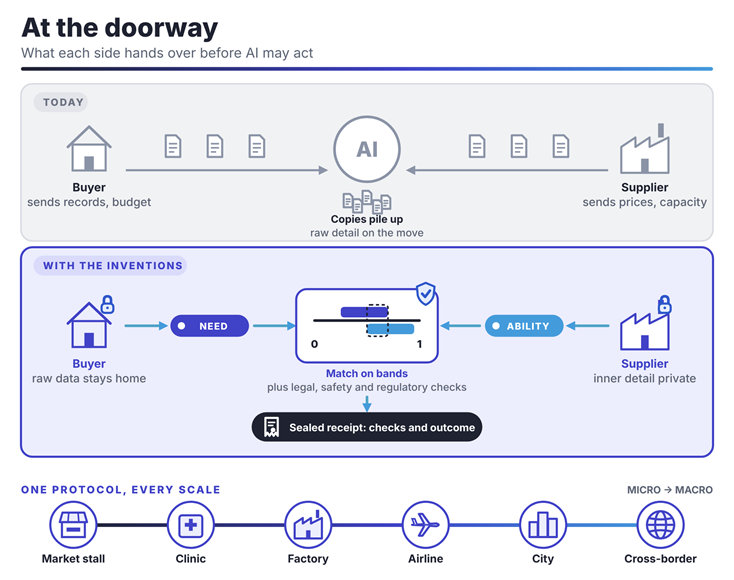
Figure 1. At the doorway: today, and with the inventions.
MANY SUPPLIERS, ONE FAIR TEST
When several suppliers could serve a buyer, each declares its own range and all face the same declared criteria. If two clash, the design describes ways to settle it by rule, not by favour. Buyers can compare more offers, and smaller suppliers can win on fit rather than size.
BUYERS KEEP DATA AT HOME
A buyer’s measurements, budget or health record stay on its own system. Only a range leaves, and the temporary working copy is deleted after use while the original stays with its owner. That can cut data-handling cost and leave less exposed to theft.
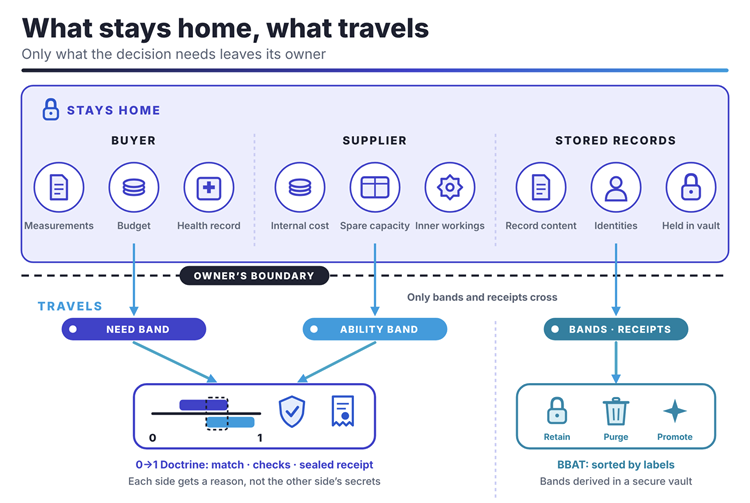
Figure 2. What stays home, what travels.
STORED DATA AT THE DOOR
BBAT sorts stored records before AI reaches them, new or archived. Reading labels such as age, consent and legal hold, it marks each record retain, purge or promote under authorised rules. Storage cost can fall, and promoted records yield bands, derived in a secure vault, that can be offered as AI training signals.
MANY SMALL ASKS, ONE BIG PICTURE
A sensitive picture can be assembled from harmless-looking requests. BBAT is designed to watch for this, whether one AI agent drifts or many probe together. It reads sealed receipts and bands, never identities or content, and escalates to a human. That can flag suspicious patterns before further access.
CLEAR OUTCOMES, WITH REASONS
Every declaration meets a human-approved range and ends in a plain result: approval, approval with conditions, a redesign, another supplier, or a refusal with a reason code. Hard cases go to a human. Each side receives a reason code without seeing the other’s confidential detail.
EARLY WARNING AT THE ENTRANCE
Before anything is accepted, the Predictive Risk Advisory Token can flag signs of risk, from a likely delay to a capacity strain. The flag is advice only, and human operators keep control. Catching a poor input early usually costs less than repairing it later.
REPAIR IF SOMETHING SLIPS IN
No doorway is perfect. The filing describes recovery after an act, where a remedy can start, such as rolling back where possible, with each step recorded. That can shorten outages and shrink the cost of a mistake, and it leaves partners a record they can follow.
A SEALED RECORD
Each accepted entry is sealed in a receipt naming what was checked, never the raw detail. Authorised auditors can verify it later without seeing raw detail. That can lower audit cost and gives insurers and partners a verifiable record of the checks and outcome.
WHAT IT CAN BE WORTH
The Doctrine’s savings can come from less rework, fewer disclosures and fewer failed matches, and its income from entering careful sectors with AI that reviewers accept. BBAT’s savings come from lower storage and exposure cost, and its income from governed bands. Figure 3 compares them.
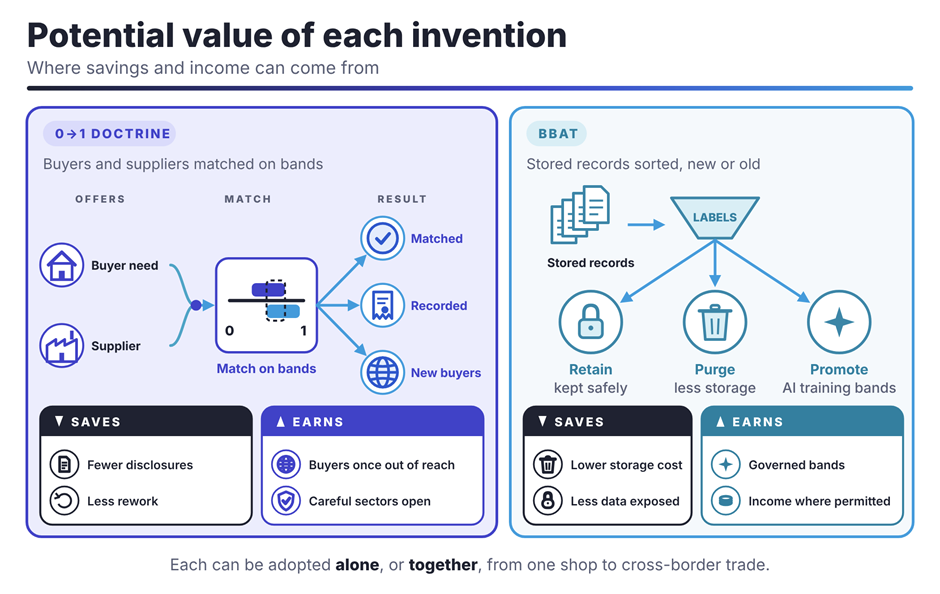
Figure 3. Potential value of each invention.
HUMANS SET THE RANGES
Recognised authorities and domain experts set the ranges, drawing on published standards, contracts and law. The doorway applies what they decide and passes judgment calls to a human. When standards change, ranges can be updated without rebuilding the system, which can ease upkeep.
AHEAD OF SUPERINTELLIGENCE
Superintelligence has not arrived, and these filings do not claim to build it. They offer a doorway any capable AI connected to it would still pass: declare a range, meet the human-approved limit, leave a record. Where a range is not enough, a human decides.
QUESTIONS ON READERS’ MINDS
| Does this suit small suppliers? Yes. Tokens can travel by SMS, voice menus, QR codes or paper, so small firms can join with basic tools. | Can older software connect? The filing describes adapter layers, so existing systems can link in without being replaced. |
| What about an inaccurate declaration? The doorway checks declared ranges. Contracts, regulators and audits decide how declarations are verified, as in any market. | What if countries’ rules differ? The strictest applicable rule prevails, unless an approved override policy says otherwise. |
| Must both inventions be adopted? Either can be adopted alone; together they cover the doorway from both sides. | Is a human still involved? Yes. Hard cases reach a human reviewer who sees ranges and reasons, with wider access only where authorised. |
CLOSING NOTE
Trade without telling, and let every input earn its way in, long before any mind outgrows the room.
LIVE www.0to1doctrine.com
This can be tested, live, via API, governed against ungoverned, side by side.
THE INVENTOR
Systems theorist, inventor, and serial entrepreneur Vatsal Soin holds grants in the US, Japan, India and more; filings span six continents; latest grant, AI footwear, August 2026. Inventions: footwear, apparel fit, Sharable Size Cards, digital twins, robotics, global governed data, archive triage, quantum-resilient cryptography, AI governance. SIM–RMIT and NTU alumnus. Every prior invention was a step; 0→1 is the destination.


More Stories
Great Indian Diwali Travel Report 2026: Group Travel Becomes A Favourite As Indians Spend More To Travel Together.
Story On Beyond Outsourcing: How India Is Emerging As Japan’s Strategic Technology And Innovation Partner.
India’s Warehousing Demand Hits 3-Year High At 32.6 Mn Sq Ft, Manufacturing And Auto Sectors Gain Ground – Vestian.