





Mandi, Himachal Pradesh, 20th of November, 2026 : Researchers at the Indian Institute of Technology (IIT) Mandi have developed a new mathematical modelling framework that uses artificial intelligence (AI) techniques to predict changes in wildlife populations. The model can help scientists understand how predator and prey populations influence each other and forecast their future numbers, even when the available data is limited or irregular.
The research focuses on the wolf and moose populations of Isle Royale National Park, a 544-square-kilometre island in Lake Superior, Michigan, USA. Wolves are the primary natural predators of moose in the park, with moose accounting for nearly 90% of the wolves’ winter diet. Their populations have been monitored annually since 1959, making this one of the world’s longest-running records of predator-prey populations.
Over the decades, both populations have witnessed significant ups and downs. For instance, wolf numbers declined sharply in the early 1980s following a disease outbreak, while the moose population experienced a major decline in the mid-1990s. Understanding such changes is important because an imbalance between predators and prey can affect the health of an entire ecosystem.
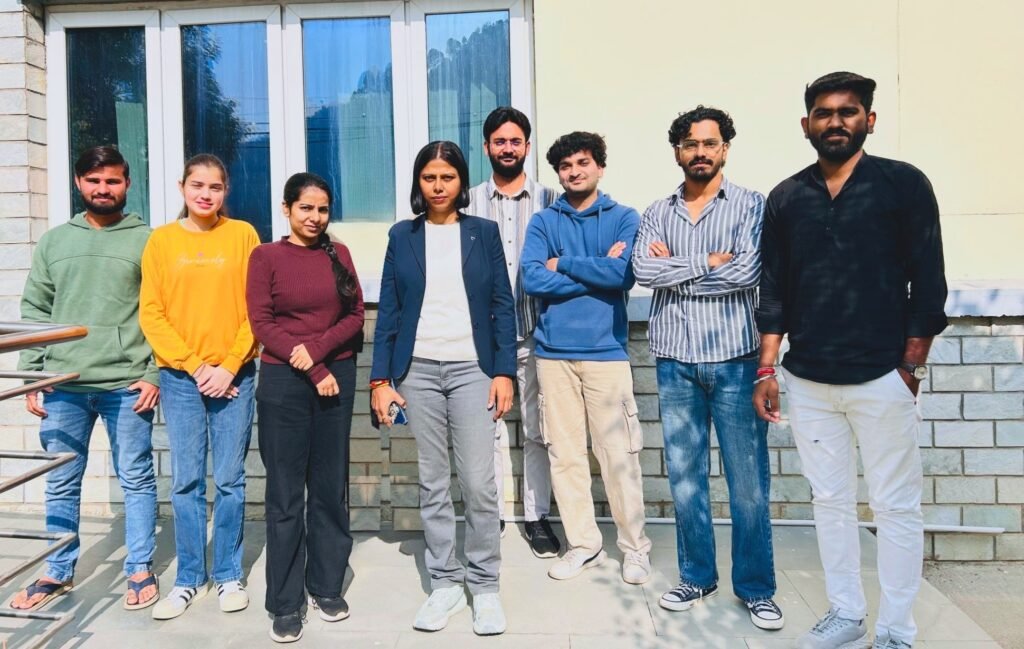
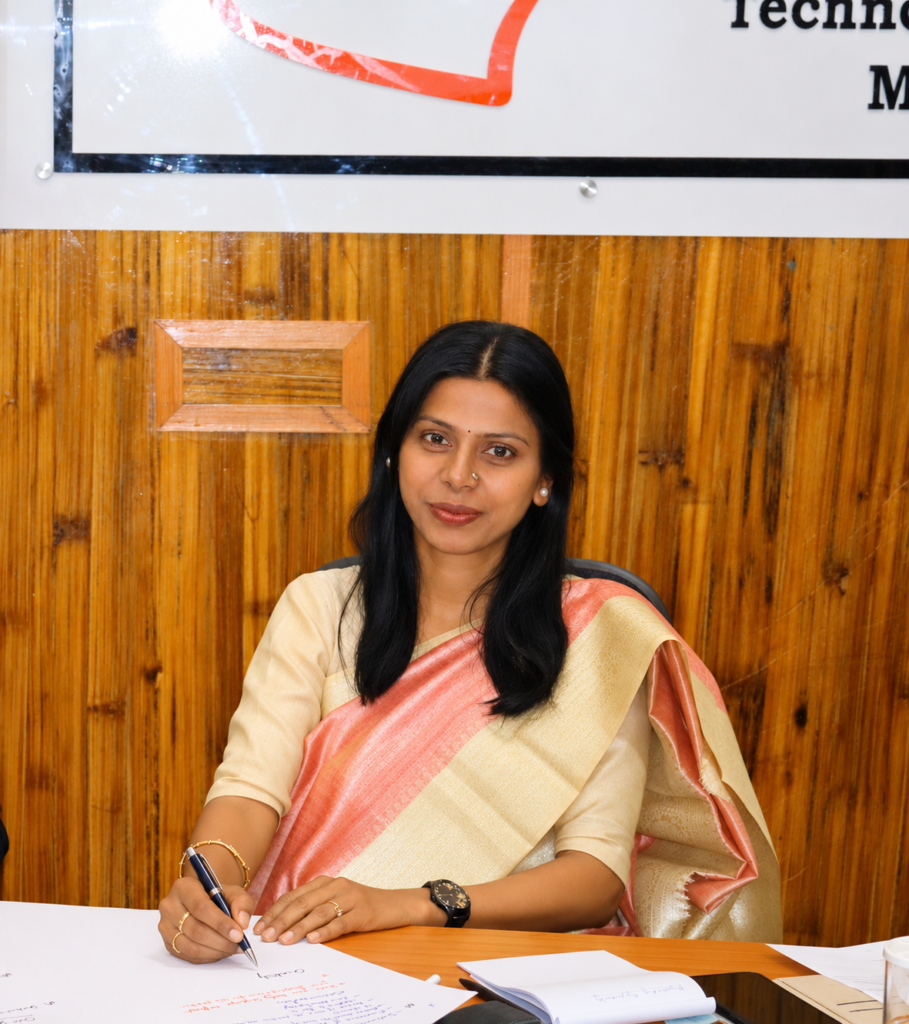
The research has been conducted by Dr Nitu Kumari, Professor at the School of Mathematical and Statistical Sciences, along with her PhD student, Mr Anurag Singh. The researchers developed a model that uses historical population data to estimate how quickly moose reproduce, how wolf populations change naturally, and how predation affects the number of moose. Using these estimates, the model can forecast population trends for up to five years.
The researchers tested two different approaches to understand how wolves hunt moose. Their findings showed that the model based on the relationship between predator and prey numbers performed better than the alternative approach. It also successfully identified periods of unusual population decline in the historical data.
For the period between 2020 and 2024, the model predicted an increase in wolf numbers and a decline in moose numbers, broadly matching the population trends subsequently observed in the park.
According to Prof. Kumari, this is the first study, to the best of her knowledge, to use a self-adaptive mathematical modelling framework combining physics-informed neural networks and transfer learning to study predator-prey population fluctuations. The findings demonstrate how AI-assisted mathematical models can help scientists make meaningful predictions even when environmental data is limited and contains uncertainties.
The research has also attracted international media attention. Prof. Kumari recently gave an interview to US-based news outlet The Primary, whose article on the research is expected to be published online soon.
About IIT Mandi:
Indian Institutes of Technology Mandi is one of the top second-generation IITs located in Kamand Valley, Mandi district of Himachal Pradesh, India. It is one of eight new Indian Institutes of Technology (IITs) established by the Ministry of Human Resource Development, Government of India, and recognized as one of Institutes of National Importance. IIT Mandi’s permanent campus about 14 km (8.7 mi) from Mandi consists of the South and North campuses connected by a narrow neck. The South campus is on the left bank of the Uhl River below Kamand village. The North campus is along the Kataula Khad opposite Salgi village. A transit campus at Government Post graduate College, Mandi was handed over by the Himachal Pradesh Government on 16 November 2009. The Kamand campus ground-breaking ceremony, to mark the start of construction, was held on 13 April 2012. On 25 April 2015, IIT Mandi became the first of all the new IITs to completely shift B. Tech students to its permanent campus in Kamand. Since its inception the institute has been involved with more than 275 Research and Development (R&D) projects worth more than ₹120 crore. In the past 10 years, the institute has signed Memorandum of Understanding (MoU) with as many as 11 international and 12 national universities.



More Stories
MeitY Engages with UN Special Rapporteur on Digital Accessibility and Inclusion of Persons with Disabilities.
V-Guard Launches Cool Wires, Powered By ICE 300 Engineering, Bringing A New Dimension To Wire Performance.
Bhupender Yadav Acknowledges Dedication, Commitment And Hard Work Of Experts And Frontline Forest Staff For The Success Of Project Cheetah.