





New Delhi, Delhi, 26th of August, 2026 : Indian agriculture is entering a new phase in which fertilisers, farm machinery and physical infrastructure are increasingly being complemented by digital platforms, artificial intelligence, precision farming and data-based advisory services. At the centre of this transition, *Indian Potash Limited (IPL)* is expanding its farmer-focused approach by combining its extensive agricultural network with technology, scientific nutrient management and sustainable farming practices.
For IPL, the shift towards digital agriculture builds on an ecosystem that has been developed over decades. The company was established with the objective of promoting balanced potash use and has subsequently expanded into fertilisers, sugar, dairy, cattle feed and rural warehousing, with its activities aimed at supporting agricultural growth and farmer livelihoods.

The company’s growing engagement with digital agriculture comes as the Government of India is accelerating the use of AI and digital public infrastructure in farming. The Union Budget 2026-27 proposed *Bharat-VISTAAR*, a multilingual AI platform designed to integrate AgriStack with agricultural practices developed by ICAR and provide customised advisory support to farmers. The platform is intended to improve farm productivity, decision-making and risk management.
For IPL, this national technology push dovetails with initiatives that it has already undertaken at the farmer level.
IPL’s digital farmer-connect initiative
A key element of IPL’s digital agriculture efforts is the IPL Farmer Samvad mobile application. Research published by IPL professionals in the *Indian Journal of Fertilisers* noted that the company developed the application to transmit need-based agricultural information to farmers with the objective of improving farm incomes. The research also examined how digital tools can make Indian agriculture more resilient, profitable and sustainable.
The significance of such a platform is increasing as farmers require timely information on weather, crop management, government schemes, markets, pests and diseases and efficient use of agricultural inputs.
IPL’s existing field-level extension network gives these digital initiatives a physical outreach mechanism. The company’s promotional and farmer programmes include crop demonstrations, farmer meetings and field days, crop seminars, technical literature, training programmes and dealer and retailer training.
This combination of digital information and on-ground agricultural extension can help bridge one of the major challenges in technology adoption—ensuring that new information and farming techniques actually reach farmers in a practical and usable form.
From balanced fertilisation to precision agriculture
Technology is also reinforcing IPL’s long-standing work on balanced fertilisation.
The company’s Potash for Life programme focuses on increasing potash consumption, narrowing the NPK imbalance, minimising negative potassium balance in Indian soils and improving crop productivity. The programme also seeks to demonstrate the economic benefits of appropriate potash use to farmers.
The next step is precision nutrient management, where soil data, crop requirements, weather information and field-level conditions can increasingly be used to determine what nutrients are required, in what quantity and at what stage of crop growth.
This is particularly relevant as the Government expands digital soil and crop databases. The Digital Agriculture ecosystem is being developed to make agriculture more data-driven and farmer-centric, while AI-enabled systems are increasingly being deployed for pest surveillance, crop advisories and weather information.
The Government’s AI-based agricultural initiatives are already moving from concept to field applications. Bharat-VISTAAR is designed to provide farmers with a single digital interface for agricultural information, while AI-enabled pest surveillance is being used to identify pest threats and provide timely advisories.
Technology meets sustainable sugarcane farming
IPL’s recent partnerships indicate that its technology-led approach is extending beyond fertiliser distribution into actual farm practices.
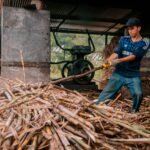
In July 2026, IPL entered into an initiative with *UPL Sustainable Agri Solutions* to promote sustainable sugarcane cultivation in Gujarat. The programme focuses on areas including seed, soil, water, fertiliser use and crop-residue management, while incorporating digital services for farmer onboarding, monitoring and field-level documentation.
Another recent initiative involves technology-driven sugarcane cultivation through an MoU between IPL and Jain Irrigation Systems, aimed at promoting scientific and sustainable sugarcane farming in Gujarat through drip irrigation and precision-farming practices.
Such partnerships are significant because they move technology adoption beyond advisory services and towards measurable changes in how crops are cultivated. Precision irrigation, improved nutrient management and better monitoring can help farmers reduce input wastage while improving productivity and resilience.
IPL’s farmer-centric approach extends beyond the farm
IPL’s role in agriculture is also increasingly being reflected in its efforts to strengthen the wider rural economy.
The company’s initiative to revive closed cooperative sugar mills is a notable example. With the support of the Ministry of Cooperation, IPL has taken up the revival and modernisation of cooperative sugar mills. The Government has highlighted IPL’s role in the revival of such mills, including the Badamba Cooperative Sugar Mill in Odisha.
The Badamba revival involves an estimated investment of around **Rs 360 crore** and is expected to restore an important economic activity in the region. The project is part of IPL’s wider diversification into the sugar sector and its efforts to strengthen farmer-linked rural value chains.
The significance of such projects extends beyond sugar production. A functioning sugar mill creates demand for sugarcane, supports farmers through procurement, generates local employment and stimulates activity across transportation, input supply, processing and allied services.
This makes IPL’s role broader than that of a conventional fertiliser company. Its presence across fertilisers, sugar, dairy, cattle feed and other rural businesses allows it to participate in multiple stages of the agricultural economy.
Building resilience through science and technology
Climate variability is adding urgency to this transition. Erratic rainfall, rising temperatures, water stress, declining soil fertility and pest outbreaks can affect farm productivity and increase cultivation costs.
AI and precision technologies can help address some of these challenges by providing more accurate weather information, identifying crop stress, monitoring soil moisture, detecting pests and diseases and improving the timing and quantity of farm inputs.
The Government has already begun using AI-based systems for weather and agricultural advisories. A pilot for local monsoon-onset forecasting, for example, was used to provide information to millions of farmers, demonstrating how AI-generated information can influence decisions related to sowing and land preparation.
For IPL, this creates an opportunity to integrate its experience in fertiliser management and farmer extension with the emerging digital ecosystem.
A wider rural transformation
IPL’s recent initiatives suggest that the company’s farmer-centric strategy is increasingly moving towards an integrated model—*agricultural input combined with scientific knowledge, digital information, technology, infrastructure and rural value creation*.
Its work on balanced fertilisation addresses soil and nutrient management; Farmer Samvad brings agricultural information to farmers digitally; technology-led sugarcane programmes are promoting precision irrigation and sustainable cultivation; and the revival of cooperative sugar mills is strengthening local agricultural value chains.
The direction is consistent with the Government’s broader objective of making Indian agriculture more productive, technology-enabled and resilient. Bharat-VISTAAR, Digital Agriculture initiatives and AI-enabled agricultural advisory systems are creating the national digital infrastructure, while organisations such as IPL can help translate these technologies into practical farm-level adoption.
The next phase of IPL’s evolution is therefore likely to be defined not only by the quantity of agricultural inputs it makes available, but also by how effectively science, technology and farmer outreach are brought together to improve input efficiency, soil health, crop productivity and rural incomes.
As India moves towards an increasingly AI-enabled agricultural economy, IPL’s combination of a large farmer network, fertiliser expertise, field-level extension, digital initiatives, sustainable farming partnerships and rural infrastructure puts the company in a position to play a larger role in the country’s transition from conventional farming to *data-driven, precision and climate-resilient agriculture*.



More Stories
Africa24 Brings Alamein Africa Forum 2026 Live.
AI Is Disrupting The Old Job Model; Entrepreneurial Mindset Is The Future”: Dr. J. A. Chowdary At Industry Leadership Summit-2026.
Beyond “Just A Viral Infection”: When Common Childhood Illnesses Need Medical Attention : Dr. Manju Kedarnath, Senior Consultant & Clinical Lead – Paediatrics, PICU & Ped ER, KIMS Hospitals, Electronic City, Bengaluru.