





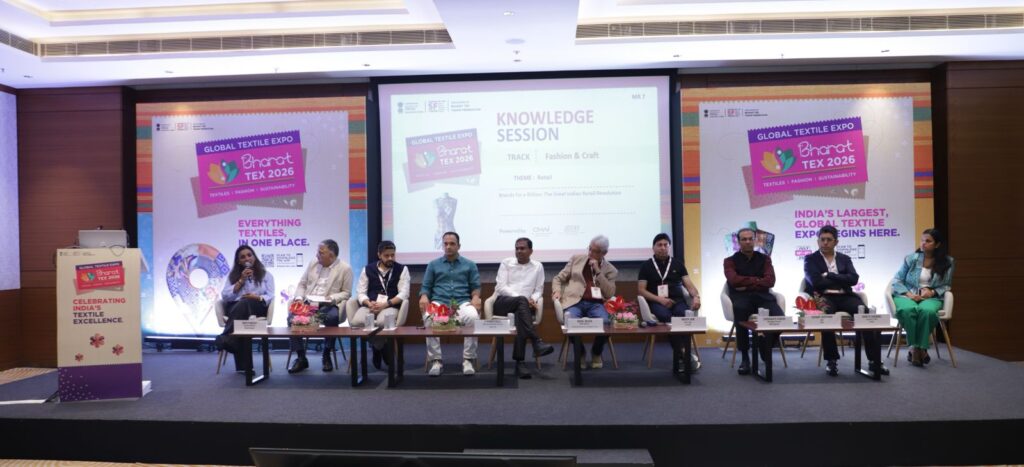
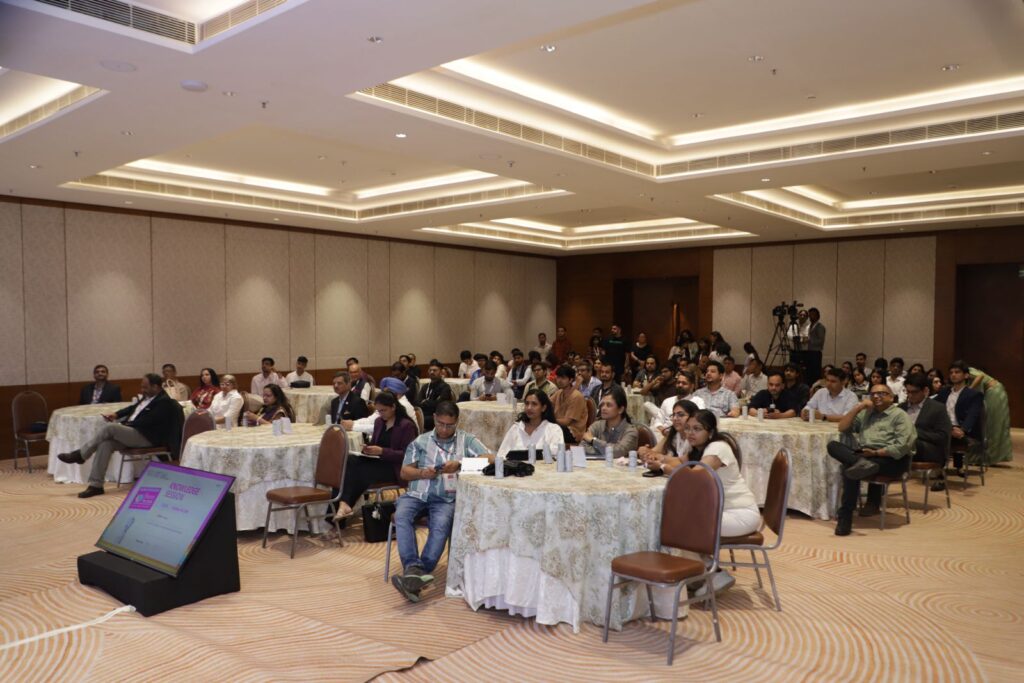
Mumbai, Maharashtra, 3rd of August, 2026 : India’s fashion and retail industry is poised for its next phase of transformation, driven by rising consumer aspirations, rapid digital adoption and an expanding middle class. While the market opportunity has never been greater, industry leaders believe the next decade will belong to brands that can scale across India’s diverse consumer landscape while building globally competitive businesses. These insights emerged during the thought-provoking panel discussion, “Brands for a Billion: The Great Indian Retail Revolution,” jointly organised by Clothing Manufacturers Association of India (CMAI) and Confederation of Indian Textile Industry (CITI) at Bharat Tex 2026.
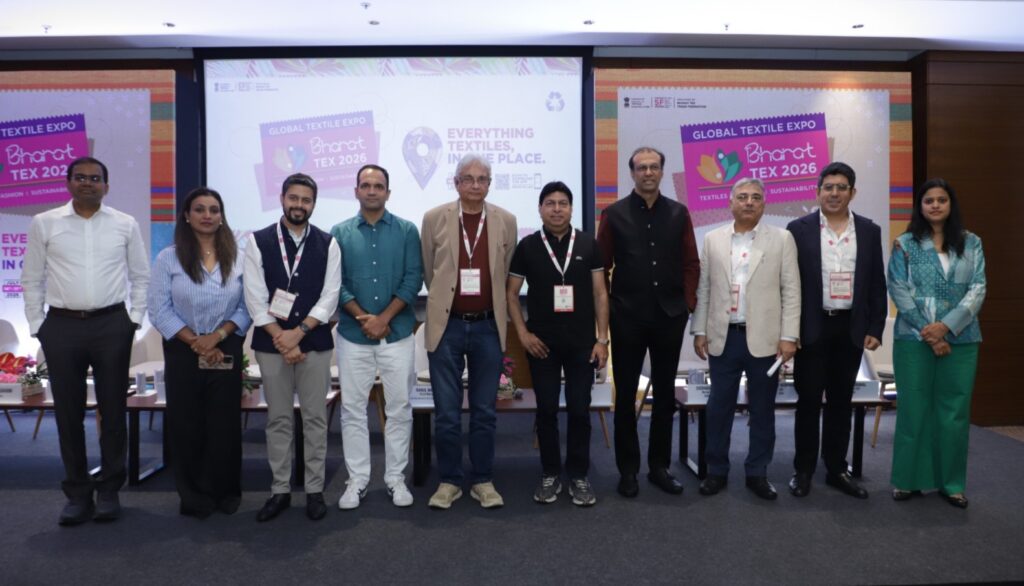
The stimulating session brought together some of India’s foremost retail and fashion industry leaders Rahul Mehta (CMAI), P. Venkatesalu (Trent Ltd.), Siddharth Bindra (Biba Apparels), Rajesh Jain (Lacoste India), Nikhil Upadhye (Benetton India), Gautam Saraogi (Go Colors), Sidhant Keshwani (Libas), Maya Pradeep (Haute Couture), Shweta Agarwal (Tradyl), and Harminder Sahni (Wazir Advisors) to deliberate on the evolution of India’s branded apparel market, shifting consumer preferences, the growing importance of omnichannel retail, the rise of premiumisation, and the strategic vision required to build Indian fashion brands with global recognition and competitiveness.
Setting the context, Rahul Mehta, Chief Mentor, CMAI, stated that India’s apparel industry has reached a pivotal inflection point. While the domestic fashion market is now valued at nearly USD 98 billion, branded apparel consumption per capita remains relatively low, presenting enormous headroom for growth. He said that rising incomes, changing lifestyles and increasing consumer aspirations are creating the ideal conditions for sustained expansion of organised fashion retail.
Speaking on the transformation of consumer preferences, P. Venkatesalu, CEO & Managing Director, Trent Ltd., said Indian consumers today are fundamentally different from those of previous decades. Younger shoppers are increasingly seeking trend-led fashion, convenience and greater product choice, while digital exposure has largely erased the distinction between metro and non-metro markets. Consumers across Tier II, III & IV cities are now equally aware of global fashion trends expecting better quality and value.
Highlighting the changing retail landscape, Gautam Saraogi, Founder & CEO, Go Colors, enlightened that consumers today are willing to travel farther for superior shopping experiences. This shift is encouraging retailers to invest in larger-format experiential stores that deliver stronger customer engagement and improved business economics. Offering the perspective of a digital-first brand, Sidhant Keshwani, Founder & CEO, Libas, emphasised that the future of fashion retail lies in the seamless coexistence of online and offline channels. While e-commerce and quick commerce will continue to address convenience-driven purchases, larger physical stores will remain vital for product discovery, wider assortments and immersive brand experiences.
Adding to this perspective, Sidhharth Bindra, Managing Director, Biba, emphasised the importance of staying rooted in core brand identity while scaling. He noted that Indian ethnic wear continues to evolve with changing lifestyles, but brands must remain consistent in their promise. “The opportunity is massive, but the challenge is to stay relevant without losing who you are as a brand,” he said, highlighting that trust and familiarity remain central to long-term brand building in India.
The discussion underlined the importance of preserving brand authenticity in an increasingly competitive marketplace. Nikhil Upadhye, Managing Director, Benetton India, commented that many established brands have rediscovered their original identity and purpose. Staying true to a brand’s core values, he said, is fundamental to building billion-dollar businesses. Sharing his perspective on the premium fashion segment, Rajesh Jain, Managing Director & CEO, Lacoste India, asserted that while India’s premium consumer base is expanding rapidly, brands aspiring to achieve global scale must eventually establish a strong international presence. He added that Indian entrepreneurs today possess greater confidence, capability, and ambition than ever before to compete successfully with the world’s leading fashion brands.
Industry expert and international brand consultant Maya Pradeep, Founder & Creative Director, Haute Couture, proclaimed that a new generation of entrepreneurs is thinking beyond domestic success. With greater focus on quality, sustainability, transparency and digital influence, Indian brands are increasingly well-positioned to earn consumer trust in international markets. Furthermore, adding a strategic market perspective, Shweta Agarwal, Founder & CEO, Tradyl, claimed that India should no longer be viewed as a single homogeneous market but as a collection of highly diverse consumer segments. Brands that understand regional nuances and build sharply differentiated consumer propositions, she said, will be best placed to achieve meaningful scale.
Providing a macro perspective on the industry, Harminder Sahni, Founder & Managing Director, Wazir Advisors, observed that India’s branded apparel market remains significantly under-penetrated compared to developed economies, presenting immense headroom for future growth. He noted that the coming decade will be shaped by increasing formalisation, industry consolidation, and the emergence of stronger Indian brands, with supply chain excellence, operational efficiency, innovation, and scale becoming the defining competitive advantages.
Summarizing the discussion, the leaders collectively opined that the industry should adopt a fundamentally different mindset. Rather than viewing themselves primarily as exporters, Indian companies must see themselves as global brand builders capable of creating world-class fashion businesses. The discussion further highlighted that India’s next retail revolution will be driven not merely by the size of its consumer market, but by brands that combine deep consumer insight, relentless innovation, omnichannel excellence, and a bold global vision. As the Indian fashion industry enters a new era of accelerated growth, India is uniquely positioned to create multiple “Brands for Billions” homegrown brands with the scale, resilience, and ambition to emerge as global leaders. The country’s entrepreneurial spirit, expanding domestic market, and rapidly evolving retail ecosystem provides a strong foundation for Indian fashion brands to compete successfully on the world stage.
About CMAI
The Clothing Manufacturers Association of India (CMAI) is the country’s most representative association of the apparel industry, with over 7,000 members and outreach to more than 50,000 retailers. Its membership includes manufacturers, exporters, brands and allied industry stakeholders. CMAI actively advocates industry-friendly policies while supporting members in areas such as sustainability, ESG and responsible business practices.
Established over 63 years ago, CMAI has played a pioneering role in the growth of India’s apparel industry. It spearheaded the formation of the Apparel Export Promotion Council (AEPC) in 1978 and is authorised by the Government of India to issue Certificates of Origin (Non-Preferential) for exporters. CMAI also represents the Indian apparel industry on prestigious global platforms, including the International Apparel Federation (IAF), headquartered in the Netherlands.




More Stories
Ministry Of Women And Child Development Gears Up For Implementation Of Special Campaign 6.
Varmora Granito IPO To Make Its Market Debut; Issue To Open On September 22.
“A Vision For Advanced Packaging: Delivering Maximum Value With Minimum Investment” : – Prof. Rao R. Tummala, Father of Advanced Packaging Emeritus Professor, Georgia Tech, Advisor, ISM.