


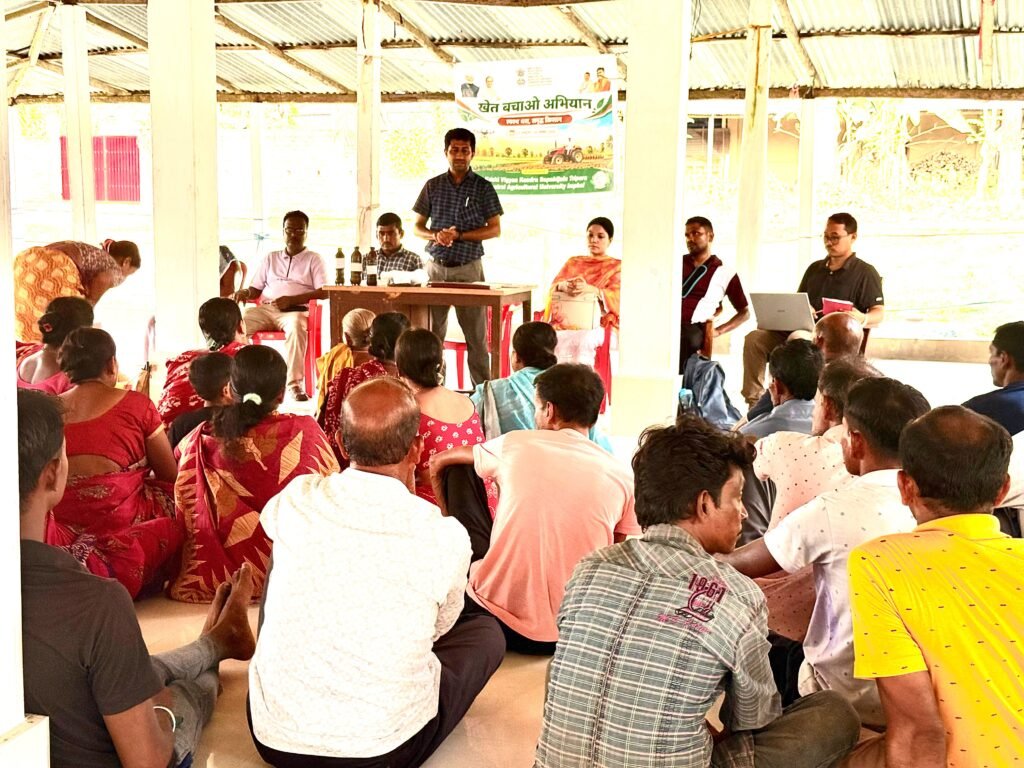
Sepahijala, Tripura, 29th of October, 2026 : To promote natural farming, enhance soil health, and expand the area under pulse and oilseed crops through crop diversification, Krishi Vigyan Kendra (KVK), Sepahijala, under Central Agricultural University (Imphal), organized the ‘Khet Bachao Abhiyan’ (Save the Farm Campaign) at Champamura village under Bishalgarh block of Sepahijala district, Tripura. The programme focused on creating awareness among farmers about the scientific principles of natural farming, soil fertility management, and climate-resilient agricultural practices. Technical guidance was provided on the inclusion of pulses and oilseed crops in existing cropping systems to improve cropping intensity, diversify farm income, and promote efficient utilization of available natural resources.
The campaign emphasized the role of leguminous crops in biological nitrogen fixation, enhancement of soil organic matter, and improvement of soil fertility, while advocating the use of crop residues, organic inputs, mulching, and integrated nutrient management to sustain soil health. Farmers were also sensitized to the importance of balanced nutrient management, soil moisture conservation, and the adoption of environmentally sound crop production practices. The initiative aimed to reduce excessive dependence on external agricultural inputs, improve resource-use efficiency, and strengthen the long-term productivity, sustainability, and resilience of farming systems in the region.
The programme conducted under the leadership and guidance of Dr. Anupam Mishra, Hon’ble Vice-Chancellor, CAU, Imphal, with technical guidance from Dr. Ng. Iboyaima, Director, Directorate of Extension Education, CAU, Imphal, and Dr. A. K. Mohanty, Director, ICAR–Agricultural Technology Application Research Institute (ATARI), Zone VII, Umiam, Meghalaya. The programme is coordinated under the guidance of Prof. Arun Bhai Patel, Dean, College of Fisheries, Lembucherra, and supervised by Dr. Shatabhisa Sarkar, Senior Scientist and Head, KVK-Sepahijala.
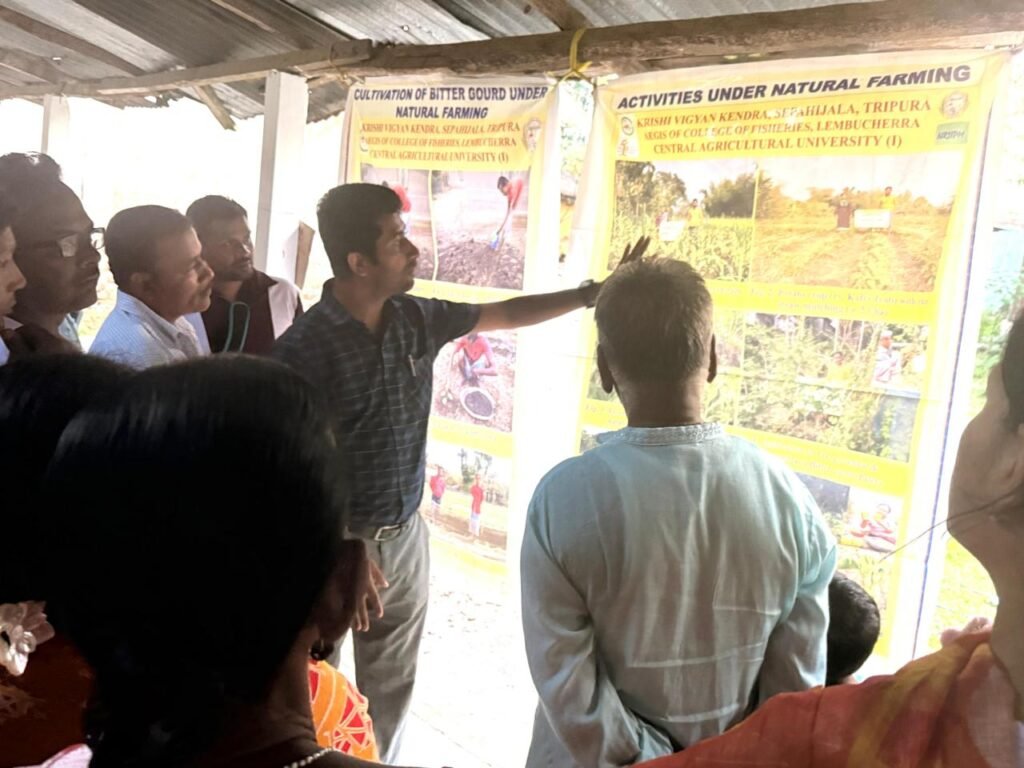
Program was inaugurated by Shri Gouranga Bhowmik, Chairman ,Agri Standing committee, Sepahijala, Shri Gurupada Kapali, Upa Pradhan Champamura, Shri Tapas Laskar, Social worker, Smt. Shilpi Das, Social Worker and Chandra Kanta Sarkar, Agri Assistant, Dept. of Agriculture and Farmers Welfare in the presence of Dr Utpal Dey, Subject Matter Specialist (Plant Protection), and Dr Ayam Pushparani Devi, Subject Matter Specialist (Horticulture), KVK-Sepahijala, Pijush Debbarma, Programme Assistant(Lab. Technician), KVK Sepahijala.
During the programme on oilseed and pulse crops was organised to create awareness among farmers about sustainable agricultural practices, improvement of soil health, and diversification of cropping systems. It also mentioned about Crop rotation, use of lime in the field, to reduce soil acidity, to make nutrients availability to the plants. Use of compost , to improve soil fertility
The main objective of the programme was to encourage and awareness among farmers to adopt scientific methods of cultivation, improve crop productivity, reduce cultivation costs, and enhance farm income. The programme also highlighted the importance of conserving agricultural land, maintaining soil fertility, and promoting the efficient use of natural resources.
During the training, farmers were sensitised to improved cultivation practices for oilseed crops such as mustard, sesame, groundnut and rapeseed, as well as pulse crops such as lentil, chickpea, green gram and black gram, depending on local agro-climatic conditions. Experts explained the importance of selecting suitable varieties, using quality seeds, following proper sowing practices, maintaining optimum plant spacing, and applying fertilisers and organic manures based on soil requirements.
Special emphasis was placed on integrated nutrient management, integrated pest and disease management, timely weed control, water conservation, and the adoption of climate-resilient farming techniques. Farmers were also informed about the role of pulse crops in improving soil fertility through biological nitrogen fixation and the benefits of including pulses and oilseeds in crop rotation.
The programme further highlighted how crop diversification can reduce dependence on a single crop, help manage production risks, and create additional income opportunities for farming households. Participants were encouraged to adopt improved technologies and seek technical guidance from agricultural experts and extension personnel.
The programme aims to promote responsible land management, sustainable agricultural production, and greater awareness of farming practices that protect soil health while supporting farmers’ livelihoods. Such training programmes can play an important role in bridging the gap between agricultural research and field-level implementation.
The programme concluded with an appeal to farmers to adopt scientific cultivation practices, conserve their agricultural resources, and contribute towards a more productive, sustainable and resilient agricultural sector.
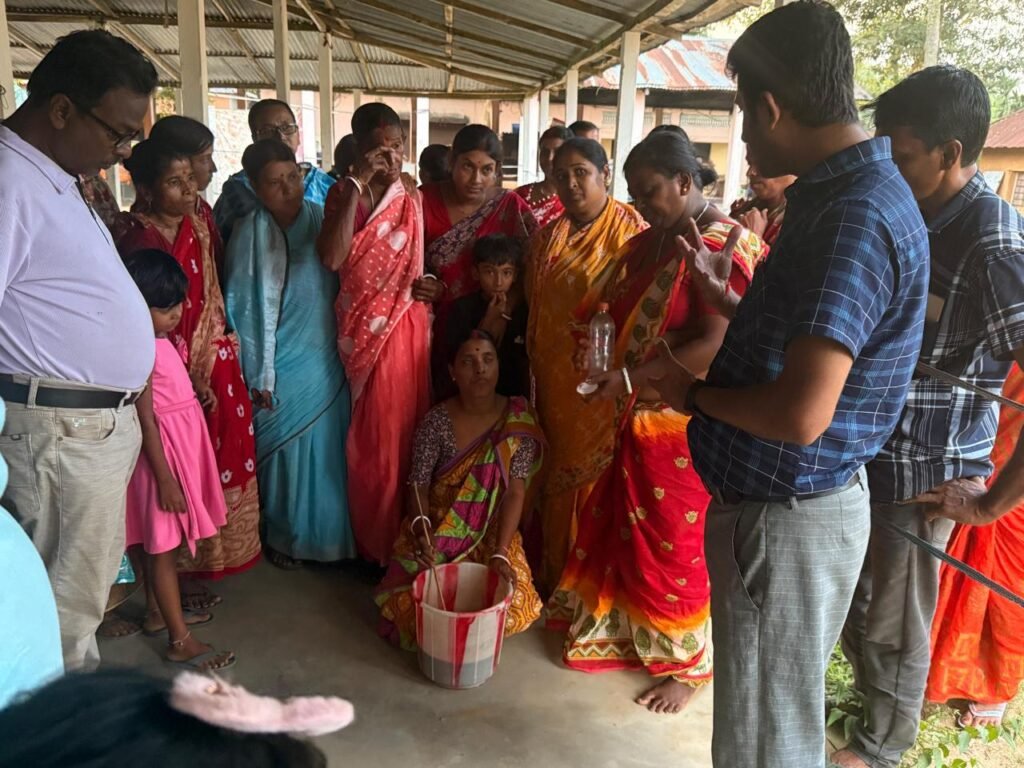
The demonstrations highlighted practical approaches to natural farming, Preparation of Jeevamrut, Ghana Jeeavamrut and Neemastra were practically demonstrated and explained in easy language so famers can easily prepare at home and use in their field.
The programme was co-ordinated by Dr Utpal Dey, Subject Matter Specialist (Plant Protection), and Dr Ayam Pushparani Devi, Subject Matter Specialist (Horticulture), KVK-Sepahijala.
More Stories
Tripura Railway Police Seizes 6.105 Kg Of Cannabis Worth ₹3 Lakh With 1 Drug Peddler In Agartala Railway Station.
Shortage Of Doctors And Nurses At Tilthai Primary Health Centre, Jan Arogya Samiti Chairman Raises Concern.
Tripura Gramin Bank Organises Awareness Rally To Promote A Corruption-Free Society.