





Agartala, Tripura/Imphal, Manipur, 1st of September, 2026 : For decades, Indian agriculture has been largely assessed through the lens of production and productivity. However, changing consumer preferences, environmental concerns and the need for sustainable livelihoods are redefining the future of farming. Today, agriculture is not merely about growing crops, it is increasingly about creating value, building brands and connecting producers directly with consumers. In this changing landscape, natural farming has transcended its role as an environmentally sustainable cultivation practice and is increasingly emerging as a viable and promising business opportunity. At the heart of this transformation are Farmer Producer Organizations (FPOs), which are helping small and marginal farmers turn sustainable agriculture into a profitable enterprise.
Natural farming promotes cultivation practices that work in harmony with nature by minimizing the use of synthetic fertilizers, pesticides and other external inputs. Farmers rely on locally available resources, biological processes and traditional knowledge to maintain soil fertility and crop health. While the environmental benefits of natural farming are well documented, its growing economic potential is now attracting equal attention. Across India, consumers are increasingly willing to pay more for food that is healthy, safe and produced sustainably. This shift has opened new market opportunities for naturally grown products and created a favourable environment for business-oriented agricultural enterprises.
The demand for chemical-free food is no longer limited to a niche group of consumers. Urban households, health-conscious individuals, wellness centers, restaurants, supermarkets and online food retailers are actively seeking naturally grown fruits, vegetables, cereals, spices and processed products. The rise of lifestyle diseases and concerns about pesticide residues in food have further accelerated this trend. As a result, products cultivated through natural farming methods are gradually securing premium positions in the marketplace. Yet, despite this growing demand, individual farmers often struggle to access these opportunities due to limited production volumes, weak market connections and inadequate bargaining power.
This is where Farmer Producer Organizations are proving to be game changers. By organizing farmers into collective enterprises, FPOs create the scale necessary to participate effectively in modern markets. By pooling their produce through FPOs, farmers can overcome the limitations of small-scale production, ensuring consistent quality and sufficient quantities to cater to organized markets and institutional buyers.Aggregation reduces transaction costs, improves price negotiation and enhances market efficiency. More importantly, it allows smallholder farmers to compete in markets that would otherwise remain inaccessible.
Beyond aggregation, FPOs are increasingly moving toward value addition, one of the most profitable segments of the agricultural value chain. Rather than marketing raw produce alone, many FPOs are exploring opportunities to process and package products into consumer-ready forms. Naturally grown turmeric can be converted into branded turmeric powder, millets can be transformed into flour, snacks, and ready-to-cook products, honey can be processed and packaged under local brands and fruits can be turned into preserves, juices and dehydrated products. Such value addition significantly increases product value and creates new income streams for farmers and rural entrepreneurs.
Branding has become another critical area where FPOs are creating business opportunities. Modern consumers increasingly seek authenticity, traceability and stories behind the products they purchase. A packet of naturally grown turmeric carrying the identity of a farmer collective from the hills of Meghalaya or a bottle of honey sourced from pristine mountain ecosystems often appeals more strongly to consumers than a generic product. Recognizing this trend, many FPOs are developing regional brands that emphasize sustainability, traditional knowledgeand local heritage. Effective branding enables products to command premium prices while building long-term customer loyalty.
Certification and traceability are also becoming important business assets. Consumers want assurance that products marketed as natural are genuinely produced using sustainable methods. FPOs can facilitate group certification and traceability systems that would otherwise be too expensive for individual farmers. Through collective certification mechanisms and digital tracking tools, FPOs can strengthen consumer confidence and improve access to premium domestic and international markets. Such systems not only increase product credibility but also help create distinct market identities.
The business opportunities associated with natural farming extend beyond the sale of agricultural produce. FPOs can establish enterprises dedicated to producing bio-inputs such as compost, vermicompost, biofertilizers, microbial cultures, and botanical pesticides. Since natural farming depends heavily on biological inputs, there is growing demand for quality products that support sustainable cultivation. Community-based input production units managed by FPOs can generate additional revenue while reducing farmers’ dependence on external suppliers. These enterprises also create employment opportunities, particularly for rural women and youth.
The rapid growth of digital technology has further expanded opportunities for natural farming enterprises. E-commerce platforms, mobile applications, social media marketing and direct-to-consumer delivery systems have transformed the way agricultural products are marketed. FPOs can now connect directly with consumers without relying entirely on traditional intermediaries. Through online platforms, farmer collectives can showcase their products, share stories about production practices and establish stronger relationships with customers. This direct engagement often results in better price realization and greater consumer trust.
The export market presents another promising avenue for FPO-led natural farming enterprises. Global consumers are increasingly demanding food products that are environmentally sustainable, ethically produced and free from harmful residues. Products such as spices, medicinal plants, tea, coffee, honey and processed foods have significant export potential. FPOs can help farmers comply with quality standards, certification requirements and traceability protocols necessary for international trade. By participating in export markets, farmer collectives can access higher-value opportunities and improve rural incomes.
Natural farming enterprises are also creating new avenues for women and youth entrepreneurship. Activities such as processing, packaging, digital marketing, seed production, bio-input manufacturing and logistics management offer opportunities beyond conventional farming. In many regions, women’s groups are successfully managing value-addition units and marketing initiatives, while rural youth are using digital tools to build innovative agricultural businesses. Such developments are making agriculture more attractive as a livelihood option and contributing to rural economic diversification.
The Himalayan and North Eastern regions of India are particularly well positioned to benefit from this emerging business landscape. These regions possess rich biodiversity, relatively low chemical use and unique agricultural products that can be marketed as premium natural products. Crops such as large cardamom, ginger, turmeric, buckwheat, millets, medicinal plants and specialty honey have strong market potential. FPOs can leverage these advantages through branding, value addition and collective marketing while simultaneously promoting environmental conservation and sustainable livelihoods.
Despite the growing opportunities, challenges remain. Many FPOs continue to face constraints related to infrastructure, finance, managerial expertise and market intelligence. Establishing processing facilities, obtaining certifications, building brands and accessing premium markets require investments and professional management. Addressing these challenges will require continued support from government agencies, research institutions, financial organizations, and private-sector partners. Capacity building, infrastructure development and market linkage programs will be critical to ensuring long-term success.
The future of Indian agriculture will depend not only on increasing production but also on creating sustainable and profitable business models for farmers. Natural farming offers an opportunity to align environmental sustainability with economic growth, while FPOs provide the institutional framework necessary to scale this opportunity. Together, they represent a powerful combination capable of transforming rural economies and creating resilient agricultural systems.
As consumers increasingly seek food that is healthy for both people and the planet, natural farming is moving from the margins to the mainstream. Farmer Producer Organizations are ensuring that this transition benefits not only consumers but also the millions of smallholder farmers who form the backbone of Indian agriculture. In doing so, they are demonstrating that sustainability and profitability need not be opposing goals. Instead, they can become partners in building a greener, healthier and more prosperous future.
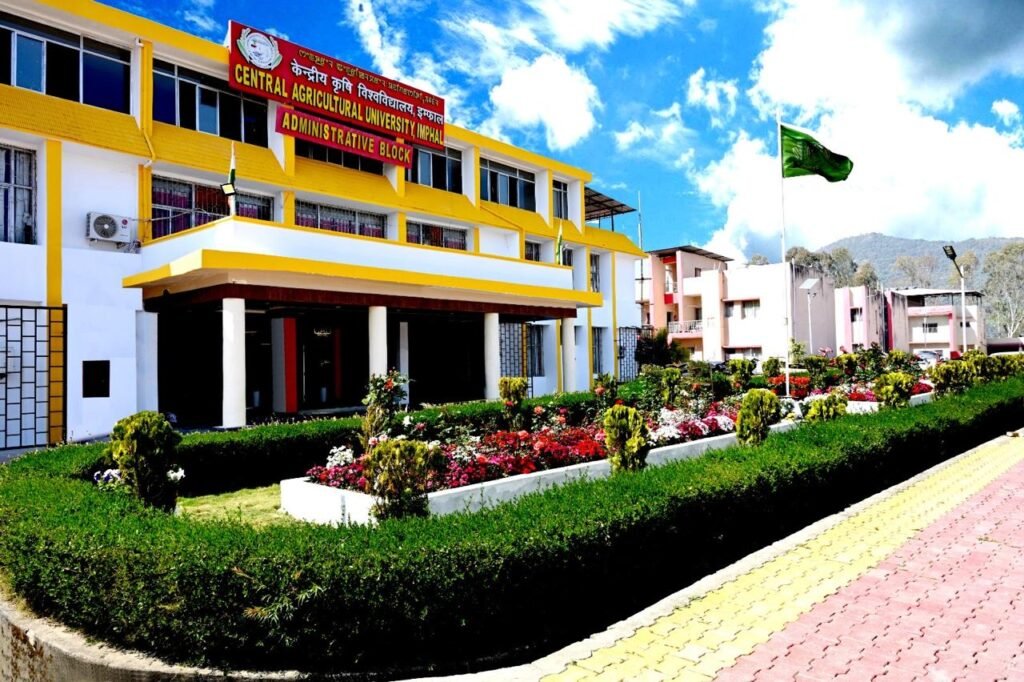
[This article is written by Dr. Vennila M., Dr. Mahesh B. Tengli and Prof. Dwipendra Thakuria, CPGSAS (CAU-Imphal), Umiam, Meghalaya for publication on the occasion of the forthcoming three-day National Conference on “Natural Farming: Pathways to Self-Reliant Farming and Rural Prosperity”, with the motto “One Farm, One Ecosystem and One Health”, during 9th to 11th September 2026 under the aegis of Central Agricultural University (Imphal), Manipur, to be held at the College of Post Graduate Studies in Agricultural Sciences (CPGSAS), Umiam, Meghalaya.]




More Stories
Maha Ashtami Puja Celebration At Durga Bari, Agartala.
Prime Minister Shares Sanskrit Subhashitam Highlighting The Blessings And Protective Grace Of Goddess Durga.
Approach Entertainment & Communications Named PR & Communications Partner For Inkspell Insight Ignition 4.0.