





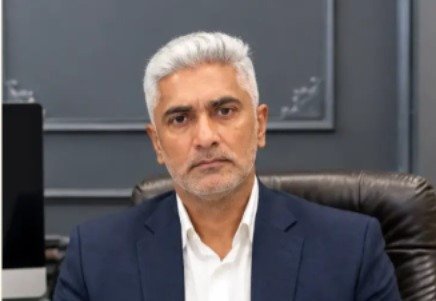
Guwahati, Assam, 26th of September, 2026 : Unleashing The Potential Of Youth Through Wakf : Mohammed Naif Ali, Trustee, Anowaruddin Wakf Estate.
What if some of the most valuable community assets lying underutilised today could become classrooms, start-up hubs, training centres and engines of employment for the young?
This is not simply a question of property management. It is a question of how an institution with centuries of history can respond to the aspirations of a generation facing a very different economic and social landscape.
Wakf has traditionally been associated with charity, religious institutions, education, healthcare and community welfare. Its fundamental philosophy, however, is much broader: an asset is dedicated in perpetuity for a social purpose, allowing its benefits to extend from one generation to another.
That intergenerational character makes Wakf particularly relevant to one of the most important challenges facing society today—the need to equip young people with the skills, opportunities and resources to build sustainable livelihoods.
The opportunity is to move from thinking of Wakf primarily as a source of charity to seeing it as a platform for empowerment. And the youth should be at the centre of that transformation.
Beyond the traditional idea of charity
Charity can provide immediate relief. Empowerment creates the possibility of long-term independence.
A scholarship can help a young person complete an education. Vocational training can make that person employable. Access to finance and mentoring can help them become entrepreneurs. If that entrepreneur subsequently creates employment for others, the impact multiplies. This is where the potential of Wakf becomes particularly significant.
The philanthropic potential of Wakfs can play a transformative role in helping young people achieve greater heights. For instance, a high-performing A-level student with academic potential could be supported through a structured scholarship programme, enabling them to progress from leading universities in India to some of the world’s best institutions. Such support can help talented students overcome financial barriers and access opportunities that may otherwise remain beyond their reach.
From a socio-economic perspective, Wakfs can extend their role beyond traditional charitable assistance to support a broader section of society. While their charitable initiatives can continue to address the needs of underprivileged communities, their philanthropic programmes could also benefit the aspiring middle and upper-middle classes by supporting tuition fees, student loan repayments and other education-related expenses. This would create a more inclusive model of social empowerment, where assistance is based not only on economic hardship but also on potential, merit and the ability to contribute to society.
While a few have access to government scholarships and subsidies, many families, despite facing significant financial pressures, often fall outside the eligibility criteria for such assistance. This represents an important gap that professionally managed Waqfs could address efficiently through targeted scholarships, educational grants and other forms of need- and merit-based support.
From beneficiaries to entrepreneurs
India’s young population represents an enormous reservoir of entrepreneurial energy. Yet many young people with ideas lack three basic ingredients: access to capital, professional guidance and an environment in which they can experiment and grow.
This is an area where Wakf-backed initiatives could make a meaningful difference.
Imagine a network of youth entrepreneurship centres operating from suitable Wakf properties. These centres could provide affordable workspaces, mentoring, business training and access to professional networks. Promising entrepreneurs could be connected with appropriate financing mechanisms, including interest-free or Shariah-compliant models where legally and institutionally feasible.
The objective would not be to create another conventional loan programme. It would be to create an ecosystem in which a young person with an idea has a realistic pathway from idea to enterprise.
A young woman trained in fashion could be given access to a workspace and business mentorship. A technology graduate could use a Wakf-supported innovation hub to develop a digital product. A group of skilled young people could establish a food-processing, handicraft or services enterprise.
The success of such an initiative should not be measured only by the money distributed. It should be measured by the businesses created, jobs generated and lives transformed.
Unlocking the potential of Wakf properties
Perhaps the most immediate opportunity lies in the productive development of underutilised Wakf properties.
Land and buildings that generate little social or economic value today could, where legally permissible and financially viable, potentially be developed into educational institutions, skill centres, innovation hubs, affordable commercial spaces, healthcare facilities, affordable housing or other productive enterprises.
The objective should not be commercialisation for its own sake. The objective should be productive utilisation without compromising the purpose and integrity of the Wakf.
Consider a property that generates modest rental income. With professional planning, the same asset might potentially support a commercial or institutional development that generates substantially greater recurring revenue. That revenue could then finance scholarships, vocational training, healthcare or entrepreneurship programmes.
In other words, the asset becomes more than a property. It becomes an engine of social investment. This is perhaps the most powerful idea behind a modern Wakf model: productive assets can generate recurring resources, which can then be reinvested in people.
The missing link: technology
If Wakf is to become more relevant to young people, it must also become more accessible to them. Technology can play a transformative role.
Digitised records, GIS mapping, data analytics and modern property-management systems can help identify assets, improve transparency and support better decision-making. Digital platforms can potentially make information about Wakf institutions and their programmes more accessible to communities.
But there is an even more interesting opportunity. Why not make young people part of the process of modernising Wakf itself?
Technology students, start-ups and young professionals could be encouraged to develop solutions for Wakf management. Innovation challenges could focus on property mapping, documentation, financial reporting, beneficiary management, impact measurement and public engagement.
This would create a mutually beneficial relationship. Wakf can invest in young innovators, while young innovators can help modernise Wakf.
Give the youth a seat at the table
There is, however, a deeper change that may be required.
If young people are expected to become future custodians of Wakf, they need more than programmes designed for them. They need opportunities to participate in shaping those programmes.
This does not mean disregarding institutional experience or replacing existing leadership. On the contrary, the strongest model may be an intergenerational partnership.
Experienced administrators can bring institutional knowledge, while young professionals can bring expertise in technology, finance, management, law, design, communications and entrepreneurship.
Youth advisory councils, innovation committees, fellowship programmes and community leadership initiatives could create structured avenues for participation. The purpose is not simply to give young people a voice. It is to give them responsibility. Responsibility creates ownership, and ownership creates custodianship.
Building a virtuous cycle
The most compelling possibility is that all these interventions can connect with one another.
A Wakf property can provide the space for a training centre. The training centre can equip young people with skills. Some trainees can become entrepreneurs. Entrepreneurs can create jobs. Productive Wakf assets can generate revenue. That revenue can support more scholarships and training. The next generation can then build on those opportunities.
This is a model in which Wakf does not simply transfer resources from one part of society to another. It helps create the capacity to generate new resources and opportunities.
Preserving the past by investing in the future
There is an important philosophical dimension to this discussion.
Wakf is inherently about the future. A Wakf is established with the intention that its benefits should continue beyond the lifetime of its founder.
That makes youth empowerment not an additional activity but, in many ways, a natural extension of the intergenerational idea at the heart of Wakf.
The young people of today will become tomorrow’s professionals, entrepreneurs, community leaders and philanthropists. If they understand the value of Wakf and participate in its development, they can become its strongest custodians. The challenge, therefore, is not to make Wakf less traditional. It is to make its purpose relevant to contemporary needs.
Charity will always have a place. But in an era of rapid economic and technological change, the greater opportunity may lie in using Wakf to create pathways to education, employment, entrepreneurship and self-reliance.
The ultimate success of Wakf should perhaps not be measured by how many people depend on it. It should be measured by how many people it enables to stand on their own feet—and eventually help others do the same.
Wakf should not only serve the youth. It should empower the youth to become its partners, innovators, entrepreneurs and, ultimately, its future custodians.
That is how an institution rooted in centuries of tradition can become an engine of opportunity for generations yet to come.



More Stories
TVS Motor Company, She For Society And Taliru Foundation Join Hands To Empower Women Auto Drivers In Bengaluru.
Ministries/Departments Of Government Of India Actively Undertaking Preparatory Phase Activities For Special Campaign 6.
India Supplied 300 Million Vaccine Doses To Around 100 Countries And Provided Medical Assistance To Over 150 Countries During COVID-19: Smt. Punya Salila Srivastava.