





New Delhi, Delhi, 23rd of March 2026 : Agriculture has long been the backbone of India’s economy, supporting food security, livelihoods, and rural development. For women in rural areas, agriculture and allied sectors are the primary source of livelihood, with 80% of rural women being engaged in these sectors. Of these, 33% are agricultural labourers and 48% are self-employed farmers. The United Nations has designated 2026 as the International Year of the Woman Farmer (IYWF 2026), in recognition of the vital and indispensable role of women in global agriculture. Women farmers constitute a critical component of the agricultural sector, which is increasingly characterized by substantial female
participation.
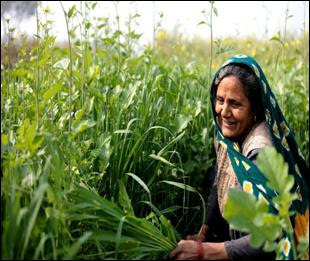
Their involvement extends across the entire agricultural value chain, encompassing crop production, livestock management, agroforestry, fishing, horticulture, pre-harvest operations, post-harvest processing, packaging, and marketing. Consequently, women’s engagement is central to driving agricultural growth, enhancing food security, and strengthening rural livelihoods. IYWF 2026 seeks to highlight women’s contributions to agriculture while promoting equitable access to land, resources, technology, finance, and markets. The Year seeks to mobilize governments, development partners, civil society, and the private sector to promote inclusive policies and targeted actions that enhance the visibility, recognition, and economic empowerment of women farmers worldwide.
Promoting Gender-Inclusive Growth in Agri-Food Systems: GCWAS-2026
The UN’s declaration of 2026 as the International Year of Women Farmers presents a significant opportunity to advance policy reforms, enhance awareness, strengthen global cooperation, and mobilise resources to support women in agriculture. The Global Conference on Women in Agri-Food Systems (GCWAS–2026), centred on “Driving Progress, Attaining New Heights,” underscores India’s commitment to integrating women more effectively into agricultural development. A three-day GCWAS-2026 was held in New Delhi from 12-14 March 2026 at the ICAR Convention Centre. The conference brought together over 700 participants from India and abroad, including scientists, policymakers, industry leaders, entrepreneurs, women farmers, start-ups, and students.
The conference focused on strengthening gender-responsive policies, promoting women’s leadership and economic inclusion, and advancing technology-driven, climate-smart, and women-friendly agricultural innovations. It also featured a Women Farmers’ Forum, a Youth Forum, and an exhibition showcasing women-oriented technologies and start-up innovations. Overall, the conference aimed to generate actionable recommendations, global best practices, and a future roadmap for building more inclusive, sustainable, and equitable agri-food systems.
Targeted Schemes ensuring Agricultural Development and Women Farmer Empowerment
Women farmers are playing an increasingly significant role in driving India’s agricultural progress. Their growing participation in farming and allied activities is being strengthened through various government initiatives that enhance their access to resources, technologies, and markets. The schemes like the Agriculture Infrastructure Fund (AIF), Integrated Scheme for Agricultural Marketing (ISAM)/Agricultural Marketing Infrastructure (AMI), Mission for Integrated Development of Horticulture (MIDH), Pradhan Mantri Kisan Samman Nidhi (PM-KISAN), and the Modified Interest Subvention Scheme (MISS) provide financial support and credit access to women farmers through subsidies, interest subvention, and direct income transfers. Additionally, initiatives such as the Namo Drone Didi Programme, National Beekeeping and Honey Mission (NBHM), and the Deendayal Antyodaya Yojana–National Rural Livelihoods Mission (DAY-NRLM) strengthen women’s participation by promoting technology adoption, skill development, and livelihood diversification. Together, these initiatives strengthen women’s participation in the agricultural value chain by improving infrastructure, enhancing market linkages, and supporting efficient post-harvest management.

- Agriculture Infrastructure Fund (AIF)
The scheme was launched to strengthen agricultural infrastructure across India. It provides a medium to long-term debt financing facility through interest subvention and credit guarantee support for loans used to develop viable post-harvest management facilities and productive farm assets. Its primary focus is on creating storage and logistics infrastructure at the farm gate and enabling farmers to store their produce properly and secure better prices by reducing post-harvest losses and limiting reliance on intermediaries.
The loans under AIF cover:
- individual farmers and farmer collectives, with special emphasis on supporting women farmers.
- a maximum interest rate of 9%,
- with an interest subvention of 3% per annum for loans up to Rs 2 crore for a period of up to seven years.
As of 28 February 2025, a total of 8,190 projects amounting to Rs 2,377 crore have been sanctioned to women farmers under the scheme.
- Integrated Scheme for Agriculture Marketing (ISAM)
The Ministry of Agriculture and Farmers’ Welfare, under the Integrated Scheme for Agriculture Marketing (ISAM), implements the Agricultural Marketing Infrastructure (AMI) scheme. Its objective is to strengthen agricultural marketing systems across rural India by offering financial assistance for the building and upgrading of godowns and warehouses.[1] Women farmers, SC/ST promoters, Farmer Producer Organizations (FPOs), and beneficiaries in the North-Eastern and hilly regions are eligible for a 33.33% subsidy. In comparison, farmers in plain areas are eligible for a 25% subsidy.
Progress of Women Beneficiaries assisted under AMI for Storage and Other than Storage Infrastructure since inception as on 31 January 2026 is given below:
| Storage Infrastructure Projects | Other than Storage Projects | |||
| No. of womenbeneficiaries | Capacitycreated (MT) | Subsidy Released(Rs. In Lakh) | No. of womenbeneficiaries | SubsidyReleased (Rs.In Lakh) |
| 10,631 | 35953967.8 | 17,3971.41 | 1095 | 11,767.67 |
Under AMI, a total of 10631 storage infrastructure projects, with a combined storage capacity of 395.53 lakh MT (35953968 metric tonnes), have been sanctioned. A subsidy of Rs. 17,3971.41 lakh has been released, and 1095 projects other than storage infrastructure projects have been sanctioned. A subsidy of Rs. 11,767.67 lakh has been released to women beneficiaries across the country, reflecting the scheme’s commitment to enhancing women’s participation in agricultural marketing.
- Namo Drone Didi
The NAMO Drone Didi Scheme is a Central Sector initiative to provide 15,000 drones to Women Self-Help Groups (SHGs) from 2023–24 to 2025–26, with an outlay of Rs. 1,261 crores. It promotes modern agricultural technology, enhances efficiency, and strengthens women’s livelihoods by enabling SHGs to offer drone-based services. Selected SHGs receive 80% Central Financial Assistance (up to Rs. 8 Lakh) for a drone package, along with training, 15 days for a drone pilot, and 5 days for a drone assistant training. In 2023-24, 1094 drones were distributed across 22 states through Lead Fertilizer Companies (LFCs), with 500 provided under the scheme, demonstrating strong support for expanding technology adoption and enhancing women’s participation in modern agricultural practices.
In addition to the Namo Drone Didi initiative, the Sub-Mission on Agricultural Mechanization (SMAM) supports entrepreneurship by helping farmers, including women, set up Custom Hiring Centres (CHCs) and provides 50% assistance (up to Rs. 5 Lakh) for drone purchases by small, marginal, SC/ST, Northeastern and women farmers to strengthen technological adoption in rural areas.
- National Beekeeping and Honey Mission (NBHM)
NBHM is a Central Sector Scheme launched by the Government to promote scientific beekeeping and increase the production of quality honey and other beehive products. The scheme aims to foster the holistic growth of the beekeeping sector, enhancing income generation, employment opportunities, and livelihood support for both farm and non-farm households, including women farmers. NBHM places strong emphasis on awareness creation, capacity building, and skill development, with a dedicated focus on empowering women through training and support in beekeeping activities.
- Deendayal Antyodaya Yojana–National Rural Livelihood Mission (DAY-NRLM)
This flagship poverty-alleviation programme is implemented entirely through women, aiming to empower them in agriculture and allied sectors. It reduces rural poverty by helping poor households, especially women, access self-employment and skilled-wage opportunities, thereby creating sustainable, diversified livelihoods. A major milestone under the Deen Dayal Antyodaya Yojana – National Rural Livelihoods Mission (DAY-NRLM) is the disbursement of over Rs 11 lakh crore in credit to women Self-Help Groups (SHGs) through formal financial institutions.
Between FY 2022–23 and 2024–25, 2.58 crore women farmers received training in agro-ecology and livestock management, 2.50 lakh community resource persons, such as Pashu Sakhis, were trained, 503 Krishi Sakhis were trained as Drone Sakhis, 70,021 Self Help Group (SHG) women were trained in natural farming, and 800 women-led producer companies were promoted under the Farmer Producer Organization (FPO) scheme.
- Modified Interest Subvention Scheme (MISS)
The Modified Interest Subvention Scheme (MISS) is a central sector scheme that ensures the availability of short-term credit to farmers at affordable rates through the Kisan Credit Card (KCC). The Kisan Credit Card (KCC) was designed to ensure farmers have access to short-term credit at affordable interest rates. Under the scheme, farmers can avail loans of up to Rs. 3 lakhs at a 7% interest rate, with a 1.5% interest subvention to lending institutions. To enhance access, especially for women farmers, awareness is being promoted through Information, Education, and Communication (IEC) campaigns by banks, state and central governments, the RBI, NABARD, and digital platforms such as the Kisan Rin Portal. Additionally, the collateral-free credit limit has been increased from Rs 1.6 lakh to Rs 2 lakh, effective from January 1, 2025.
- Mission for Integrated Development of Horticulture (MIDH)
The Mission for Integrated Development of Horticulture (MIDH), a Centrally Sponsored Scheme implemented since 2014–15, supports the comprehensive growth of India’s horticulture sector, including fruits, vegetables, spices, flowers, plantation crops, and more. The schemes follow a 60:40 Centre-State funding pattern and 90:10 for the North-Eastern and Himalayan states. MIDH assists farmers, including women farmers, in developing Post-Harvest Management (PHM) infrastructure for perishable horticulture produce.
- Mission for Aatmanirbharta in Pulses (Dalhan Aatmanirbharta Mission)
The Mission for Aatmanirbharta in Pulses (Dalhan Aatmanirbharta Mission), with a total outlay of Rs 11,440 crore over six years from 2025–26 to 2030–31, aims to enhance pulses production, with a special focus on Tur, Urad, and Masoor. The Mission promotes the production and availability of climate-resilient seeds, expansion of area under pulses cultivation, and post-harvest storage and management technologies. It also provides support for assured procurement of Tur, Urad, and Masoor through the National Agricultural Cooperative Marketing Federation of India (NAFED) and the National Cooperative Consumers’ Federation (NCCF) under Pradhan Mantri Annadata Aay Sanrakshhan Abhiyan (PMAASHA). As per the operational guidelines, the implementing states ensure that at least 20% of the funds are allocated to women farmers under the Pulses Mission.
I. Pradhan Mantri Kisan Samman Nidhi (PM-KISAN)
To extend financial support to all landholding farmer households with cultivable land, the Government launched the Pradhan Mantri Kisan Samman Nidhi (PM-KISAN), a central sector scheme, on 24 February 2019. Under this initiative, eligible farmers receive Rs 6,000 annually, disbursed in three equal instalments of Rs 2,000 each. The farmer can self-register through the PM-Kisan portal, mobile application, and CSC, and their land records are digitally verified. The financial assistance is transferred to the farmer’s Aadhaar-seeded bank accounts through the Direct Benefit Transfer (DBT) system, which ensures transparency, efficiency, and timely delivery.
As one of the world’s largest DBT programmes, PM-KISAN has significantly impacted farmers by providing direct financial support. Notably, around 25% of the total benefits go to women beneficiaries, reflecting the government’s commitment to empowering women farmers and enhancing their economic security.
| Women farmers beneficiaries benefited during 22nd Instalment under PM-KISAN (as on 17/03/2026) | |
| No. of Women Beneficiaries | Amount transferred (in Cr). |
| 2,15,47,095 | 4,309.46 |
It may be noted that under the Pradhan Mantri Kisan Samman Nidhi (PM-KISAN) scheme, over Rs 1.01 lakh crore has been disbursed to women beneficiaries since the Scheme’s inception.
Government schemes offer direct financial assistance, access to credit, technology, and training to individual farmers.
Farmer-Producer Organizations (FPOs) are established
- To strengthen small, marginal, and landless farmers by uniting them as a collective,
- helping them overcome the challenges they face when working individually.
FPOs act as an institutional support system that amplifies the impact of individual-oriented schemes, promoting higher income stability and greater competitiveness for farmers across the agricultural value chain.
Women-Led Collectivization and Farmer-Producer Organizations (FPOs)
A Farmer-Producer Organization (FPO) is a collective of farmers who come together to jointly produce, process, and market their agricultural products. The primary objective of FPOs is to enhance farmers’ income, improve access to markets, and uplift members, especially women, through collective decision-making and cooperative management.
FPOs place strong emphasis on inclusivity by encouraging participation:
- Small and marginal farmers,
- Women farmers
- Self-Help Groups (SHGs)
- Scheduled Caste (SC) and Scheduled Tribe (ST) farmers, and other economically weaker sections.
This inclusive approach ensures equitable growth and greater participation from all segments of the farming community. To promote farmer collectivization and strengthen their economic position, the Government launched the Central Sector Scheme for the Formation and Promotion of 10,000 Farmer-Producer Organizations (FPOs) on 29th February 2020. A total budget outlay for these initiatives is worth Rs 6,865 crore up to 2027–28. Since the launch of the scheme, Rs 481.38 crore has been released as equity grants to 7041 FPOs, while credit guarantee cover worth Rs 712.16 crore has been provided to 2761 FPOs (inclusive of new FPOs formed under 10,000 and existing ones)
Under the 10,000 FPOs Scheme (as of 28th Feb, 2026):
Each Farmer-Producer Organization (FPO) has at least one-woman member on its Board of Directors, and women-centric FPOs have a strong national presence, with 1,175 FPOs having 100% women shareholders and 1,084 FPOs having 50% to 99% women members. Odisha, Jharkhand, Bihar, Maharashtra, and Telangana are among the leading states in terms of the number of all women FPOs.
Institutional Support to enhance Women’s participation in Agriculture
Strengthening women’s participation in agriculture requires a robust network of institutions that provide training, research support, policy guidance, and field-level capacity building. The following institutions, such as:
- National Institute of Agricultural Extension Management (MANAGE), Hyderabad,
- National Gender Resource Centre in Agriculture (NGRCA),
- ICAR–Central Institute for Women in Agriculture (CIWA), Bhubaneswar, and
- Farm Machinery Training and Testing Institutes (FMTTIs),
play a critical role in equipping women farmers with knowledge, skills, and gender-responsive support systems.
A. National Institute of Agricultural Extension Management (MANAGE), Hyderabad, India, builds the capacities of extension professionals through training and other thematic programmes. The Centre for Gender in Agriculture at the Institute conducts training and other activities to promote gender-inclusive agricultural development. It focuses on capacity building through structured training programmes for senior and middle-level extension personnel and other relevant stakeholders. Key training areas include gender mainstreaming, gender-responsive extension advisory services, women’s entrepreneurship, leadership skills, gender-sensitive agricultural value chains, access to markets, financial literacy, and the use of digital technologies in agriculture. A total of 61,496 women participants have benefited from different training programs organized by the Institute since 2020.
B. National Gender Resource Centre in Agriculture (NGRCA): It serves as the national coordinating body for all gender-focused initiatives. The centre plays a key role in integrating gender considerations across agricultural policies, schemes, and programmes. It supports States and Union Territories through advocacy, policy guidance, training, and research to promote gender-responsive agricultural development.

C. ICAR- Central Institute for Women in Agriculture (CIWA), Bhubaneswar: ICAR-CIWA undertakes research on Women in Agriculture to identify gender issues and approaches in agriculture. The institute focuses on promoting women-friendly technologies, drudgery-reducing tools, gender-responsive farming practices, and capacity-building programmes. It has developed modules on climate-smart nutri-sensitive agricultural practices, natural farming, homestead farming systems, mushroom cultivation, scientific dairy management practices, backyard poultry, and value addition to support women-led agripreneurship.
A wide range of women-friendly tools and technologies were field-tested and introduced to ease women’s workload, including pedal-operated coconut dehusker, power-operated groundnut decorticator-cum-stripper, maize dehusker-cum-sheller, rotary goat feeding system, revolving milking stool, easy harvest bag, improved manual disc ridgers, opium Stripper, device to manage head load, apron-type collection bag, fertilizer trolley, seed drill, vegetable plucker, etc.
In addition, the institute has developed and demonstrating gender-responsive extension models and methodologies such as Gender Responsive Integrated Homestead Aqua-horticulture Model (GRIHA), Sustainable She-preneurship in Mushroom Cultivation Model (2S2M), JANANI Nutri-Garden Model, Gender Sensitive Agri-Nutri Farming System Model (GSAN), Gender-Sensitive Community-based Agripreneurship Model through Livestock and Fisheries Technologies (GCAM), Gender-Sensitive Model for Doubling Farmers Income, Multi Agency Participatory Extension Model for Sustainable backyard poultry (MAPEM), Gender Responsive Climate Smart Agriculture Framework etc. to enhance livelihoods, nutrition, and income of women farmers.
Transformational Journey of Kamini Nathsharma: From Subsistence to Sustainability
Smt. Kamini Nathsharma, a farm woman from Dularpur village in Cuttack, Odisha, lived with her family of five on only 0.33 acres of cultivated land. With income largely dependent on seasonal rice farming, she and her husband often struggled to find ways to improve their livelihood. Under the participatory research project of ICAR-CIWA, Kamini received handholding support, including training, exposure visits, vegetable seeds, and fruit saplings. She also received initial support for starting duck farming in their unused pond and poultry rearing in a small thatched shed. Since the household already owned two cows, Hybrid Napier grass was introduced to enhance the household’s fodder supply.
The results soon became evident. The family began earning from eggs, milk, and surplus vegetables grown in their nutrition garden. Milk production increased, improving household nutrition. With every Rs. 1 invested, they earned Rs.1.75, raising their annual income to RS.96,000 through ICAR-CIWA’s intervention. Kamini emerged as a role model in her village, inspiring other women in the locality. The integrated farming system enabled her and her mother-in-law to make productive use of their time, demonstrating how training and innovation can significantly strengthen rural livelihoods.
D. Farm Machinery Training and Testing Institutes (FMTTIs): The four Farm Machinery Training and Testing Institutes (FMTTIs) located at Budni (Madhya Pradesh), Hisar (Haryana), Anantapur (Andhra Pradesh), and Biswanath Chariali (Assam) provide skill development training to a wide range of beneficiaries. This includes farmers, particularly women farmers, technicians, undergraduate engineers, and entrepreneurs. By training beneficiaries to operate the machines used in Custom Hiring Centres (CHCs), the institutes promote wider access to mechanization, reduce the gender gap, and enable women farmers to adopt modern tools and enhance productivity.
Nurturing Growth: Community-Based Extension and Training Initiatives
To ensure that training and knowledge reach every household, a dedicated cadre of women para-extension workers known as Krishi Sakhis has been developed.
Role and Significance of Krishi Sakhis
Krishi Sakhis are practicing women farmers who have been trained as para-extension professionals to support sustainable agriculture at the grassroots level. They act as “farmers’ friends,” providing doorstep guidance, knowledge, and support in Natural Farming and Soil Health Management. To strengthen community-based extension, the Ministry of Agriculture & Farmers Welfare, along with the Ministry of Rural Development, has jointly undertaken the training of 70,000 Krishi Sakhis in a phased manner.
In the post-training phase, Krishi Sakhis conduct awareness programmes across Self-Help Groups (SHGs), schools, Anganwadis, Gram Panchayats, and Village Organizations. Their role is to create a ripple effect that encourages the widespread adoption of environmentally friendly, economically viable agricultural practices. This leads to improved soil health, enhanced productivity, and better livelihoods for farming households by linking rural women farmers to extension services and government program Krishi Sakhis play a crucial role in strengthening participation, improving skills, and empowering women in agriculture.
Krishi Sakhis create the foundation for community-level awareness, which is further strengthened by district-led training initiatives –
- Mahila Kisan Sashaktikaran Pariyojana (MKSP)
The scheme offers nationwide skill development and capacity-building support for rural women under the DAY-NRLM framework, implemented through the State Rural Livelihood Mission. It empowers women farmers by strengthening community institutions and promoting sustainable agriculture, improved livestock management, and the cultivation and collection of scientific Non-Timber Forest Produce (NTFPs).
By June 2025, the mission had supported 4.62 crore Mahila Kisans in adopting agro-ecological practices, including 2.09 crore trained in livestock management. A strong network of over 3.50 lakh Community Resource Persons, Krishi Sakhis (for agriculture), Pashu Sakhis (for livestock management), Van Sakhis (for NTFP collection and cultivation), and Matshya Sakhis (for fisheries interventions), provides field-level guidance and facilitates knowledge sharing.
- Agricultural Technology Management Agency (ATMA)
ATMA enhances agricultural extension and technology transfer at the district and block levels through targeted training, capacity building, and demonstrations. It promotes women’s participation by supporting Farm Women’s Food Security Groups (FSGs), which serve as “Model Food Security Hubs” through activities such as kitchen gardening, backyard poultry, goat rearing, mushroom cultivation, and dairying. Each FSG receives Rs. 25,000 for training, publications, and essential inputs, with at least two groups formed per block annually. The number of women beneficiaries under ATMA increased from 9.93 lakh in 2024-25 to 11.61 lakh in 2025-26 (Up to 28 February 2026), representing a growth of approximately 2.29%. Implemented in 734 districts across 28 States and 5 UTs, ATMA supports a decentralized, farmer-centric extension system through trainings, demonstrations, exposure visits, and Kisan Melas.
- Skill Training of Rural Youth (STRY)
STRY offers short-term, week-long vocational training to rural youth and farmers in agriculture and allied sectors, including horticulture, dairy, and fisheries. The programme enhances skills, boosts productivity, and promotes both self-employment and wage employment, with a special focus on women and young entrepreneurs. The programme trained 10,546 beneficiaries in 2021-2022, 11,634 in 2022-2023, and 20,940 in 2023-2024. By December 2024, more than 51,000 rural beneficiaries, including women farmers, had been trained since 2021.
Conclusion
Empowering women in agriculture is crucial for enhancing productivity, bolstering rural livelihoods, and promoting inclusive economic growth. Targeted interventions, such as gender-responsive schemes, skill development programmes, women-friendly technologies, and institutional support, play a crucial role in reducing drudgery, enhancing incomes, and enabling women to become leaders across the value chains. Initiatives like AIF, PM-KISAN, ATMA, DAY-NRLM, Namo Drone Didi, and the Krishi Sakhi programme are expanding women’s access to resources, training, and modern farming practices.
The growth of women-led FPOs and capacity-building efforts through KVKs and ICAR-CIWA are further enabling women to boost productivity, diversify livelihoods, and engage more actively in decision-making. Enhancing women’s skills, visibility, and leadership in agriculture, in alignment with the vision of International Year of the Woman Farmer (IYWF 2026), will strengthen rural livelihoods and resilience while making a substantial contribution to national food and nutrition security.

More Stories
Reliance Foundation Presents 25 Electric Buses To TTD.
University Of Canberra – Tournament Brings Together 24 School Teams And More Than 300 Young Cricketers.
Huge Free Health And Legal Counseling Camp Organized In Trilokpuri; Over 70 Women Benefited.