



Agartala, Tripura/Imphal, Manipur, 3rd of September, 2026 : Intercropping is a vital traditional agricultural practice in which two or more crops are cultivated simultaneously in the same field. This system offers multiple benefits, including enhanced crop yield, improved land equivalent ratio, greater economic returns, reduced soil degradation, and effective control of weeds, pests, and diseases. Among various approaches, cereal–legume intercropping has emerged as an environmentally friendly and sustainable strategy for pest and disease management while supporting higher crop productivity.
Neptunia oleracea Lour. commonly known as Water mimosa and locally known as “Eshing Ekaithabi” in Manipuri is a pantropical nitrogen fixing perennial legume. The North Eastern Region of India particularly Manipur provides favourable condition for growth and propagation of the plant owing to its ample rainfall, humidity and moderate range of temperature and thrives in stagnant or slow‑moving waters with slightly acidic conditions (pH 5.4–6.0). In South East Asian Countries, the plant is cultivated and consumed for its nutritional and therapeutic value. Numerous studies have validated water mimosa as a nutritionally rich and agronomically resilient aquatic legume with significant potential as a functional food and nutraceutical. Phytochemical analyses identified diverse bioactive compounds—including phenolics, flavonoids, alkaloids, diterpenes, lignans, and fatty acid derivatives—associated with antioxidant, anti‑inflammatory, neuroprotective, anti‑cancer, and cardioprotective activities. These attributes highlight its applicability in addressing lifestyle‑related disorders, including oxidative stress, cardiovascular disease, and metabolic syndrome. The multiple agronomic and nutritional benefits of water mimosa position it as an effective candidate for cereal–legume intercropping systems.
A growing body of research across China, Malaysia, and Vietnam has systematically investigated rice–water mimosa intercropping systems. These studies highlight how intercropping influences the rice canopy microclimate, suppresses pest and disease incidence, enhances yield stability, and improves grain quality. Studies conducted by Hei, Z. et.al, 2021; Zewen Hei et.al, 2021; Deng Y H et.al 2025 on rice-water mimosa intercropping plots, a 2:1 area ratio, with four rows of rice alternating with three rows of water mimosa, and row spacing adjusted to 0.2 m for rice and 0.15 m for water mimosa, with 0.25 m between species revealed that:
Rice-water mimosa intercropping treatments elevated canopy air temperature compared with rice monocropping, while reducing dewpoint temperature and relative humidity. The contrasting growth habits—prostrate water mimosa and erect rice—created a marked height difference, with rice standing taller, thereby intensifying competition for light. In such systems, high irradiation is typically associated with increased temperature and reduced humidity, and the crop height differential further enhanced air circulation. Consequently, the rice–water mimosa intercropping system established a distinct canopy microclimate characterized by higher air temperature and lower relative humidity and dewpoint temperature.
Rice–water mimosa intercropping reduced pathogen incidence through several mechanisms: (i) The strip distribution of crops acted as a physical barrier, limiting horizontal pathogen spread. (ii) Microclimatic modifications—higher canopy temperature, lower relative humidity and dewpoint, stronger solar radiation, and improved air circulation—suppressed pest activity and disease development by hindering insect migration and reproduction. (iii) Water mimosa, being neither a food source nor a host for rice pathogens, diluted pathogen density within the system. Collectively, these factors contributed to lower pest and disease incidence in intercropped plots.
Legumes enhance soil nitrogen fertility by fixing atmospheric N₂ and transferring it into mineral forms. In intercropping systems, water mimosa fixed 19.78–87.06 kg ha⁻¹ N, significantly increasing both available and total soil nitrogen. The intercropping provided greater space for water mimosa growth, resulting in higher biomass, greater N fixation, and elevated soil total Nitrogen content
Intercropping treatments increased rice yield per unit area. Effective panicle numbers were consistently higher in rice–water mimosa intercropping than in rice monocropping. While grain components showed no significant differences between cultivation patterns, yield gains were largely attributable to increased effective panicle numbers, a key yield component. The improvement may also be linked to nitrogen fixation by water mimosa. Notably, intercropping with reduced nitrogen application produced higher yields and panicle numbers than monocropping under conventional nitrogen levels, suggesting that rice–water mimosa intercropping combined with reduced fertilizer input is a promising practice for enhancing productivity in paddy fields.
Moreover, selling of water mimosa, a local delicacy, provides farmers with direct income, as bundles of 4–5 plants fetch ₹20–30 each in local markets. Its strong seasonal demand ensures quick sales and steady cash flow. Cultivation requires low input costs since it thrives in paddy fields, making it cost‑effective. By diversifying beyond rice, farmers reduce financial risks and gain resilience against crop price fluctuations. Community employment in harvesting and marketing further enhance profitability. Overall, water mimosa offers farmers a sustainable, low‑cost, and high‑return economic advantage alongside its environmental benefits.
Water mimosa is nutritionally rich, containing proteins, vitamins, minerals, and bioactive compounds that contribute to dietary diversity and health. As a functional food, it supports local food security by offering affordable, nutrient‑dense options to rural and urban consumers alike. Its inclusion in diets helps address nutritional deficiencies, particularly in resource‑constrained communities, while promoting healthier eating habits. By combining affordability with high nutritional value, water mimosa not only improves household diets but also contributes to broader goals of nutritional security and public health.
Rice–water mimosa intercropping is a promising practice, capable of fixing atmospheric N₂, boosting Nitrogen input to paddy fields, reducing fertilizer use, and mitigating non‑point source pollution. It also creates a favorable canopy microclimate with higher temperature, lower relative humidity and dew point temperature, and better control of rice pests and diseases, increasing rice productivity, grain quality, and economic income. Beyond agronomic benefits, findings consistently emphasize the positive impact on farmers’ economic returns, positioning rice–water mimosa intercropping as a promising strategy for sustainable intensification and ecological resilience in rice‑based agroecosystems. Also, water mimosa contributes to nutritional security by providing a protein‑rich, vitamin‑ and mineral‑dense vegetable that supports dietary diversity and affordable access to nutrient‑dense food. Taken together, rice–water mimosa intercropping strengthens ecological sustainability, economic stability, and nutritional well‑being, making it a holistic strategy for resilient rice‑based agroecosystems.
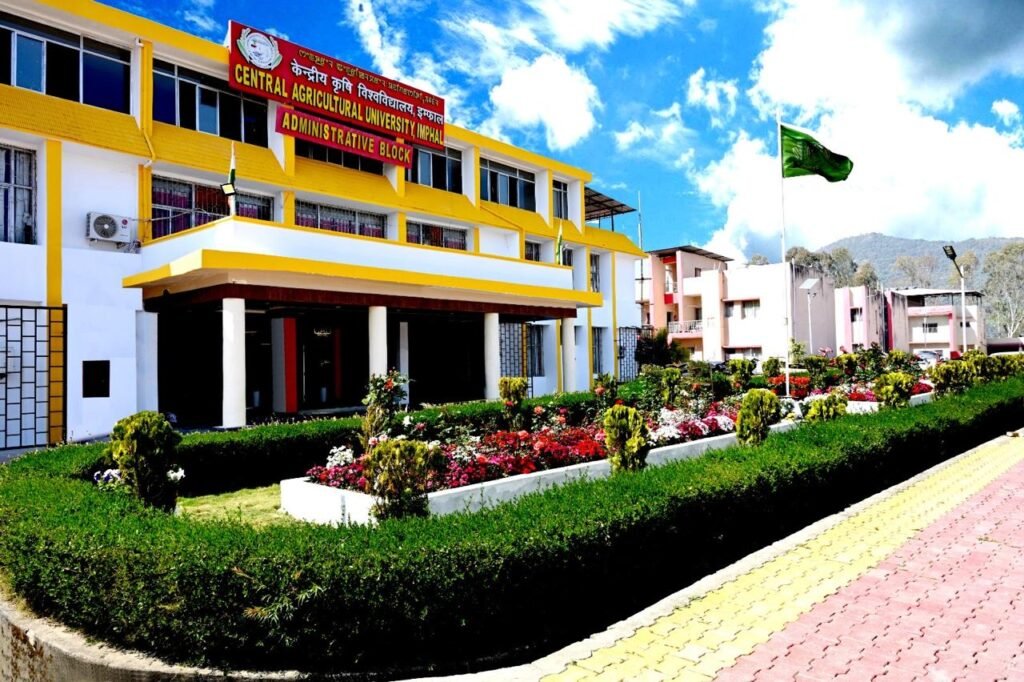
[This article is written by Prof. Yengkokpam Ranjana Devi1, Ms. Ambika Devi Yumkhaibam2& Dr. Dinesh G K21 Deputy Director of Instruction, Central Agricultural University, Imphal2 College of Agriculture, Iroisemba, Imphal for publication on the occasion of the forthcoming three-day National Conference on “Natural Farming: Pathways to Self-Reliant Farming and Rural Prosperity”, with the motto “One Farm, One Ecosystem and One Health”, during 9–11 September 2026 under the aegis of Central Agricultural University (Imphal), Manipur, to be held at the College of Post Graduate Studies in Agricultural Sciences (CPGSAS), Umiam, Meghalaya.]

More Stories
Sindoor Khela : A Farewell to the Goddess in a Cloud of Vermillion — An Emotional Vijaya Dashami.
Chief Minister Dr. Manik Saha Attends Grand Ravan Dahan Ceremony Organised By Barnali Sangha.
CPIM Delegation Meets Family Of Two Brothers Murdered In Baruakandi.