





Agartala, Tripura, 26th of August, 2026 : In India, more than 60 million people have been diagnosed with diabetes, confirming fifth leading causes of death and it is predicted to exceed 100 million by the 2030, rising a heat up concern about the people heath. Diabetes, a chronic metabolic condition which can affects people of all ages, when our body cannot produce or utilized insulin effectively causing the blood sugar (glucose) level is too high. Gut health is gastrointestinal system which helped in digestion and absorption of nutrients from the foods. Maintaining gut microbiome can influence the beta cell dysfunction and beta cell destruction in the pancreas. Studies reported that foods with high fiber are essentially good in improving the gut health. Millets are small seeded, round shape annual cereals grain which belong to Poaceae family, widely grown in arid and semi-arid regions of Africa and Asia. The extreme resilience to harsh environment and their rich nutritional content stands out millet grains from others cereals grains. There are several varieties of millet. Millet is particularly valuable for managing diabetes because of its low glycaemic index and high fiber content. In this topic, we will explore the glycaemic index, how millet influence on the controlling the blood sugar level as well as the impact of high fiber content on gut health of an individual and to assimilate into the diet of individual with diabetes mellitus.
Millet: Ancient Wisdom for Modern Diets
The Millet grain is reported to be widely cultivated and consumed in arid and semi-arid regions of Africa and Asia. In some part of the globe, it is consumed as staple food and also called as drought or famine food because of its drought resilience crops, which can be grown in tough environment with extreme temperature and are also resistant to pest and diseases. Millet has been used as major food component and also in various traditional food and beverages production in India for centuries.
In Manipur, millet is locally called as ‘Chanan’. It is mainly grown as Jhum cultivation in hilly part of Kangpokpi and Senapati district with low productivity. According to local context, they have different name liked Finger millet are called as Kodo/Henghou, Kanghou (Foxtail millet), Leibaklei (Little millet), Kongjeng (Barnyard millet), Tulik (Proso millet) and Channaan (Sorghum). Chanan or millet has been cultivated and consumed by indigenous communities as puff snacks for generation.
Millet has mild, earthy and nutty flavor with a firm and hearty texture, but when popped it has a very similar taste with popcorn. There is slightly different in flavor and texture with varieties but their nutritional benefit remains almost constant. However, it is not consumed as staple food, but hold cultural and traditional significance in the people of Manipur. In most of the cultural and traditional event of Manipur like Luhongba (marriages), Sorat (death event), Epan thaba (post-natal ritual), Sumang Laa Taba (offering to God for wellbeing) or any others ritual events etc atmost used puff millet (kabok aphaba) and sweeten puffed millet ball (kabok matum) as a snack, offering or ingredient as a part of offers (in making Phola).
Millet has high nutritional composition with low carbohydrates content and glycaemic index as compared to normal white rice. The high dietary fiber content of 15-20% and low glycaemic index create a gold standard to work synergistically to slow down the digestion lowering the glucose diffusion in blood stream. Millet being rich in calcium also help in regulation of insulin as well as gut mobility.
Now a days, it’s becoming a new trend in food industry to adopt millet in diets because of its multi nutrients and present of bioactive element which possess potential health benefit. To acknowledge the important of millet and its role in reducing the malnutrition, the United Nations General Assembly declared 2023 as International Year of Millet.
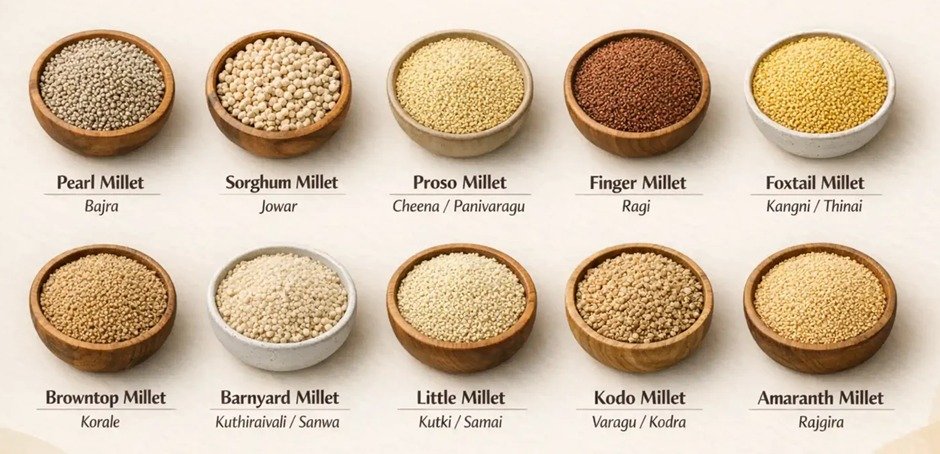
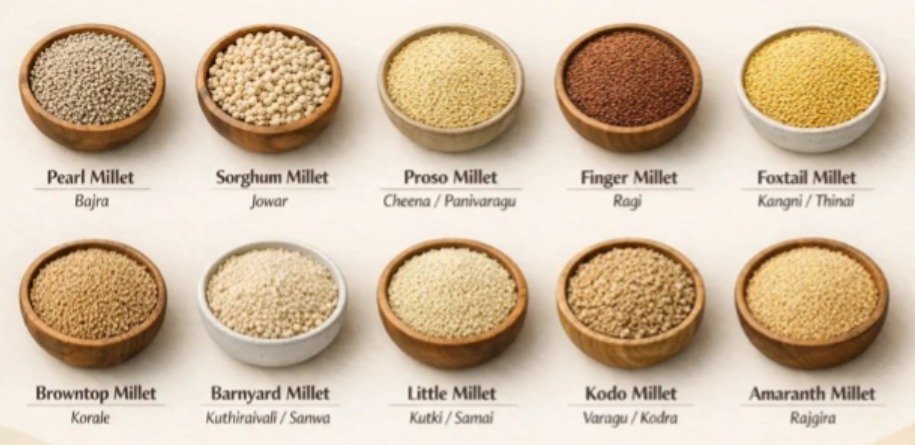
Fig: Some of the famous varieties of Millets in India
Glycaemic Index and Gut Heath
We know glycaemic index (GI) is a scale which marked from 0 to 100, used to ranks the carbohydrates content foods or drinks based on its significant impact to rise the blood sugar (glucose) level compared to standard reference food such as pure glucose having GI of 100. Based on GI value, foods are classified into three categories i.e., Low GI food (≤55), Medium GI food (56-69), High GI food (≥70). When carbohydrates are breaking down inside our digestive system, it releases simple sugar (glucose) which is then carried into our bloodstream. The excess glucose from food is converted into glycogen which role is to supply blood glucose when it drops down. It has to be cleared that low GI food can also affect the blood sugar but only by slowly increasing the glucose, giving us a tighter control over our blood sugar level instead of high GI food with direct increasing the glucose quickly.
Gut health refers to our gastrointestinal system. Food with sufficient amount of fiber provide natural probiotics which help in balancing the digestion and gut health. Probiotics, due to their ability to lower oxidative stress, identified as promising therapies for managing diabetes. Because of their role in increasing insulin sensitivity, lowering total cholesterol, and reducing body weight Bacteroides and Lactobacillus, are being considered potential probiotic agents for the treatment of diabetes. The gut bacteria such as Firmicutes also helped in lowering types 2 diabetes, obesity and inflammation. Poor gut health affects the digestion metabolism. When digested slow and food remained in stomach for longer time, it causes glucose to rise instantly. Prolong high blood sugar can cause gastroparesis which make the blood sugar level dicey and unable to control. The impaired digestion can cause complicate metabolic control also imbalance gut microbiome which will increase inflammation and exacerbate insulin resistance and also chronic heart diseases.
Functional Relationship between Millets and Metabolic Health Indicators
The GI of millet is in the range of 41 – 55 which is much lower than rice and wheat that have GI value of around 70 or more higher. Depending upon the varieties, processing, consuming method as well individual metabolism, the GI value can be fluctuated. Even though food like oils, fats and meats does not have GI value but still can affect the blood sugar level if consumed by individual with diabetes. The complex carbohydrates, high dietary fiber, protein and minerals content are the key essential element of millet to have low GI value as well as improved digestion and gut health. Since it has low GI value, the breakdown of complex carbohydrates is much slower as compared to food with high GI value, resulting in slow and steadily release of glucose into our bloodstream. This helped individual with diabetes to control over the blood sugar more effectively and sudden spikes or crashes. As compared to rice and wheat, millet has 5-50 times more dietary fiber content and had extremely significant amount of calcium of around 300 – 364mg/100g which is 10 – 35times more. Thus, it acts as multi-functional tools that control diabetes while nourishing gut microbiome. Both fiber and calcium delayed carbohydrates digestion, improved insulin sensitivity and drive insulin secretion also. The soluble fiber from millet acts as natural probiotic activate the gut bacteria to produce Short-Chain Fatty Acids (SCFA). The SCFA help in regulating insulin secretion more efficiently, protecting gut barrier to suppress the insulin resistance and also promote muscle metabolism to reduce excessive glucose production. Improving gut microbiome can also helped in digestion system as well as prevent metabolic illness such as weight and inflammation management. The high level of polyphenol and tannins content in millet can also inhibit the alpha-amylase enzymes, lowering the breakdown of starch into glucose.
Millets for Healthy Digestion, Gut Integrity, and Diabetes Prevention.
The lower GI value, high dietary fiber and mineral content of millet bring the attention to diabetes management and improving gut health. In Manipur, white rice (GI 70-89) being consumed as staple food, a concerned has been rising about spiking the blood sugar level in individuals. Also due to convenience of modern lifestyle, consumption of more high sugar and drinks as reached peaked record leading us in developing chronic diseases.
According to different structure, there are different types of carbohydrates and doesn’t work in same mechanism. Individual metabolism is also important in controlling the chronic illness. However, adopting millet diet plan also have some significant impact in controlling and managing some of the chronic diseases or illness. Some ways in which millet can be beneficial to individual with diabetes are:
Consistent blood glucose management: The glycaemic index of millet is lower which results in slower glucose infusion into bloodstream as compared to foods with higher GI value. A diet plan with millet will enable an individual with diabetes to maintain consistent blood sugar level avoiding sudden spikes or surge.
High Fiber Content: Millet has high dietary fiber content which is 5 – 50 times more than rice or wheat. Both the soluble and insoluble fiber has its own role in controlling diabetes. Soluble fiber acts as natural probiotic improving the gut health suppressing the insulin resistance and also promote in insulin secretion. Overall, fibers in millet slow down the enzymatic digestion leading to gradual and sustain release of glucose into blood.
Complex carbohydrates: The complex carbohydrates of millet allow slow break down proving steady energy without causing sudden spikes.
High Calcium Content: Adequate calcium amount in our diet reduces risk of Type 2 diabetes and also increases the insulin sensitivity and secretion.
Rich in Antioxidant properties: Millets are rich in antioxidant liked polyphenol, flavonoid and tannins which helped to reduces chronic inflammation and oxidative stress.
Vitamins and minerals: The vitamins and minerals in millet slow down absorption of glucose and also improved insulin sensitivity.
Cardiac vitality: Prolong consumption of foods and drinks with high sugar often led to abnormal accumulation of glycogen which may affect liver and muscle as well as metabolism of our body. Many diseases related to cardiac health might be surged which may cause sudden death or coma.
Everyday Millet Integration for a Healthier Lifestyle
- Replace white rice with cooked millets such as Foxtail Millet, Barnyard Millet, or Little Millet in lunch and dinner meals.
- Use millet flour like Finger Millet or Pearl Millet for preparing rotis, chapatis, pancakes, and baked products.
- Prepare millet-based breakfast foods such as porridge, dosa, idli, upma, flakes, or ready-to-cook mixes for a healthy start to the day.
- Incorporate millets into snacks by making roasted millet mixtures, energy bars, cookies, puffs, and extruded snack products.
- Blend millets with pulses, vegetables, and dairy products to develop balanced meals like khichdi, soups, salads, and fermented foods.
- Use millet malt or flour in beverages, smoothies, and health drinks to improve nutritional quality and increase daily millet intake.
Conclusion Millets are highly nutritious functional cereals with significant potential in managing diabetes, obesity, and other metabolic disorders due to their low glycaemic index, high dietary fiber, complex carbohydrates, minerals, and bioactive compounds. They help maintain stable blood sugar levels, improve insulin sensitivity, support beneficial gut microbiota, and reduce oxidative stress and inflammation. In addition to promoting gut health and weight management, millets may also help lower the risk of cardiovascular diseases. Although traditionally consumed in regions such as Manipur, millet consumption has declined due to changing food habits and increased dependence on refined cereals. Therefore, reintroducing millets through traditional and value-added food products can improve public health and nutritional security. However, individual metabolic responses may vary, and proper dietary guidance and regular health monitoring are essential for maximum benefits.




More Stories
Tripura Moving Rapidly Towards Development On PM Modi’s Path: Chief Minister Of Tripura Dr. Manik Saha.
Sonamura Police Seize 143 Nos ESKUF Cough Syrup, Worth 11.37 Lakh.
Khowai Hosts State-Level Under-14 And Under-17 School Karate Championship.