





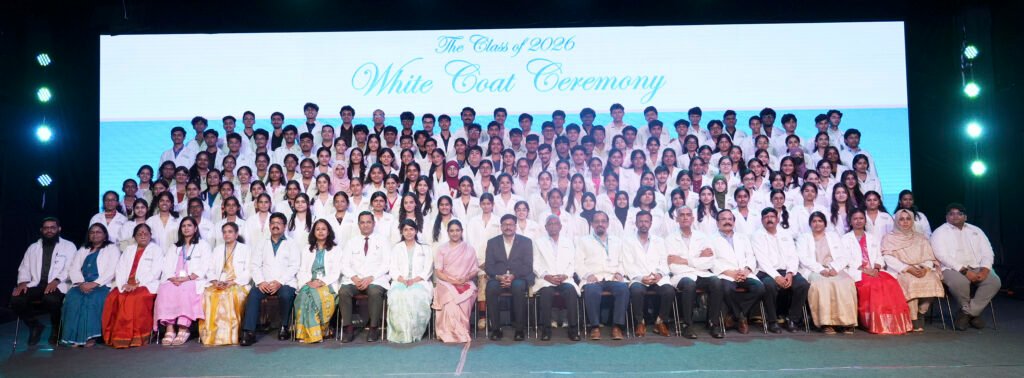
Hyderabad, Telangana, 29th of October, 2026 : Apollo Institute of Medical Sciences and Research (AIMSR) held its White Coat Ceremony for 152 first-year MBBS students of the Batch of 2026, today, at the Ravi Narayana Reddy Auditorium, MLA Colony, Hyderabad. The occasion was attended by faculty members of AIMSR and the parents of the incoming medical students.
Dr. K. Subba Reddy, Director of Medical Services, Telangana Region, Apollo Hospitals, graced the occasion as the Chief Guest. Other dignitaries included Dr. K. Manohar, Dean, AIMSR; Ms. Aparna Reddy, Chief Operating Officer; and Dr. Sathyanarayana Reddy, Medical Superintendent.
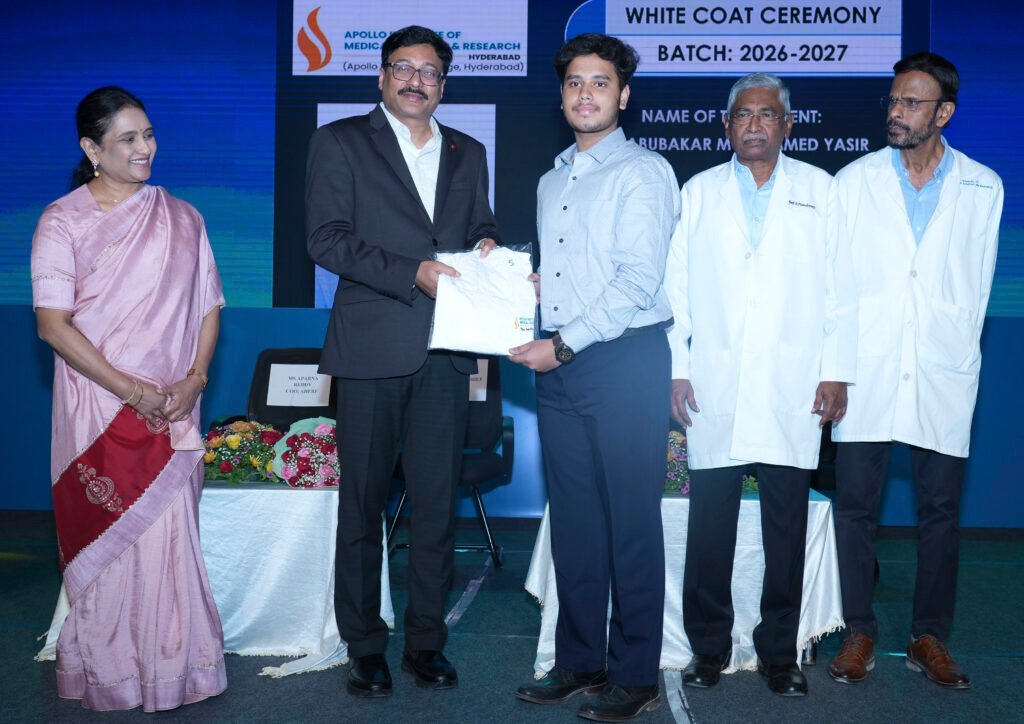
The programme commenced with an academic orientation session by Dr. Neetha Kundoor, Associate Dean, Academics, who introduced the students to the academic journey and responsibilities that lie ahead. The Chief Guest, the Dean, senior management and heads of departments then presented white coats to the students, symbolising their entry into the medical profession and their commitment to patient care.
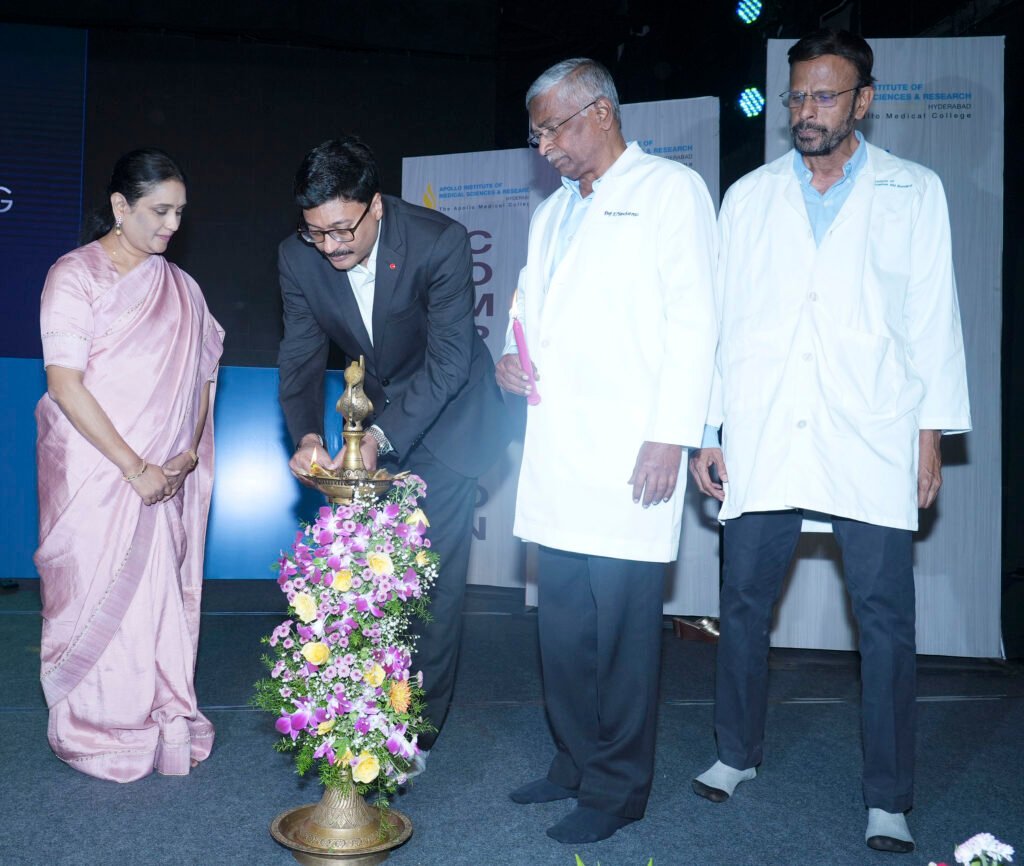
Chief Guest Dr. K. Subba Reddy, speaking on the occasion said, The White Coat Ceremony marks the beginning of a noble profession where science meets humanity. Medicine demands not only knowledge and clinical competence but also compassion, empathy, humility and accountability. A medical career requires sacrifices, including long working hours and missing family occasions. However, the satisfaction of saving a life and the gratitude of patients and their families make these sacrifices worthwhile. Despite the challenges, doctors must remain committed to their purpose of serving humanity. Apollo Hospitals, guided by the vision of its Chairman, Padma Vibhushan Dr. Prathap C. Reddy, has advanced healthcare through its mission of “Heal in India, Heal by India and Heal from India.” Through clinical excellence, medical education, research, innovation and digital healthcare, Apollo contributes to healthcare delivery in India and across the world. As future doctors, students must build a strong foundation in medical knowledge, clinical skills and professional ethics. The four pillars of medical ethics—autonomy, beneficence, non-maleficence and distributive justice—must guide their decisions. Respecting patient rights, doing good, avoiding harm and ensuring the fair distribution of limited medical resources are essential responsibilities, particularly in challenging situations. Medical practice can be emotionally demanding. Doctors may experience setbacks and burnout, and not every life can be saved. During such moments, remembering their purpose, maintaining ethical standards and treating patients with dignity become even more important. When treatment is no longer effective, compassionate care, palliative support and respect for patient autonomy remain vital. Doctors must also embrace emerging technologies, including artificial intelligence and robotics, while preserving the human connection that lies at the heart of medicine. Technology can enhance healthcare, but empathy and personal care remain irreplaceable. The guiding principle for every doctor should be to treat every patient with the same care and compassion they would offer their own family. Be ambitious, confident and committed to excellence, but never compromise on medical ethics. Above all, remain humble, empathetic and dedicated to serving humanity.
K. Manohar, Dean, AIMSR; said, When I was a medical student in 1975, we did not have this ceremony. Today, wearing the white coat marks the beginning of your professional journey, bringing with it immense responsibility. Drawing on my 45 years of experience, I
would like to emphasise three essential values of sincerity, service, and sacrifice.Be sincere in your studies and treat every patient as a human being. Earn their trust through genuine care and always remember the fundamental principle: Do no harm.Whether in a government hospital or a private institution, every patient deserves the same quality of care. Our duty is to serve selflessly, compassionately, and without discrimination, ensuring the best possible relief to every patient.Medicine is more than a profession; it is a lifelong commitment. Night duties, missed celebrations, and personal sacrifices are sometimes necessary to fulfil our responsibilities towards patients. Remember these three guiding principles: sincerity, service, and sacrifice.Finally, medicine is a lifelong learning process. Education does not end with a degree or specialisation; continuous learning is essential to becoming an excellent doctor.Embrace these values, and I am confident you will make your institution and profession proud.

Ms. Aparna Reddy said, It gives me immense pleasure to welcome you all to the White Coat Ceremony for the Batch of 2026 at Apollo Institute of Medical Sciences and Research, Hyderabad. Today marks the beginning of an exciting journey for our aspiring doctors. The white coat is not merely a uniform; it symbolises trust, responsibility, compassion, integrity, and a lifelong commitment to serving humanity. Students, remember that medicine goes beyond diagnosing diseases and prescribing treatments. It is about listening to patients, understanding their fears, respecting their dignity, and offering comfort. At Apollo, we believe that medical excellence must go hand in hand with ethics, compassion, and service. Your journey will demand discipline, perseverance, and continuous learning. Uphold Apollo’s values and strive not only to become excellent doctors but also good human beings. Congratulations, and wishing you a fulfilling journey ahead. Thank you!
The White Coat Ceremony is a significant milestone in every medical student’s journey. The white coat represents professionalism, evidence-based medical practice, compassion and selfless service. It serves as a reminder that healing is sacred and that serving patients is a privilege. The ceremony marks the transition of students into doctors-in-training, reinforcing the importance of ethical conduct, empathy and placing patients’ needs first.
A key highlight of the event was the administration of the Hippocratic Oath by Dr. D. Nagender, Head of General Medicine. The students pledged to uphold the principles of medical ethics and dedicate themselves to serving humanity with compassion, conscience and integrity.
The ceremony underscored AIMSR’s commitment to nurturing competent, ethical and compassionate medical professionals who will uphold the highest standards of healthcare and place the well-being of patients at the heart of their practice.




More Stories
Second Edition Of Two-Day ARISE Cities Forum Closes With A Collective Call For Greater Role Of Cities In Global Climate Governance.
CARE Hospitals Organises Walkathon and Stroke Awareness Programme on World Stroke Day.
Hyundai Celebrates Outstanding Performance Of Sheetal Devi And Samarth-Supported Athletes At The Aichi-Nagoya 2026 Asian Para Games.