


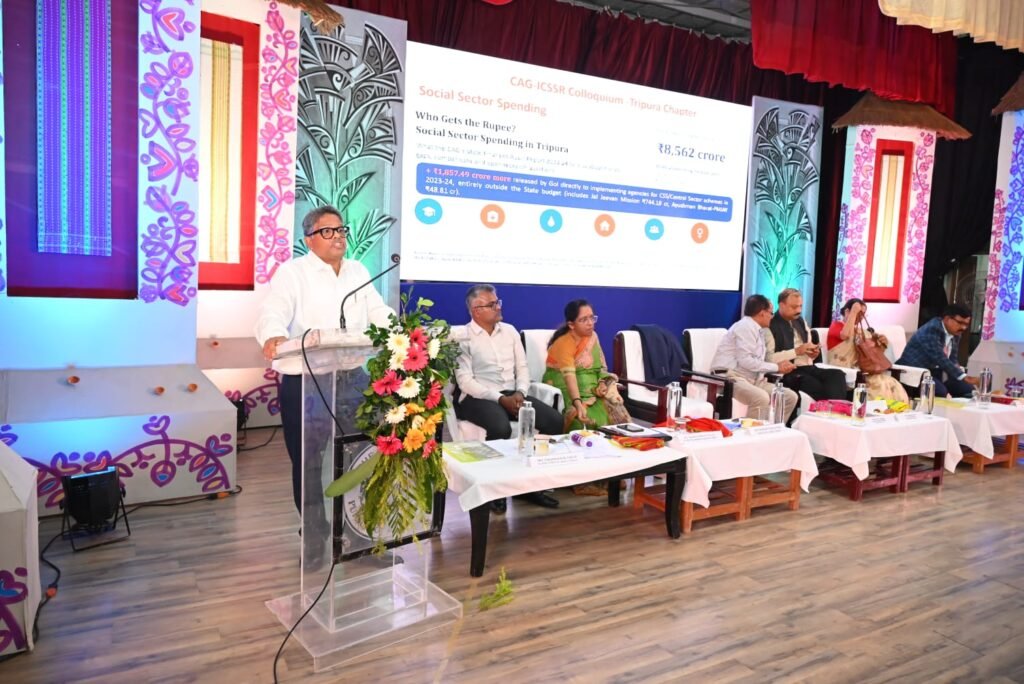
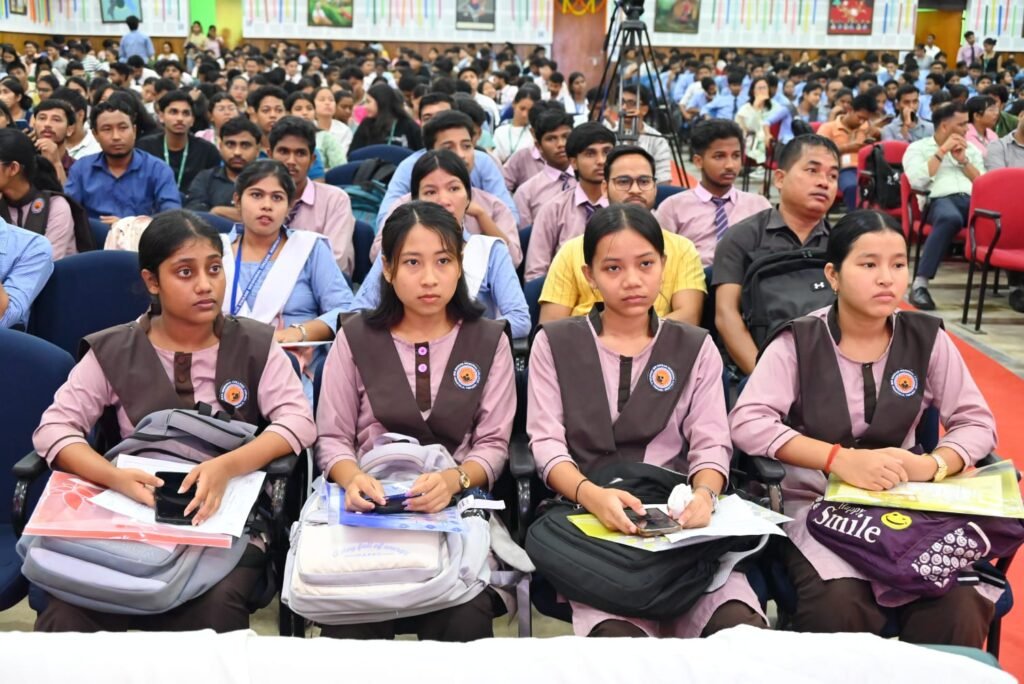
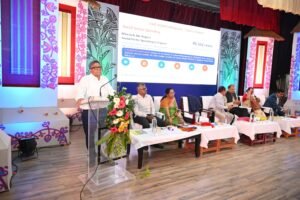
Agartala, Tripura, 25th of September, 2026 : In an effort to demystify government reports and make public oversight accessible to everyone, the Comptroller and Auditor General of India (CAG) and the Indian Council of Social Science Research (ICSSR) hosted a state-level Academic Colloquium at the MBB Auditorium, Tripura University on Thursday (24th September, 2026). Designed to translate complex financial and audit data into everyday civic awareness, the event brought together public auditors, university professors, research scholars, and over 800 students.
Event Dignitaries & Formal Proceedings
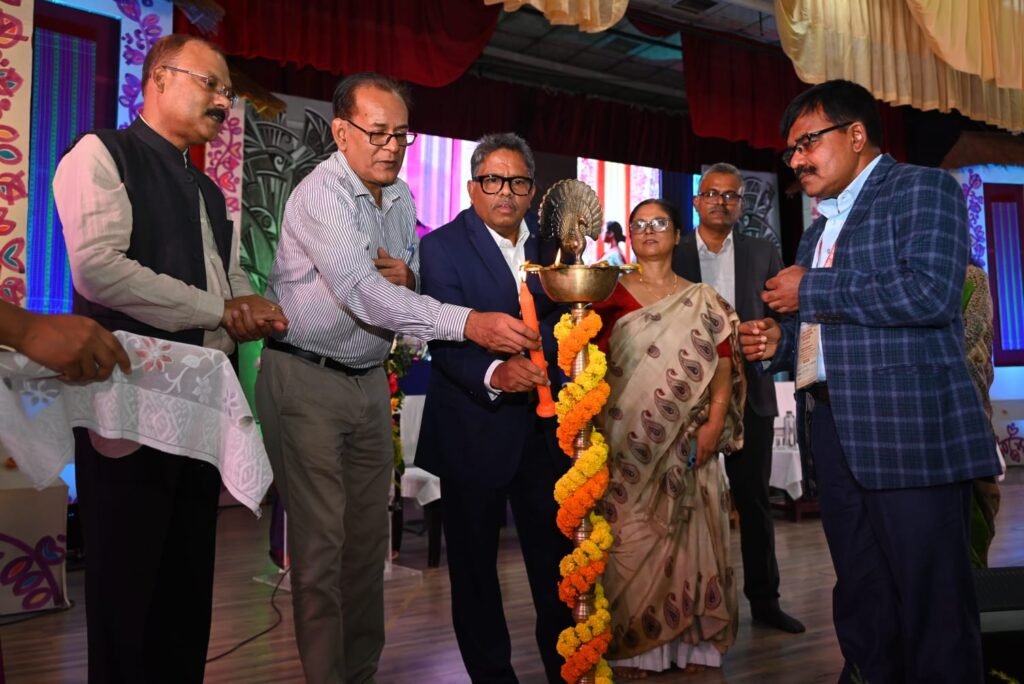
The colloquium began with a ceremonial lamp lighting and welcome address by Shri Ranendu Sarkar, IAAS, Accountant General (A&E), Tripura. Opening remarks were delivered by Prof. S. K. Nayak (Council Member, ICSSR), followed by a Special Address by Chief Guest Prof. Debabrata Das (Hon’ble Vice-Chancellor, Tripura University). Key presentations were made by Shri Shailendra Vikram Singh, IAAS (Principal Accountant General – Audit, Tripura), Shri K. Vigneshwaran, IAAS (Sr. DAG – Audit), and Prof. Paramita Saha (Department of Economics, Tripura University). Dr. Abhinav Piyush (Deputy Director, ICSSR) outlined the student research contest. The event concluded with a vote of thanks by Ms. Tanushree Biswas, IAAS (Sr. DAG – A&E, Tripura) and the National Anthem.
1. Demystifying Tripura’s State Finances
Public finances are ultimately about how the government collects funds and spends them to improve the daily lives of citizens. During the colloquium, audit officials explained the key features of Tripura’s financial health in simple terms:
| Key Takeaways on State Finances: • Central Funding Support: Tripura’s state budget relies heavily on financial allocations and grants from the Central Government to run social welfare schemes, build roads, and support public healthcare. • Investing in Permanent Assets: Auditors stressed that public money is best utilized when directed towards capital assets—such as durable infrastructure, school buildings, and hospitals—that deliver long-term benefits to the community. • Responsible Debt Management: While borrowing money allows governments to fund development projects, managing debt responsibly ensures that future generations are not burdened by heavy interest payments. |
2. Transforming Garbage Management in Urban Local Bodies
The second session focused on an issue directly affecting every family’s health and surroundings: Solid Waste Management across Tripura’s 20 Urban Local Bodies (Agartala Municipal Corporation, Municipal Councils, and Nagar Panchayats). Audit presentations highlighted key practical solutions:
• Moving Beyond Collection to Processing: Collecting garbage from doorsteps is only the first step. To keep cities truly clean, collected waste must be processed at scientific treatment facilities rather than piled up in open landfills.
• Citizen Action – Waste Segregation at Source: Households play a vital role by separating wet waste (organic kitchen waste) from dry waste (plastics, paper, and metal) before handing it over to waste collectors. Segregation makes recycling significantly faster and cheaper.
• Modern Infrastructure Needed: Urban local bodies need dedicated composting units, plastic processing plants, and modern transport vehicles to prevent environmental contamination and smell.
• Active Civic Participation: Maintaining clean neighborhoods requires active cooperation between citizens and municipal authorities, including prompt payment of nominal user charges to sustain municipal services.
3. Youth Engagement: CAG–ICSSR Research Contest
To encourage students to read audit reports and contribute fresh perspectives on governance, a nationwide Research Article Competition was highlighted for undergraduate, postgraduate, and PhD scholars. To enable wider participation from Tripura’s academic community, the submission deadline for research articles has been extended to 30 September 2026. Winning entries will receive recognition at state and national forums.
4. Why Public Audit Matters to the Common Citizen
Public audits are not merely accounting checks; they serve as a mirror of democratic accountability. By analyzing government expenditure, audit reports show citizens where public funds are working effectively and where improvements are needed—whether in state budgets, municipal sanitation, healthcare, or public education.
More Stories
1,110 Arogya Mandirs Set Up Across Tripura: Chief Minister Of Tripura Dr. Manik Saha.
Empowering Rural Women Through Skills: Mord Joint Secretary Reviews Training Initiatives At RUDSETI Agartala.
Grand Celebration Of Hindi Pakhwada Held.