



New Delhi, Delhi, 16th of May, 2026 : Union Minister of State (Independent Charge) for Science and Technology and Earth Sciences, Shri Jitendra Singh, virtually addressed the annual convocation of the 42nd batch of Sree Chitra Tirunal Institute for Medical Sciences and Technology (SCTIMST), Thiruvananthapuram, Keralam, today, in the presence of Union Health Secretary, Smt. Punya Salila Srivastava, who attended the ceremony as the Chief Guest. The institute is an Institution of National Importance and a statutory body under the Department of Science and Technology, Government of India.
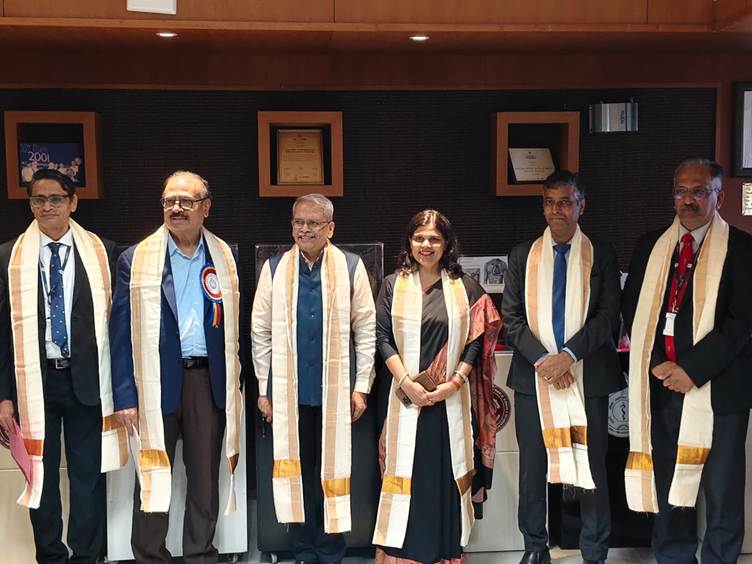
In his address, Shri Jitendra Singh congratulated the graduating the students and the Institute on its Golden Jubilee celebrations. Shri Singh lauded the achievements of the institute and highlighted that approval for the appointment of nearly 800 permanent faculty members would nearly double its working capacity. He also appreciated the Ministry of Health and Family Welfare for establishing the nine-floor Pradhan Mantri Swasthya Suraksha Yojana (PMSSY) block and the four-floor services block, stating that “the new facilities would strengthen the institute into one of the country’s largest centres for neurosurgery and cardiac sciences.”
Shri Singh congratulated the institute’s doctors for treating more than 17,000 patients under the Pradhan Mantri Ayushman Bharat Yojana since 2020. Referring to the foundation stone laid by Prime Minister Shri Narendra Modi for the Malini Vasundhara Centre, he described it as a major advancement in precision-based, non-invasive treatment for neurological and oncological conditions.
Highlighting the institute’s contribution to indigenous medical device development, Shri Singh stated that “the unique focus of the institute is in the making of medical devices which are world-class, highly effective, and at the same time indigenous and cost-effective.” He also noted that several world-class and cost-effective technologies developed at the institute are transferred to industry every year, including the 7 technologies that will be transferred this year.
Highlighting the institute’s eight-institution MoU initiative, Shri Singh described it as “a unique effort that brought together eight leading national institutions to create a collaborative cluster and foster a synergistic research ecosystem.” He noted that “such partnerships would strengthen interdisciplinary innovation and advance the country’s scientific and healthcare capabilities.”
Appreciating the collaboration between the Indian Space Research Organisation and the institute in the field of space medicine, he stated that the initiative would open new avenues for research, innovation, and clinical practice in the years to come, especially in emerging areas of medical science. Congratulating the institution for its Golden Jubilee celebrations, Shri Singh described the institute as one of the leading institutions of its kind in this part of the world.
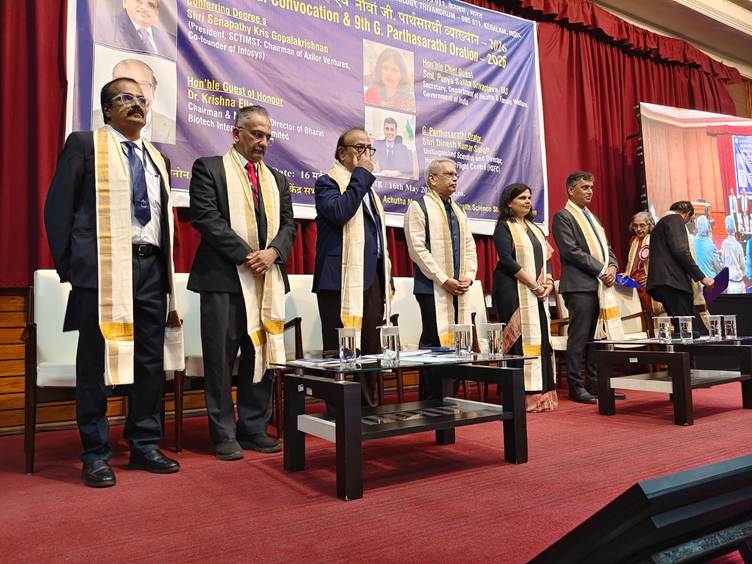
In her address, Union Health Secretary, Smt. Punya Salila Srivastava congratulated the graduating students for graduating from “a pioneering institution that has a unique character, where engineers and medical professionals work together to drive innovation in healthcare, develop new medical devices, and undertake cutting-edge research.” She conveyed her best wishes to the students for a bright and successful future and expressed confidence that they would make meaningful contributions to the advancement of healthcare and medical science in the years ahead.
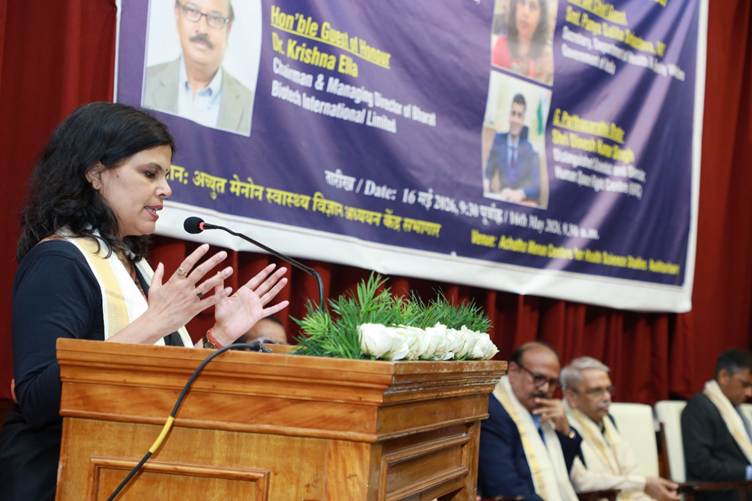
Sharing an overview of the National Health Policy and the Government’s healthcare initiatives, Smt. Srivastava stated that “the concept of Ayushman Bharat is aimed at ensuring a continuum of care so that citizens live long and live well.” Referring to the National Health Policy, 2017, she highlighted its focus on preventive, promotive, curative, rehabilitative, and palliative healthcare.
Smt. Srivastava underlined the importance of strengthening the primary healthcare network and emphasised that a strong focus on wellness and early screening can significantly reduce the burden of cardiology, neurology, and other non-communicable diseases. She noted that under the National Health Policy, “the healthcare system has expanded its focus beyond reproductive and child healthcare and communicable diseases towards a more wellness-oriented approach, with increased emphasis on screening and preventive healthcare at the primary healthcare level.” She further highlighted that the expanded healthcare packages now include screening for non-communicable diseases, mental healthcare, geriatric care, and palliative care.” She also appreciated the institute’s efforts towards disease screening and early detection initiatives.
Outlining the different pillars of Ayushman Bharat, Smt. Srivastava stated that the initiative is anchored in the Ayushman Arogya Mandirs and the Pradhan Mantri Jan Arogya Yojana (PM-JAY), which together aim to provide an integrated continuum of healthcare. She noted that patients screened at the primary healthcare level are referred to community health centres, sub-district hospitals, district hospitals, medical colleges, and empanelled hospitals for secondary and tertiary care, involving private healthcare institutions under PM-JAY. She further highlighted that “more than 600 million citizens are covered under the scheme.”
Highlighting the significance of the Ayushman Bharat Digital Mission, Smt. Srivastava stated that the ABHA account system has been created to ensure continuity of care through longitudinal digital health records for citizens. She noted that “the initiative enables individuals to securely access and share their health records across healthcare institutions with consent, thereby strengthening referral mechanisms and supporting precision healthcare through comprehensive patient histories across different stages of life and treatment.”
Referring to the Pradhan Mantri Ayushman Bharat Health Infrastructure Mission (PM-ABHIM), Smt. Srivastava said the initiative aims to address health infrastructure gaps and build pandemic-resilient healthcare systems. She also referred to the Integrated Health Information Platform of the National Centre for Disease Control and the support being extended to healthcare institutions under the mission.
Union Health Secretary also highlighted the Pradhan Mantri Swasthya Suraksha Yojana (PMSSY), under which 75 super-specialty blocks have been built across the country. The initiative also supports 22 new AIIMS institutions across the country. Encouraging the graduating students to contribute their services in remote and underserved regions, she said the new AIIMS institutions are creating opportunities to strengthen healthcare delivery in difficult areas.
Speaking about emerging technologies in healthcare, Smt. Srivastava referred to the Government’s initiatives in Artificial Intelligence in healthcare, including the recently launched strategy for AI in healthcare in collaboration with IIT Kanpur. She also mentioned the open data platform ‘Bhashini’, developed by the National Health Authority for benchmarking AI-based healthcare tools.
Smt. Srivastava emphasized that the Government is working towards strengthening regulatory systems in a manner that ensures public safety while also facilitating research, innovation, and commercial development. Referring to reforms being undertaken by the Central Drugs Standard Control Organization (CDSCO), she highlighted efforts to simplify regulatory procedures for low-risk drugs, including easing requirements related to test licences. She also stated that “steps are being taken to simplify procedures related to bioavailability and bioequivalence studies for certain generic drugs, particularly low-risk categories.” “Similar regulatory reforms are also being introduced in the medical devices sector’, she further added.
Advising the students to continue learning throughout their careers, Smt. Srivastava observed that knowledge and technology are evolving rapidly and stressed the importance of remaining updated in the healthcare profession. She also urged the graduating students to remain empathetic towards their patients, noting that compassion and communication can make a significant difference in a patient’s life.
Emphasising the importance of teamwork and ethical conduct, Smt. Srivastava stated that collaboration between engineers and doctors is essential for driving innovation in healthcare, and added that ethical conduct and integrity would play a critical role in building a “Viksit Bharat.” Concluding her remarks, she appreciated the institute’s contributions to society through innovation and research, noting that its work has brought relief to millions of people. She urged the graduating students to carry forward the same spirit of innovation, service, and scientific excellence in their future professional journeys.
A total of 130 graduands were awarded degrees, including 29 students in DM programmes––Cardiology, Neurology, Neuroimaging and Interventional Neuroradiology, Cardiac Imaging and Vascular Interventional Radiology, Cardiothoracic & Vascular Anaesthesia, and Neuro-anaesthesia; 7 students in MCh programmes including Cardiovascular and Thoracic Surgery, Vascular Surgery, and Neurosurgery; 15 students in Post-doctoral (Post DM/MCh./DNB) Fellowship programmes; 40 students in Master of Public Health; 4 students in Post-doctoral Certificate Courses in Transfusion Transmitted Disease Testing and Neuropathology; 11 PhD scholars; 22 students in Diploma and PG Diploma courses; and 2 members in ACP in Neurological Sciences.
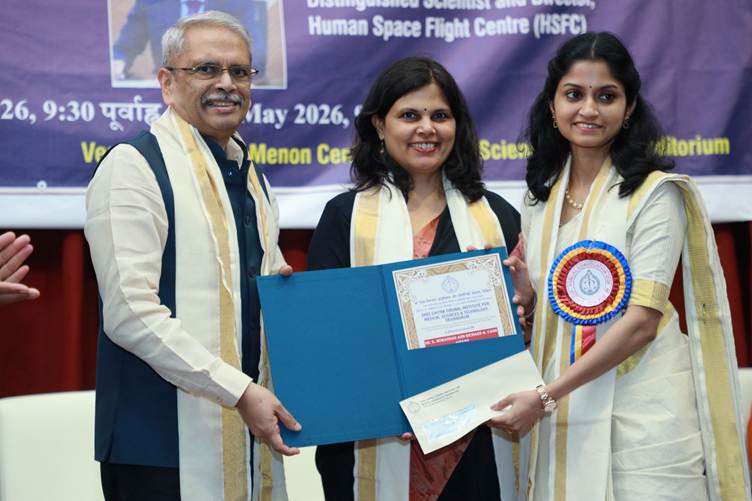
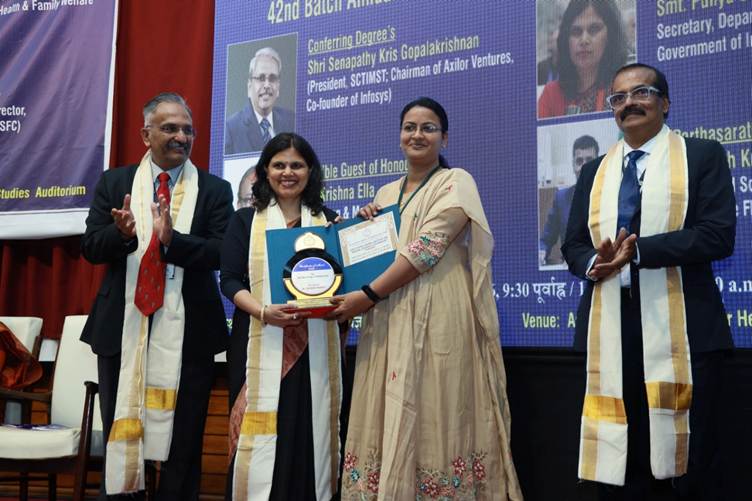
Certificates of merit were also awarded to outstanding faculty of the Institute who have won national and international awards. An institutional golden jubilee logo and a dedicated song commemorating the event were released at the convocation.
Dr. Krishna M. Ella, Executive Chairman and co-founder of Bharat Biotech International Ltd. was present on the occasion as the guest of honour. Shree Kris Gopalakrishnan, President, SCTIMST, Dr. Sanjay Behari, Director, SCTIMST, distinguished guests, faculty and parents of the students were also present.


More Stories
Selena Gomez Calls Vaping A Stupid Habit, Says Nicotine Addiction May Have Altered Her Voice; Doctor Explains Health Risks Of E-Cigarettes : Dr. Narayana Subramaniam, Lead Consultant – Head And Neck Surgery & Oncology, Aster Whitefield Hospital.
CTR-JK Tyre FMSCI Indian National Car Racing Championship 2026 set for season opener in Coimbatore.
Arthritis Is Not Just An Elderly Person’s Disease: Why Younger Adults Are Also Developing Joint Problems : Dr. Jasti Sri Rekha, Senior Specialist – Rheumatology, KIMS Hospitals, Electronic City, Bengaluru.